The world of fermented beverages has exploded in recent years, with kombucha leading the charge from obscure health food stores to mainstream supermarket shelves. But there's a lesser-known cousin that's been quietly gaining attention among fermentation enthusiasts: Jun tea. Often called the "champagne of kombucha," Jun offers a unique twist on traditional fermented tea that might just change how you think about probiotic beverages.
Both Jun and kombucha promise gut health benefits, immune support, and that satisfying fizz we've come to love. But which is healthier, Jun or kombucha? The answer isn't as straightforward as you might think. Let's dive deep into the science, traditions, and practical differences between these two fascinating fermented teas.
What is Kombucha?

Kombucha traces its roots back to ancient China around 220 BC, where it was revered as the "tea of immortality." This fermented tea beverage spread through Japan, Russia, and eventually made its way to the West, where it's experienced a remarkable renaissance in the 21st century.
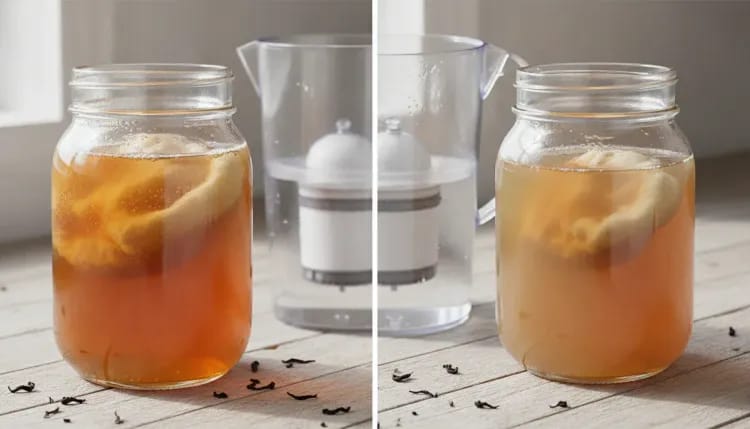
At its core, kombucha is made from just four ingredients: tea (usually black or green), sugar, water, and a SCOBY (Symbiotic Culture of Bacteria and Yeast). The SCOBY, that alien-looking disc floating in your brew, contains a complex ecosystem of beneficial bacteria like Komagataeibacter xylinus and yeasts including Saccharomyces cerevisiae. If you're ready to start your own kombucha journey, check out our complete guide to making homemade kombucha.
The fermentation process transforms sweet tea into a tangy, slightly effervescent beverage over 7-14 days at temperatures between 72-80°F. During this time, the pH drops from around 4.5 (after the acidic starter tea is added) to an ideal range of 2.5-3.5, creating kombucha's signature tart flavor profile. For precise pH monitoring, a digital pH meter is an invaluable tool for consistent results. The result? A beverage that tastes somewhere between apple cider vinegar and sparkling tea, with endless possibilities for flavor variations through secondary fermentation.
What is Jun?

Jun's origin story is shrouded in mystery. While many sources claim it originated in Tibet among Himalayan monks, fermentation expert Sandor Katz suggests Jun is actually "a relatively recent divergence from the kombucha family tree." Regardless of its true origins, Jun has carved out its own niche in the fermented beverage world.
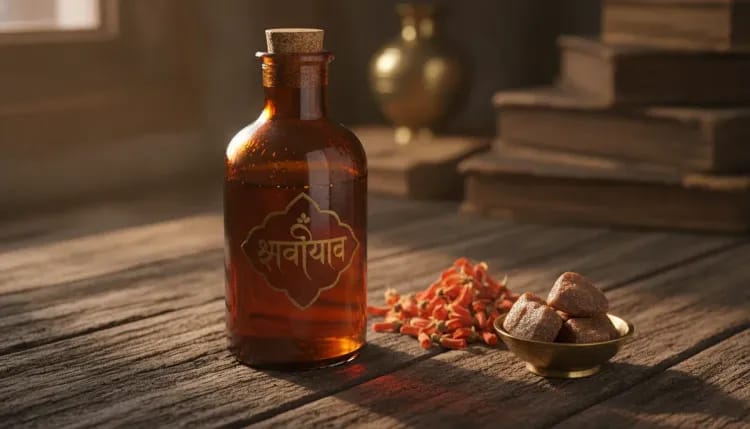
The fundamental difference between Jun and kombucha lies in its ingredients: Jun uses green tea and raw honey instead of black tea and sugar. This seemingly simple swap creates a dramatically different beverage. The Jun SCOBY has adapted to thrive on honey's unique sugar profile (30% glucose, less than 40% fructose, and 20% other sugars), developing a distinct microbial ecosystem with more lactobacillus bacteria and less acetobacteria than traditional kombucha. For a comprehensive guide on brewing this unique beverage, check out our ultimate guide to making homemade Jun.
Jun ferments faster and cooler than kombucha, requiring only 4-7 days at 65-75°F. The result is a lighter, more delicate beverage with floral notes and natural effervescence that earns its "champagne of kombucha" nickname. However, this refined character comes with increased sensitivity—Jun SCOBYs are notoriously particular about temperature, environment, and ingredient quality.
Key Differences Between Jun and Kombucha
Quick Comparison Table
| Feature | Kombucha | Jun |
|---|---|---|
| Main Sweetener | Cane sugar | Raw honey |
| Tea Base | Black or green tea | Green tea only |
| Fermentation Time | 7-14 days | 4-7 days |
| Temperature Range | 72-80°F (22-27°C) | 65-75°F (18-24°C) |
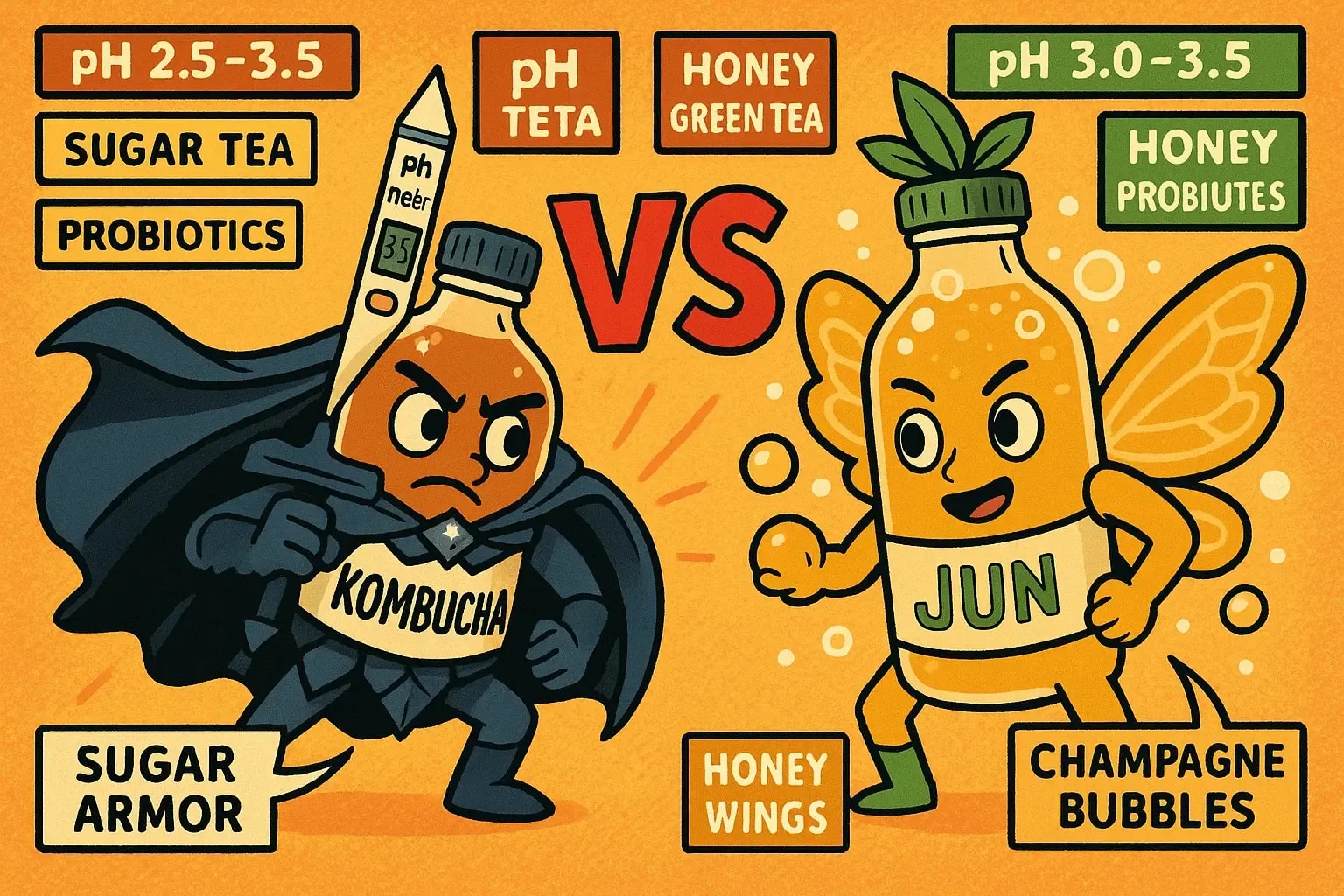
| pH Range | 2.5-3.5 | 3.0-3.5 |
| Alcohol Content | <0.5% ABV | ~1-2% ABV (up to 2-3% with an aggressive second ferment) |
| Taste Profile | Tart, vinegary, bold | Light, floral, champagne-like |
| Commercial Availability | Widely available | Very limited |
| Price Range | $3-6 per bottle | $5-8 per bottle |
| SCOBY Cost | $15-25 | $25-35 |
Ingredients: The Foundation of Difference
The difference between Jun and kombucha starts with their base ingredients. Kombucha's cane sugar provides a simple 50/50 glucose-fructose split that its SCOBY efficiently converts. Jun's raw honey brings a complex array of sugars, enzymes, and naturally occurring microbes that create a more nuanced fermentation.
Tea choice matters too. While kombucha thrives with either black or green tea, Jun exclusively prefers high-quality green tea. The Jun SCOBY has evolved to work specifically with green tea's lighter tannin profile and honey's unique properties. Use raw, unpasteurized honey, and avoid stirring it into piping-hot tea—high heat degrades honey's beneficial enzymes and delicate compounds. Let your brewed tea cool to lukewarm before adding the honey.
Fermentation Process: Time, Temperature, and Transformation
Temperature requirements reveal another crucial distinction. Kombucha's optimal range of 72-80°F suits most home environments, while Jun's cooler preference of 65-75°F often requires finding a special spot or using temperature control. This cooler fermentation, combined with honey's readily available nutrients, allows Jun to ferment nearly twice as fast as kombucha.
Alcohol content presents an interesting contrast. FDA regulations require kombucha to contain less than 0.5% ABV to avoid alcohol labeling, but Jun naturally produces more alcohol—typically around 1-2% ABV, and up to 2-3% with an aggressive second ferment. This higher alcohol content contributes to Jun's champagne-like character but may require different storage and handling considerations.
Taste and Texture: A World of Difference
If kombucha is bold and assertive, Jun is subtle and refined. Kombucha's trademark tartness comes from its lower pH and higher acetic acid content. Jun maintains a gentler acidity, allowing honey's floral notes and green tea's grassy undertones to shine through. The carbonation differs too—Jun typically produces a finer, more persistent bubble that enhances its champagne comparison.
Health Benefits Comparison
Nutritional Profile Comparison (per 8 oz serving)
| Nutrient | Kombucha | Jun |
|---|---|---|
| Calories | 30-50 | 35-60 |
| Sugars | 2-8g | 4-10g |
| B Vitamins | B1, B2, B6, B12 | B1, B2, B6 |
| Organic Acids | Acetic, gluconic, lactic | Similar mix (proportions vary by batch) |
| Antioxidants | Tea polyphenols | Tea polyphenols + honey flavonoids |
| Probiotics | Variable (10⁶-10⁸ CFU/mL) | Variable (higher lactobacillus) |

Kombucha Benefits: What Science Says
Despite kombucha's popularity, scientific evidence for its health benefits remains surprisingly limited. A 2018 systematic review of 310 articles found only one human clinical trial on kombucha. However, recent studies are beginning to fill this gap.
Two 2023 studies showed promising results: one found that 4-week kombucha consumption lowered fasting blood sugar levels, while another demonstrated improved blood sugar response to high-glycemic meals. The tea base provides proven antioxidants from polyphenols, while the fermentation process creates beneficial organic acids with antimicrobial properties.
Kombucha's probiotic content varies widely between batches and brands, making specific health claims difficult to verify. The beverage does contain B vitamins produced during fermentation and may support immune function through its complex microbial ecosystem, though more research is needed to confirm these effects in humans.
Jun Benefits: The Honey Advantage
Scientific research specifically on Jun is virtually nonexistent, leaving us to extrapolate from what we know about its components. Raw honey brings its own health benefits, including natural antimicrobial properties and a rich array of antioxidants from flavonoids and polyphenols.
Jun's unique microbial profile, with higher lactobacillus content, may offer different probiotic benefits than kombucha. Some people sensitive to kombucha's tartness find Jun's lower acidity easier on the stomach, though this is anecdotal rather than established. Additionally, the combination of green tea's catechins with honey's compounds might create synergistic effects, though this remains theoretical without specific research.
Scientific Research: The Reality Check
The stark reality is that both beverages lack robust clinical evidence. Most health claims come from animal studies, test-tube experiments, or anecdotal reports. The high variability in home and commercial preparations makes standardized research challenging. What we can say with confidence is that both provide the proven benefits of their tea bases and create beneficial organic acids during fermentation.
Which Is Healthier: Jun or Kombucha?
Health Benefits at a Glance
| Health Aspect | Kombucha | Jun | Winner |
|---|---|---|---|
| Scientific Research | Limited but growing | Almost none | Kombucha ✓ |
| Probiotic Diversity | High variety | Higher lactobacillus | Tie |
| Antioxidant Content | Tea polyphenols | Tea polyphenols + honey flavonoids | Slight edge to Jun? (small, unproven) |
| Digestibility | Can be harsh (low pH) | Often milder acidity | Anecdotal (varies by person) |
| Sugar Content | Lower final sugar | Slightly higher | Kombucha ✓ |
| Natural vs Processed | Uses refined sugar | Uses raw honey | Jun ✓ |
| Alcohol Content | Minimal (<0.5%) | Higher (~1-2%, up to 2-3%) | Depends on preference |
The question "which is healthier Jun or kombucha" doesn't have a simple answer. Both offer potential benefits, but neither has strong scientific backing for dramatic health claims. Your choice might depend more on individual factors:
Choose kombucha if you:
- Want proven antioxidants from black or green tea
- Prefer a tarter, more acidic beverage
- Need wider commercial availability
- Have a tighter budget
- Want more flavor variety options
Choose Jun if you:
- Prefer raw honey's potential benefits over processed sugar
- Have sensitivity to acidic foods
- Enjoy lighter, more delicate flavors
- Don't mind the higher cost and limited availability
- Can maintain cooler fermentation temperatures
How to Choose Between Jun and Kombucha
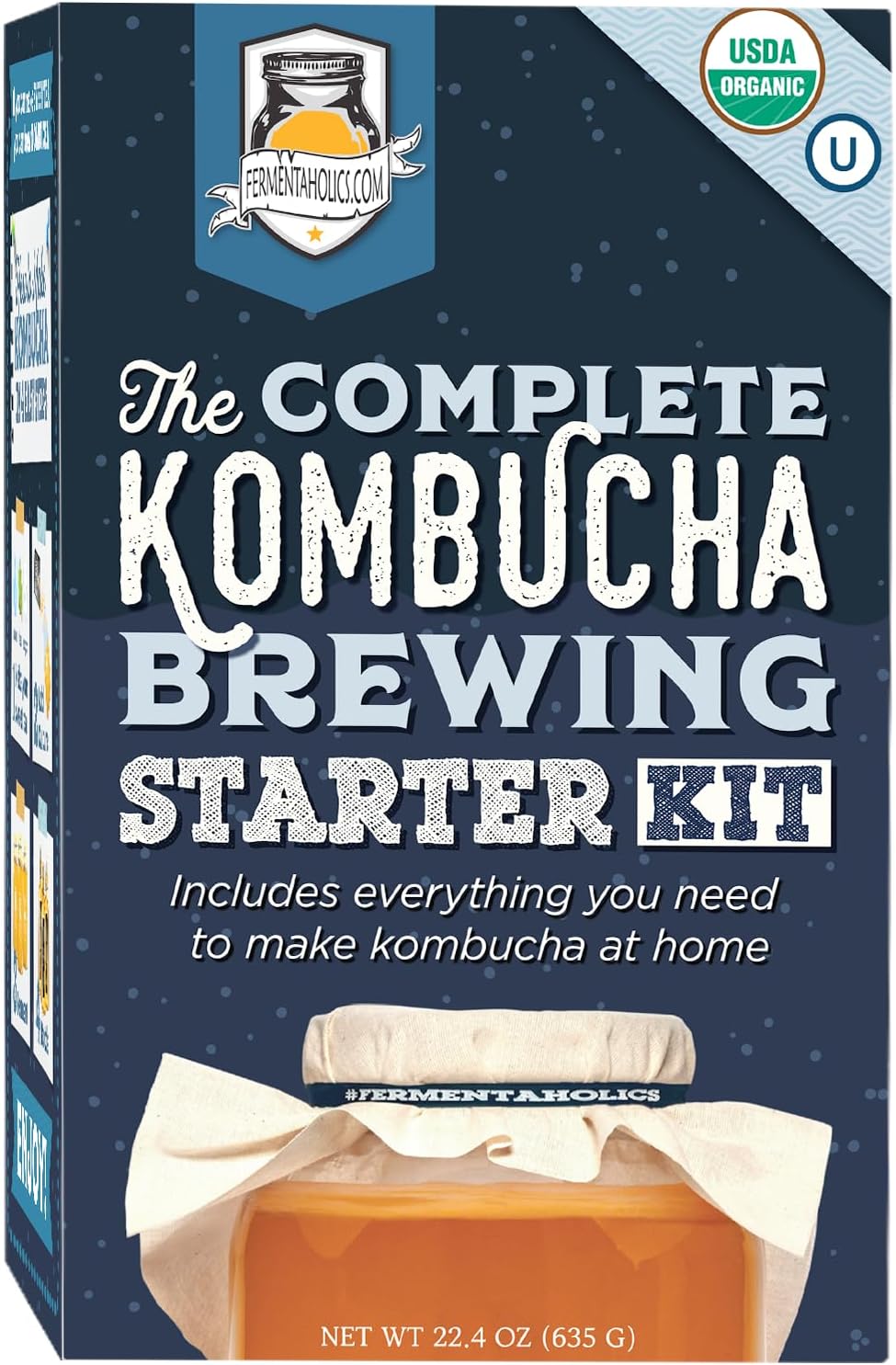
Beyond health considerations, practical factors often drive the choice. Kombucha's widespread availability makes it the obvious starting point for most people. Major brands like GT's Living Foods and Health-Ade are found in most grocery stores, with bottles ranging from $3-6. If you're inspired to start brewing at home, the Deluxe Kombucha Starter Kit includes everything needed to get started, including bottles for your finished brew.
Jun remains a niche product with very limited commercial options. Wild Tonic offers one of the few nationally distributed Jun products, while smaller producers like Huney Jun serve local markets. Expect to pay $5-8 per bottle—the premium reflects both raw honey's cost and limited production scale. For straining your Jun or kombucha during bottling, a quality stainless steel colander or fine mesh strainer helps remove any SCOBY pieces.
Making Your Own Jun vs Kombucha
Home Brewing Comparison
| Factor | Kombucha | Jun |
|---|---|---|
| Initial Setup Cost | $30-50 | $40-70 |
| Per Batch Cost | $2-4 (16 oz bottles) | $6-10 (16 oz bottles) |
| Difficulty Level | Beginner-friendly | Intermediate |
| Time Investment | 15 min prep + waiting | 20 min prep + waiting |
| Success Rate | 90%+ | 70-80% |
| Temperature Control | Room temp OK | May need cooling |
| Ingredient Availability | Everywhere | Specialty stores |
| Storage Stability | Very stable | More sensitive |

Home brewing offers the best value and control over ingredients for both beverages. A basic kombucha setup requires:
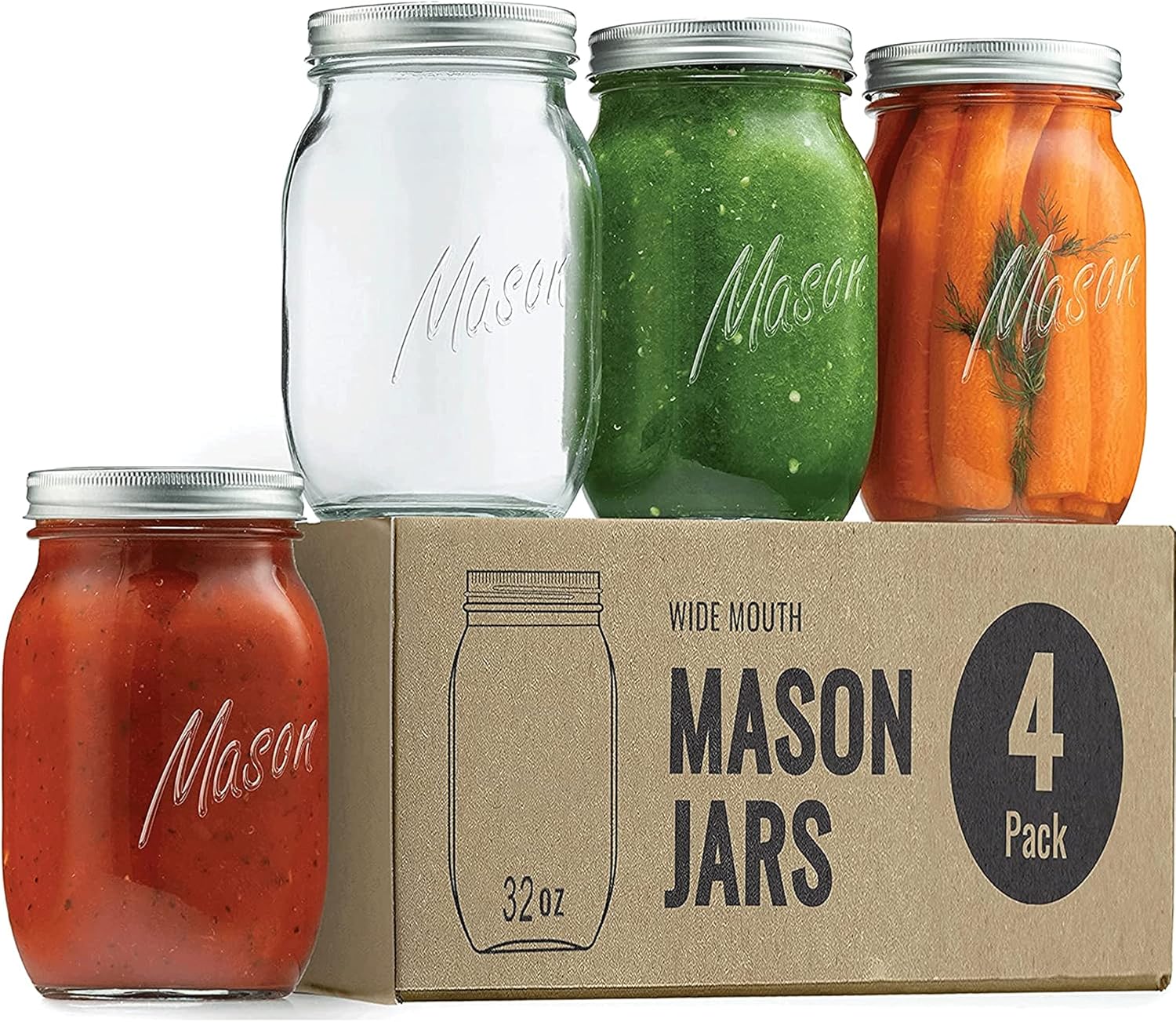
- Glass brewing jar (wide-mouth mason jars work perfectly)
- SCOBY with starter tea ($15-25) - consider a complete starter kit for beginners
- Tea and sugar
- Temperature range of 72-80°F
- 7-14 days patience
For those ready to dive deeper into fermentation science, The Noma Guide to Fermentation offers professional-level insights that apply to both kombucha and Jun.
Jun brewing demands more attention:
- Jun SCOBY with starter ($25-35) - harder to find than standard kombucha SCOBYs
- High-quality green tea and raw honey
- Cooler location (65-75°F)
- Only 4-7 days fermentation
- Greater sensitivity to disturbance
For serious brewers ready to scale up production, the Pro Kombucha Brewing Kit provides commercial-grade equipment that works well for both kombucha and Jun. Don't forget proper storage containers with leak-proof lids for mason jars to keep your finished brew fresh.
Home brewing costs approximately $0.50-1.00 per bottle versus $3-8 retail, making it attractive for regular consumers. However, Jun's temperamental nature and specific requirements make it better suited for experienced fermenters. For organization and tracking your fermentation batches, a label maker helps keep track of brew dates and flavors—essential when you start experimenting with multiple batches.
Where to Buy
For kombucha, check any health food store, most supermarkets, or online retailers. Popular brands offer consistent quality and diverse flavors. Local kombucha bars and farmers markets often feature small-batch varieties. When you're ready to brew your own, quality mason jars provide the perfect fermentation vessel.
Jun requires more hunting. Wild Tonic ships nationally through Amazon and Instacart. Unity Jun specializes in SCOBYs for home brewing. Local fermentation groups might connect you with Jun cultures and experienced brewers who can share tips. For those who prefer convenience, a Bluetooth label printer can help create professional-looking labels for your homemade bottles.
Conclusion

The Jun vs kombucha debate ultimately comes down to personal preference, practical considerations, and individual health goals. While neither beverage has robust scientific evidence for dramatic health claims, both offer the proven benefits of tea, beneficial organic acids, and potential probiotic effects.
Kombucha's accessibility, established safety profile, and growing body of research make it the practical choice for most people exploring fermented beverages. Jun appeals to those seeking a refined, less acidic option who don't mind the higher cost and brewing challenges.
Rather than declaring one definitively healthier, consider both as part of a diverse, whole-foods approach to nutrition. Start with kombucha to develop your palate and understanding of fermented teas, then explore Jun if you're drawn to its unique characteristics. Whether you're using regular mouth mason jar lids for smaller batches or scaling up production, remember that the healthiest fermented beverage is the one you'll actually drink regularly as part of a balanced diet.
FAQ Section

Q: Can I use a kombucha SCOBY to make Jun? A: While possible, it's not recommended. Kombucha SCOBYs must adapt to honey over several batches, often producing inferior results. Starting with a true Jun culture ensures better flavor and fermentation.
Q: Is Jun safe for people avoiding alcohol? A: Jun typically contains around 1-2% ABV—more than kombucha, and enough that anyone avoiding alcohol entirely should be cautious (a long second ferment can push it higher). Kombucha's sub-0.5% content makes it the safer choice for alcohol-free diets.
Q: How do I know if my Jun or kombucha has gone bad? A: Look for mold (fuzzy, colored growth), off odors beyond normal fermentation smells, or unusual SCOBY appearance. When in doubt, throw it out and start fresh.
Q: Can pregnant women drink Jun or kombucha? A: Most healthcare providers recommend avoiding both during pregnancy due to potential alcohol content, variable probiotic strains, and lack of safety studies. Consult your doctor for personalized advice.
Q: Which is better for weight loss, Jun or kombucha? A: Neither beverage has proven weight loss benefits. Both are relatively low in calories when unflavored (30-50 calories per 8 oz), but commercial varieties often contain added sugars. Focus on overall diet quality rather than expecting miraculous effects from any single beverage.
Q: How much kombucha or Jun should I drink daily? A: Start with 4-8 oz daily and gradually increase if well-tolerated. Some people consume up to 16 oz daily, but excessive amounts can cause digestive upset due to the acidity and probiotic content.
Q: Can I flavor Jun like kombucha? A: Yes! Jun takes well to second fermentation with fruits, herbs, and spices. Popular additions include ginger, elderflower, lavender, and berries. The honey base complements floral and herbal flavors especially well.
Q: What about caffeine content? A: Both beverages contain reduced caffeine compared to their tea bases due to fermentation. Kombucha made with black tea contains approximately 10-15mg per 8 oz, while Jun (made with green tea) contains 8-12mg per 8 oz.
Q: Do I need to worry about contamination? A: Both beverages' acidic nature (pH 2.5-3.5) creates an inhospitable environment for harmful bacteria. However, always use clean equipment, glass containers, and proper brewing techniques. Never use metal utensils or containers that could react with the acids.
References
- Kapp JM, Sumner W. Kombucha: a systematic review of the empirical evidence of human health benefit. Ann Epidemiol. 2019;30:66-70.
- Mendelson C, et al. Kombucha tea as an anti-hyperglycemic agent in humans with diabetes – a randomized controlled pilot trial. Front Nutr. 2023.
- Atkinson FS, et al. Glycemic index and insulin index after a standard carbohydrate meal consumed with live kombucha: A randomised, placebo-controlled, crossover trial. Front Nutr. 2023.
- Jayabalan R, et al. A review on kombucha tea—Microbiology, composition, fermentation, beneficial effects, toxicity, and tea fungus. Compr Rev Food Sci Food Saf. 2014.
- Villarreal-Soto SA, et al. Understanding kombucha tea fermentation: A review. J Food Sci. 2018.
- Martínez Leal J, et al. A review on health benefits of kombucha nutritional compounds and metabolites. CyTA - Journal of Food. 2018.