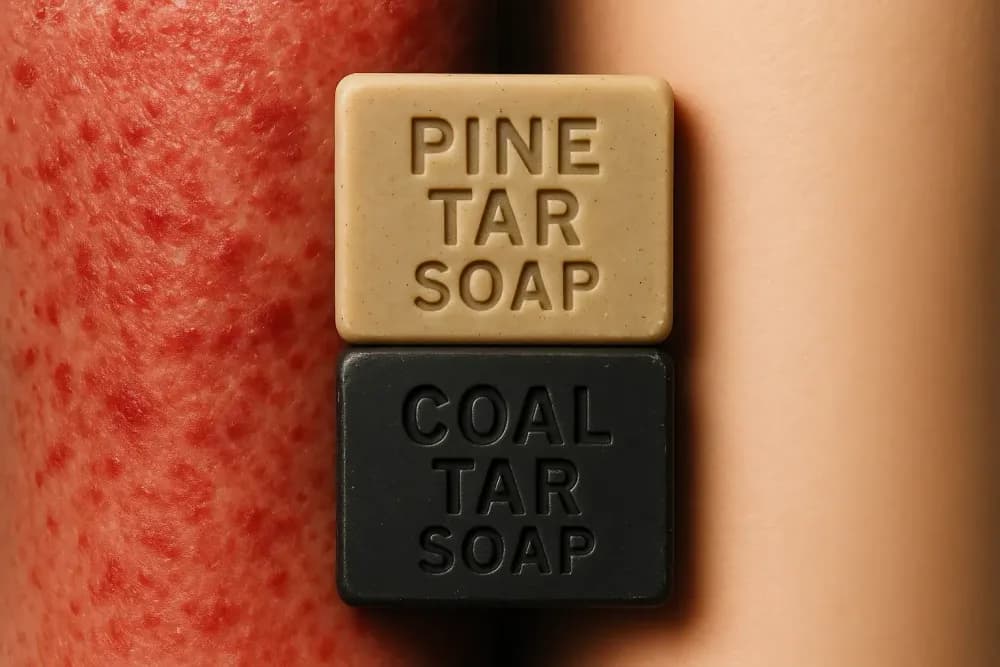
Discover how 2,000-year-old tar soaps can calm angry skin when modern medicine fails—plus the science behind why tree sap and coal derivatives actually work
Quick Summary: This comprehensive guide explores tar soap effectiveness for psoriasis and eczema, comparing pine tar vs coal tar options. Learn the science, safety, and real-world results from someone who's been there.
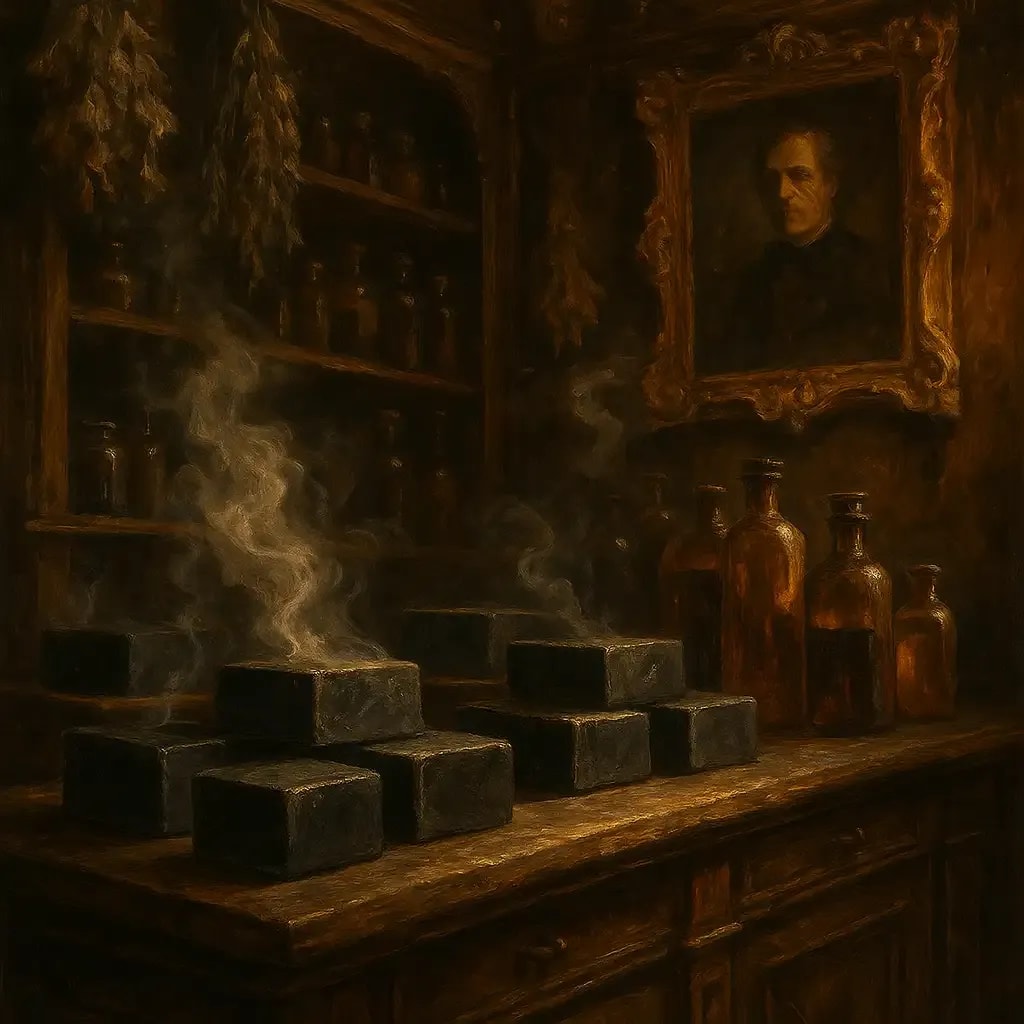
Picture this: You're standing in the health store's soap aisle, scratching that stubborn patch of skin that just won't quit, when you spot something that looks excavated from a Victorian apothecary—tar soap. Yes, TAR. The same stuff they put on roads.
But here's the wild part: your great-grandmother was onto something, and modern science has more to say about these tar soaps than you might expect — though, as we'll see, most of the real evidence is for coal tar, not pine tar.
If you've been following my journey, you know I've already fallen hard for Grandpa's Pine Tar Soap (spoiler: it still smells like a tire fire, but my psoriasis doesn't care). Today, we're diving deeper than my personal love affair with stinky soap. We're exploring the actual science, the pine tar versus coal tar showdown, and whether this ancient remedy is right for YOUR angry skin.
Buckle up. We're about to get nerdy about tree sap.
The 2,000-Year History of Tar Soap

When Hippocrates Was Your Dermatologist
Before fancy biologics and UV light boxes existed, we had trees. Apparently, that was enough.
Pine tar has been used in medicine for more than 2000 years, with Hippocrates himself prescribing it. The "Father of Medicine" was telling ancient Greeks to slather themselves in tree goo. And it worked well enough that people kept doing it for two millennia.
Think about that. We've abandoned bloodletting, trepanning, and mercury treatments (thank God), but tar soap? This sticky survivor has stuck around through every medical revolution — though longevity of use is history, not proof of effectiveness.
From Ship Protection to Skin Protection

Pine tar's medical benefits were discovered by accident—like penicillin, but smellier. Scandinavian sailors used pine tar to waterproof their ships and rigging. British sailors were literally nicknamed "tars" because they were constantly covered in the stuff.
These tar-covered seafarers noticed something interesting: their hands—despite harsh sea conditions—were surprisingly healthy. No infections. Fewer skin problems. Being perpetually sticky was actually... beneficial?
Fast forward to Colonial America, where pine tar became such a money-maker that entire forests were devoted to its production. They exported it back to Europe faster than you can say "inflammation reduction."
The Science: How Tar Soap Works on Psoriasis and Eczema
Now for the important question: WHY does tree juice help psoriasis and eczema?
Your Skin Cells Are Throwing a Party (And Tar Is the Bouncer)
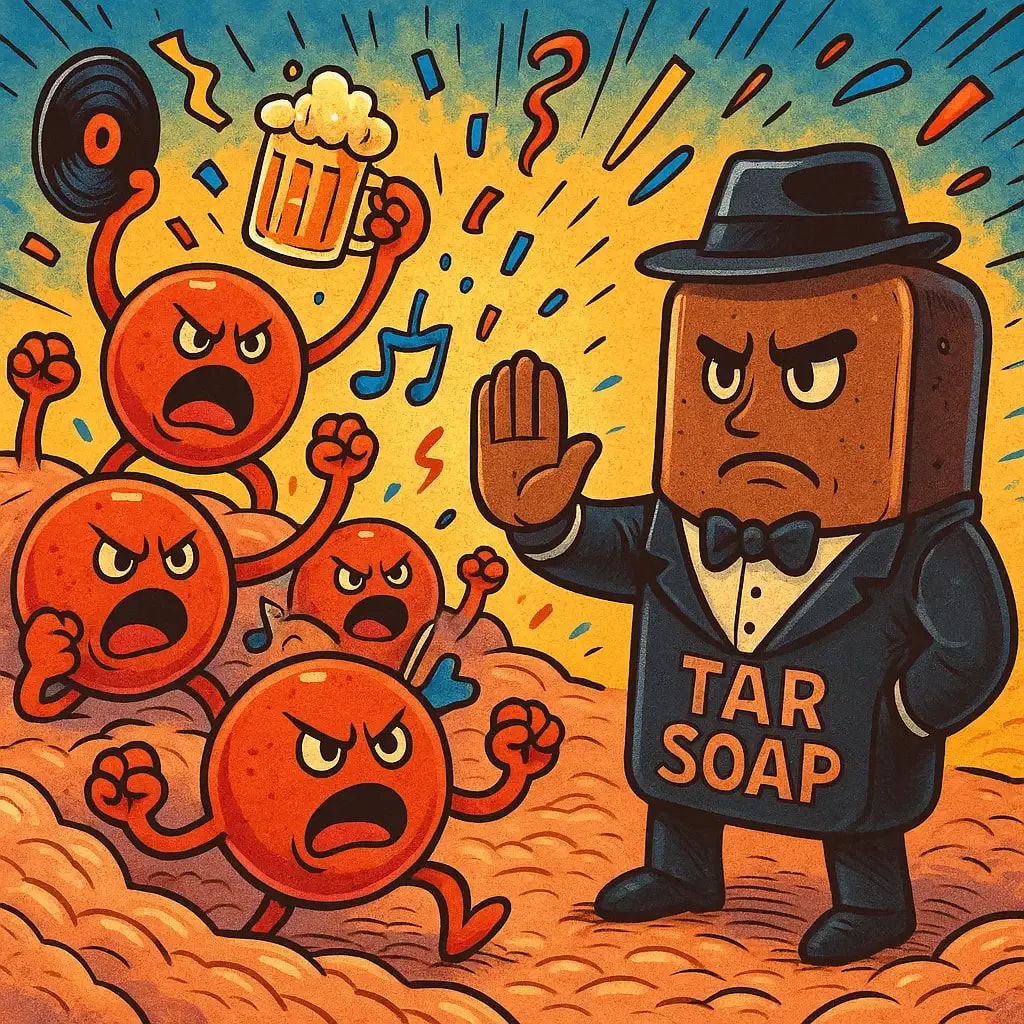
In psoriasis and eczema, your skin cells behave like that neighbor who throws parties every night. Normal skin cells take about a month to mature and shed. Psoriasis skin cells? They're speed-running the process in 3-7 days, creating those characteristic plaques and scales.
Coal tar helps slow the rapid growth of skin cells and restore the skin's appearance. Think of tar as the responsible adult who tells everyone the party's over. It literally slows down hyperactive skin cells, giving them time to develop properly.
The AHR Receptor: Your Skin's Hidden Reset Button
Here's where it gets fascinating. A 2013 study found that coal tar activated the aryl hydrocarbon receptor (AHR), resulting in induction of epidermal differentiation. Translation: tar flips a switch in your skin that tells it to stop freaking out and start acting normal.
In lab studies, coal tar also increased filaggrin expression in skin cells and counteracted the immune signaling that lowers skin-barrier proteins. In plain English: in the lab it nudges skin-barrier genes in a helpful direction — a promising mechanism, though that's a cell-level finding, not proof of barrier "repair" in everyday use.
The Multi-Action Approach of Tar Soap
Tar soap doesn't just do one thing—it's a Swiss Army knife for your skin:
- Anti-inflammatory: Reduces redness and swelling
- Antimicrobial: Fights bacteria that worsen flares
- Keratolytic: Helps soften and shed thick scale
- Antipruritic: Stops the maddening itch
- Keratolytic: Gently removes scales
Effectiveness: What Research Really Shows
Let's move beyond theory. Does tar soap actually work in real life?
Tar Soap for Psoriasis: The Evidence
A review found most studies supported coal tar for psoriasis — but the honest caveat is that those trials are largely old, small, and low-quality (one systematic review found only 2 of 25 were placebo-controlled), so "majority support" overstates how strong the evidence really is.
Some people get a good stretch of clear skin — though psoriasis is a relapsing-remitting disease, so remission is part of its natural course rather than something a soap "delivers," and the evidence here is limited. Keep expectations realistic.
Here's the surprising part: One study reported a 1% coal tar preparation performing comparably to a stronger one — a single finding, not a general rule; the recognized OTC range is 0.5-5%. More isn't always better. Sometimes your skin needs a gentle nudge, not a tar tsunami.
Tar Soap for Eczema: Promising Results
The eczema research is particularly exciting. A small pediatric study found improvements in eczema severity, itch, and Staphylococcus aureus levels among children who bathed with pine tar — encouraging, but small, and pine tar still lacks the large, modern controlled trials that would firmly establish these benefits.
Translation: Pine tar didn't just improve skin appearance—it reduced harmful bacteria AND calmed the immune system's overreaction.
Real-World Results
Here's what actual users experience:
The Good:
- many users report improvement within a few weeks, though response varies and high-quality data are limited
- Itch relief often starts within days
- Many achieve long remissions
- An inexpensive option some people add alongside other treatments
The Reality:
- Not everyone responds
- Results vary by condition severity
- Some can't tolerate smell or drying effects
- It's management, not cure
Pine Tar vs Coal Tar: Complete Comparison
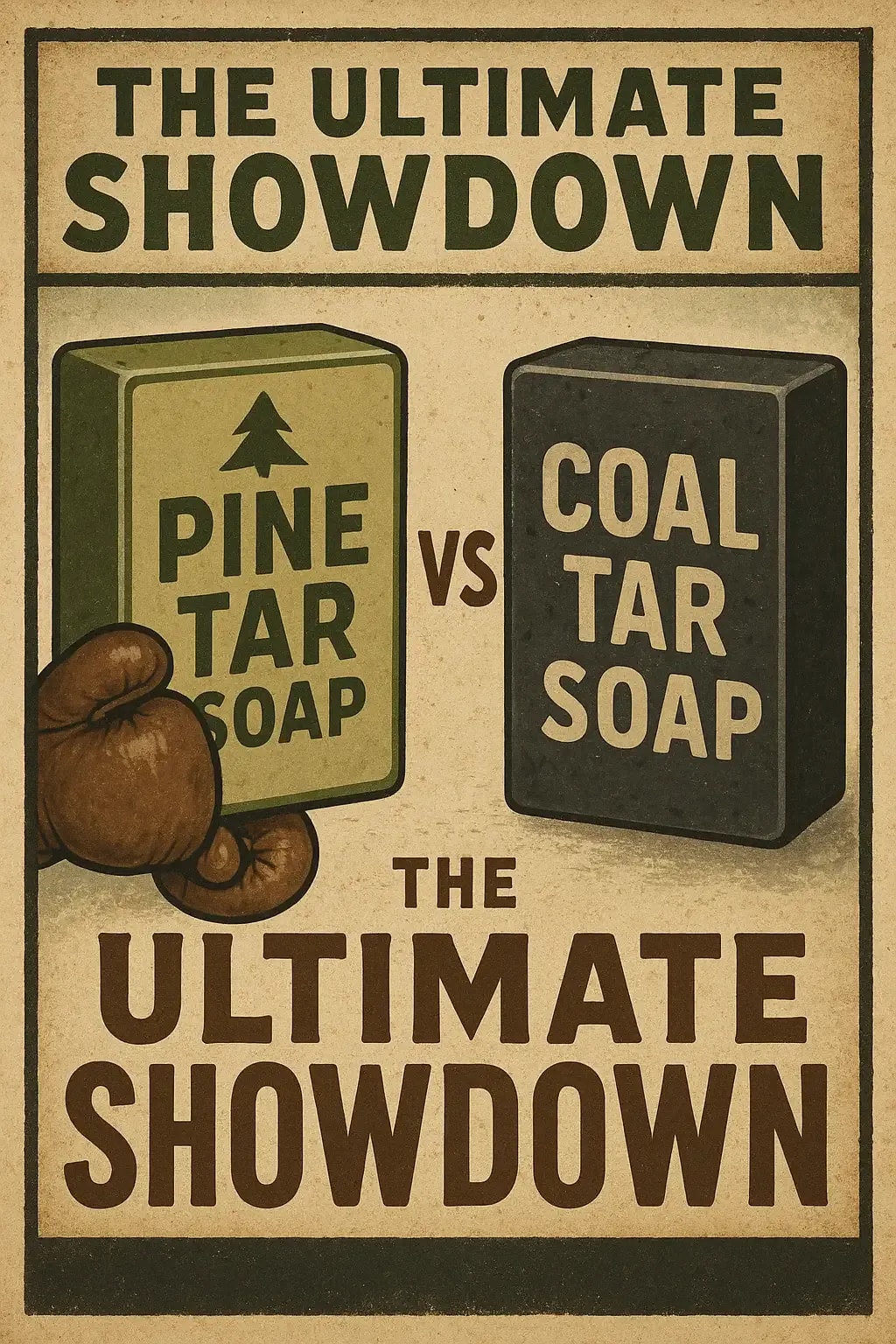
Time for the main event! Let's compare these two tar soap options head-to-head.
Origins and Production
Pine Tar: Made from burning pine wood in low-oxygen environments. It's concentrated tree essence. 100% pine tar from Swedish pine processed using traditional carbonization is the gold standard.
Coal Tar: A byproduct of converting coal into coke or gas. Contains thousands of compounds scientists are still identifying.
The Smell Factor
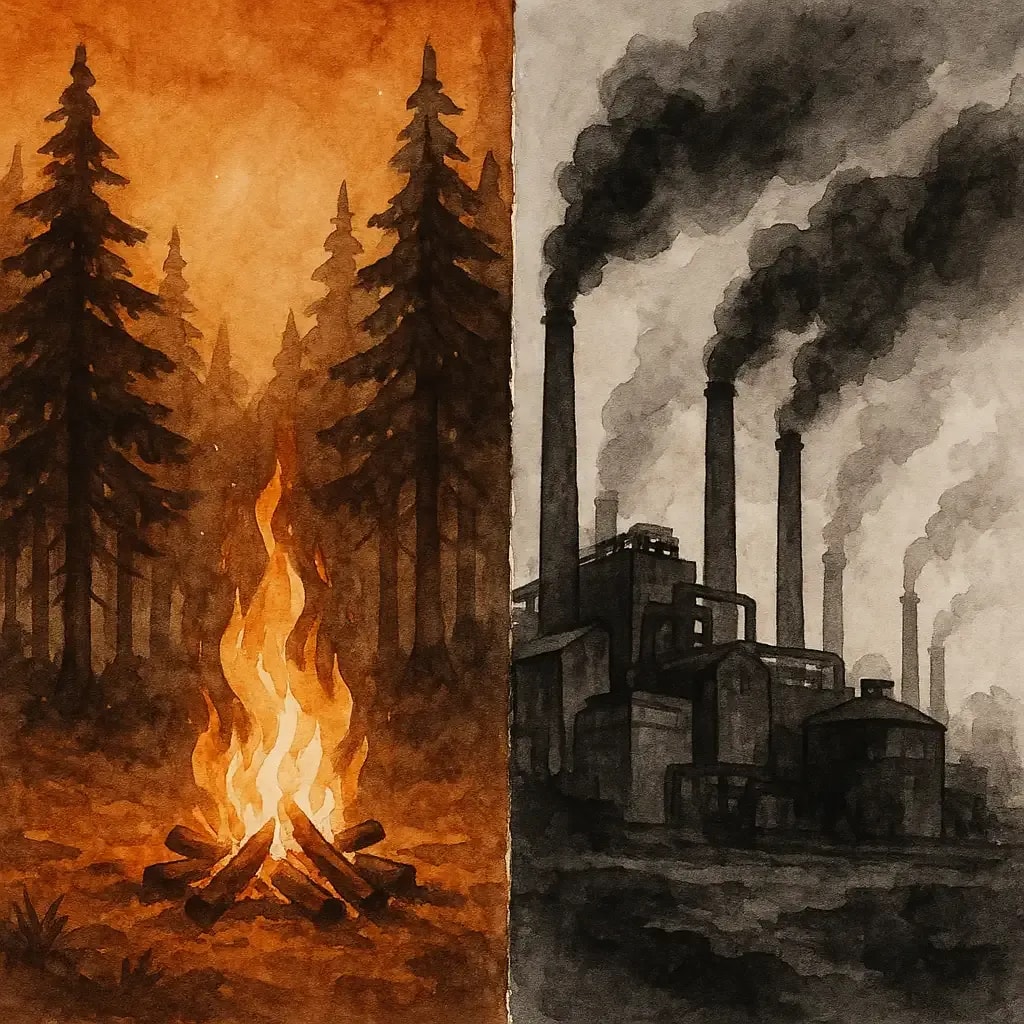
Let's address the elephant in the room—or should I say, the campfire in the bathroom.
Pine Tar: Smells like a campfire had a baby with a tire shop. However—crucially—it has a rugged, outdoorsy scent that doesn't linger on skin. Your bathroom smells like a lumber mill; you smell like a lumberjack.
Coal Tar: Strong and medicinal, like "hospital merged with coal mine." The smell announces "I have a serious skin condition." Tends to linger longer and stains more readily.
Effectiveness Comparison
Coal tar soap is generally considered more effective than pine tar soap in treating psoriasis, as it has more scientific evidence to support its use.
However, pine tar users report gentler, more pleasant experiences with similar (if slightly less dramatic) results. It's like choosing between a sledgehammer and a regular hammer—both drive the nail, but one might crack your wall.
Safety Profile Analysis
This is where pine tar pulls ahead decisively.
Pine Tar: Modern purified pine tar contains very low or undetectable carcinogenic PAHs. Its main real risk is allergic contact dermatitis (about 1% of users), so patch-test a small area before regular use — "natural" doesn't automatically mean risk-free.
Coal Tar: The cancer question has haunted coal tar for decades. While a 2010 study of 13,200 patients found no increased cancer risk with medicinal use, concerns linger. California requires cancer warnings on products with >0.5% coal tar.
The Verdict
- Mild to moderate symptoms + gentle approach: Choose pine tar
- Severe, stubborn plaques + don't mind nuclear option: Try coal tar (with dermatologist guidance)
Safety, Side Effects, and Warnings
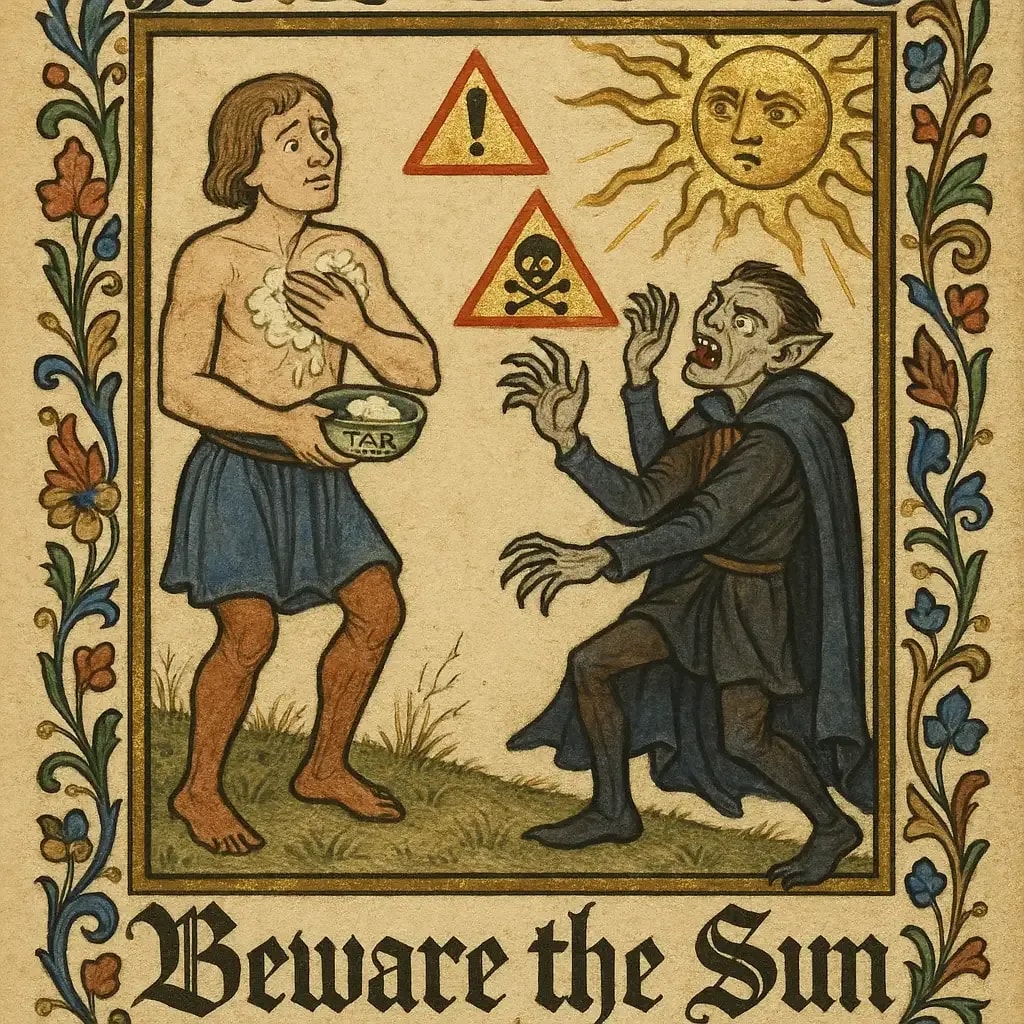
Let's discuss what soap companies don't advertise in bold letters.
Common Side Effects for All Tar Soaps
-
Photosensitivity: Both make you UV-sensitive for 24 hours. You're basically a temporary vampire. Sunscreen becomes mandatory.
-
Drying Effects: Tar strips oils indiscriminately. Moisturizer becomes your new religion.
-
Staining Issues: Coal tar especially stains everything. Pine tar is more forgiving but not innocent.
-
Hair Changes: Can make hair dry or brittle. Condition religiously if using on scalp.
Critical Warnings for Special Populations
Pregnancy and Breastfeeding: Coal tar has shown risks in animal studies and is best avoided in pregnancy generally (not just the first trimester). Pine tar's safety in pregnancy isn't well established either, so consult your doctor.
Before you start: patch-test any tar soap on a small area for 24-48 hours first, and see a dermatologist to confirm your diagnosis and plan — tar soap is an add-on, not a replacement for prescribed treatment.
Coal tar applied topically to maternal skin can result in absorption by the infant through skin-to-skin contact. Breastfeeding mothers should either avoid tar soaps or be extremely careful about skin-to-skin contact.
Children: Too few clinical trials have studied coal tar as a treatment for childhood eczema. Pine tar seems gentler, but start slowly and monitor carefully.
Complete User Guide: How to Use Tar Soap
After months of personal experience and extensive research, here's your practical roadmap.
Choosing the Right Tar Soap
Start with pine tar if:
- You have mild to moderate symptoms
- You're sensitive to harsh treatments
- Smell matters to you
- You're new to tar soap
Consider coal tar if:
- Pine tar isn't sufficient
- You have severe plaques
- Industrial aromas don't bother you
- Your dermatologist recommends it
The Optimal Application Technique
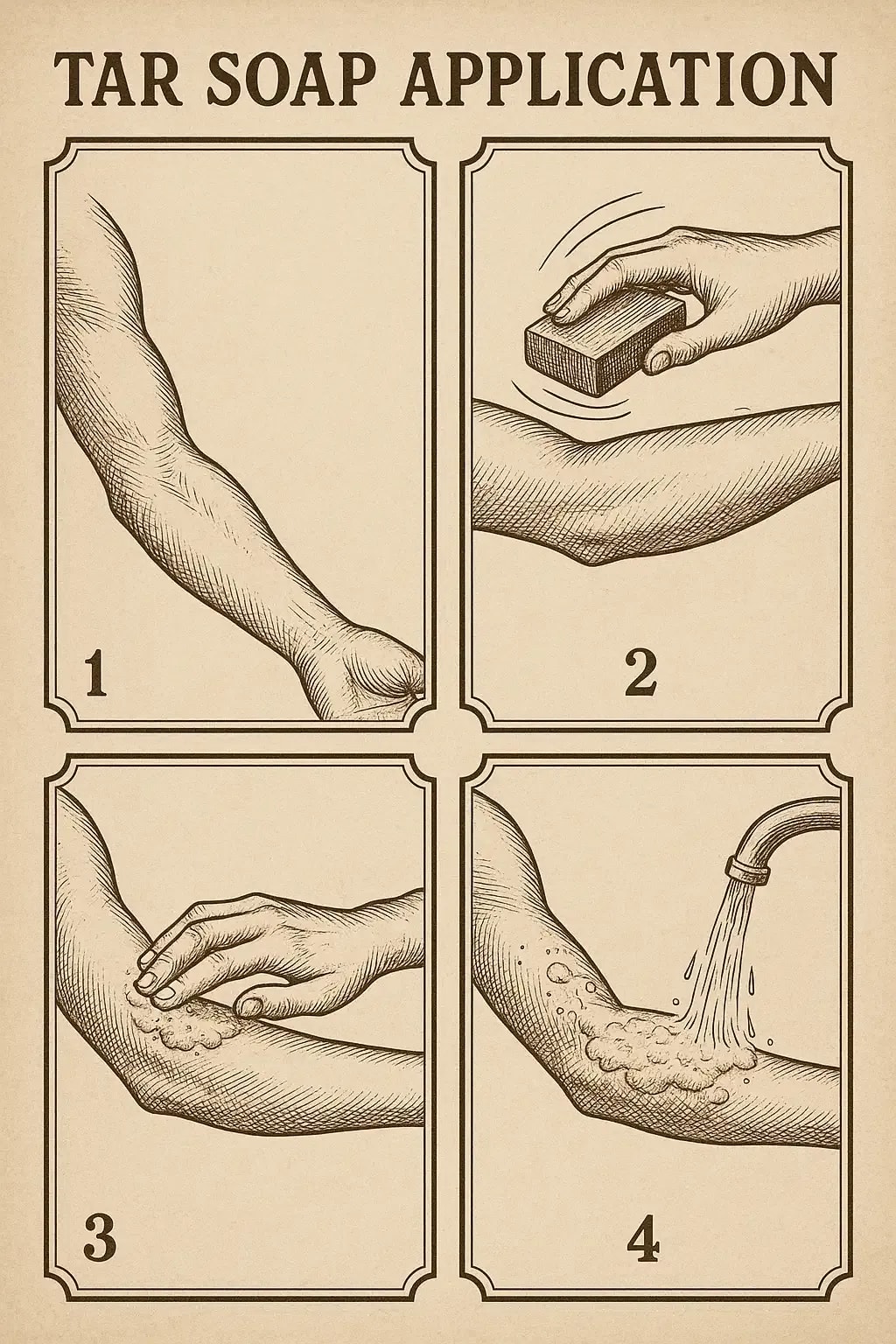
- Prep: Use lukewarm water (hot water worsens inflammation)
- Lather: Create good foam (yes, tar soap foams!)
- Apply: Target problem areas first
- Critical Step: Let sit for 2-3 minutes (set a timer—this matters)
- Rinse: Thoroughly, then rinse again
- Dry: Pat gently—never rub
- Moisturize: Within 3 minutes. Non-negotiable.
Realistic Timeline for Results
- Week 1: "What have I done?" phase
- Week 2: Itch begins calming
- Weeks 3-4: Visible improvements
- Month 2: Evangelical phase begins
- Month 3: You've named your soap
Storage and Relationship Preservation
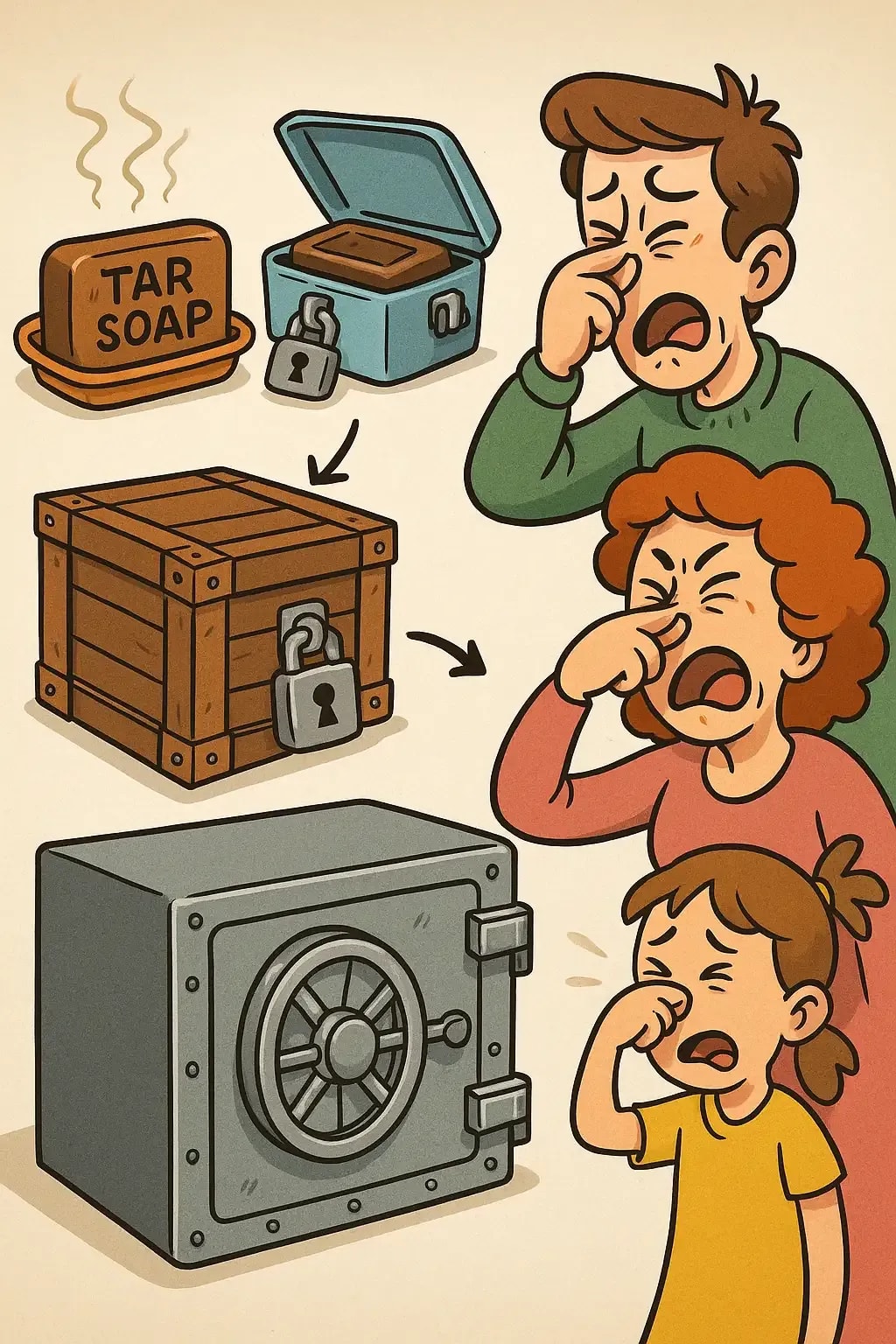
Learn from my storage container saga:
- Airtight containers are essential
- Keep bars completely dry between uses
- Use soap dishes with drainage
- Consider advance warning for household members
Combination Strategies
Tar soap works best as part of a routine:
- Morning: Tar soap shower
- Evening: Gentle moisturizing
- Flare-ups: Tar soap plus prescribed topicals
- Maintenance: Alternate with gentler options
Making the Right Choice for Your Skin
After extensive research, here's my honest assessment:
Tar soap is undeniably weird. It smells bizarre, looks medieval, and requires industrial-grade ventilation.
But it works. Not universally, not perfectly, but consistently enough to survive 2,000 years of medical advancement.
Decision Framework
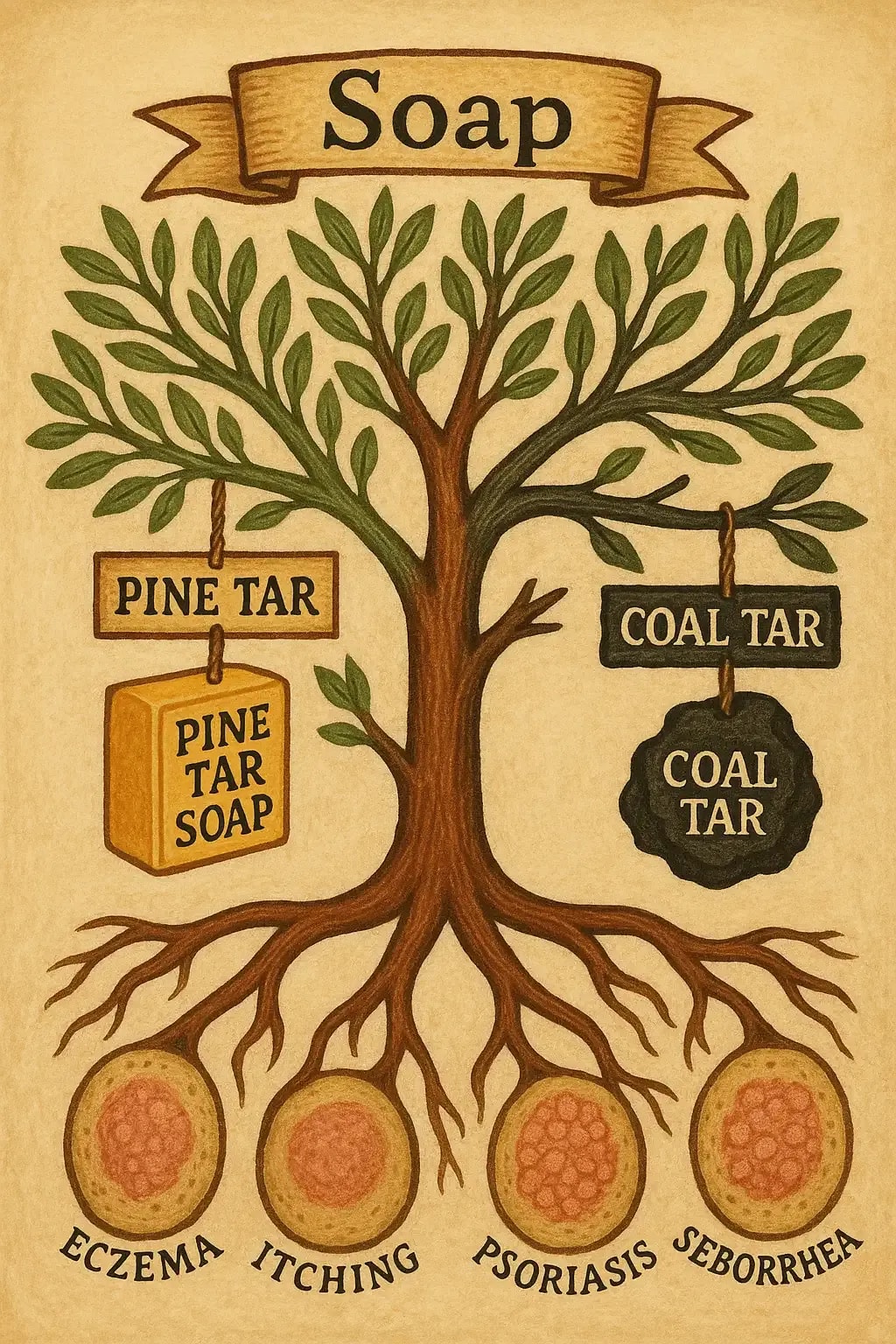
Psoriasis/Eczema Sufferer?
├── Tried everything? → Pine tar soap
├── Need maximum strength? → Coal tar (with supervision)
├── Smell-sensitive? → Pine tar or reconsider
└── Desperate? → Start with pine tar today
Cost Analysis
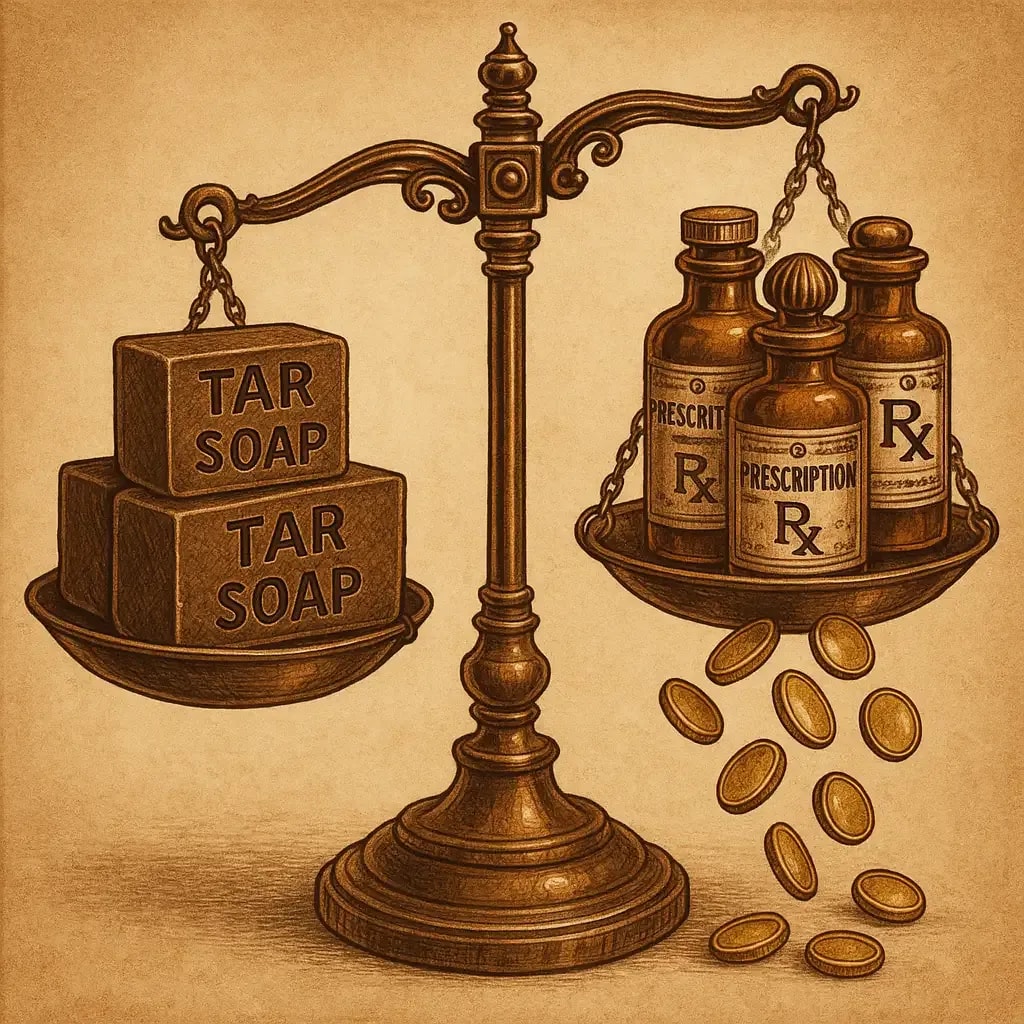
- Pine tar soap: $4-8/bar × 2 bars/month = $8-16/month
- Prescription copays: $30-100+/month
- Quality of life improvement: Invaluable
Final Thoughts: Ancient Wisdom Meets Modern Need
Two thousand years of tar soap use teaches us something profound: Sometimes old solutions address fundamental problems better than modern complexity. While laboratories create expensive molecules, trees have been producing anti-inflammatory compounds since before humans discovered fire.
Will tar soap cure your skin condition? No. These are chronic conditions we manage, not defeat.
Can a bar of stinky tree juice deliver clearer skin and short-sleeve confidence?
In my experience, absolutely.
Just warn your loved ones about the smell. And invest in apology chocolate.
Ready to try tar soap? Read my detailed 3-month review of Grandpa's Pine Tar Soap or find it on our equipment page.

Disclaimer: I'm a psoriasis sufferer who found something effective, not a medical professional. Always consult healthcare providers about skin conditions, especially if pregnant, breastfeeding, or treating children.
Quick Reference: Pine Tar vs Coal Tar Soap
| Feature | Pine Tar Soap | Coal Tar Soap |
|---|---|---|
| Best For | Mild-moderate symptoms | Severe symptoms |
| Smell | Campfire/outdoorsy | Medicinal/industrial |
| Safety | Generally safer | More concerns |
| Effectiveness | Good maintenance | Stronger results |
| Staining | Minimal | Significant |
| Price Range | $4-8/bar | $5-10/bar |
Key Takeaways
✓ Pine tar has a long traditional history (coal tar is a more recent, better-studied product)
✓ Work by slowing skin cell turnover and reducing inflammation
✓ 84% of studies support effectiveness for psoriasis
✓ Pine tar is gentler, coal tar is stronger
✓ Side effects are manageable with proper use
✓ Not a cure, but an effective management tool
✓ Always moisturize after use
✓ Allow 3-4 weeks before judging results