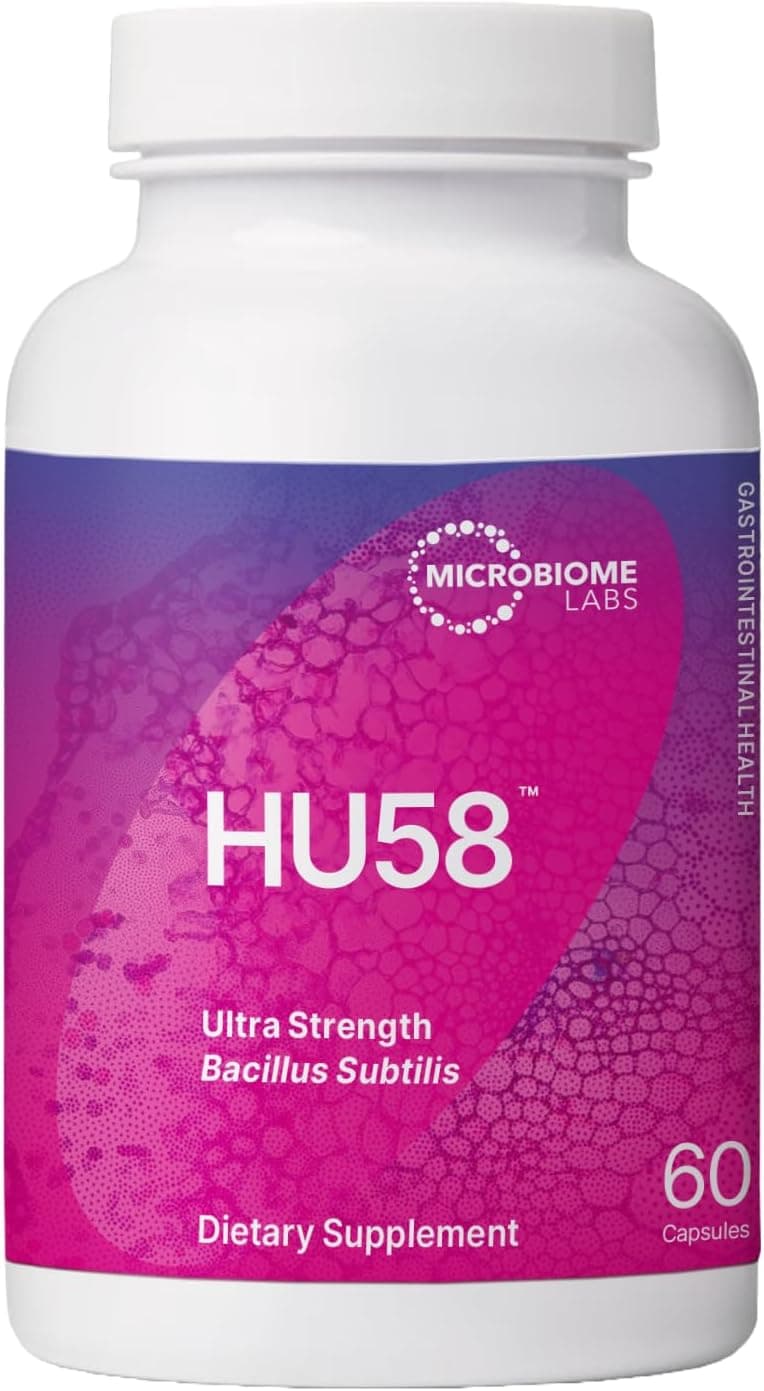
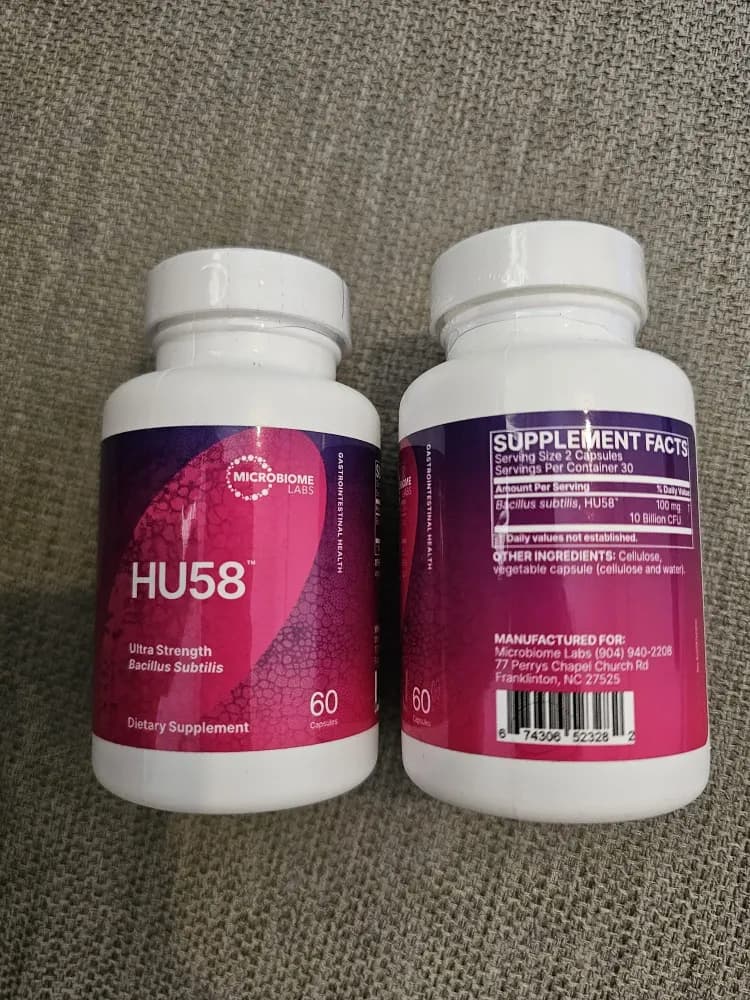
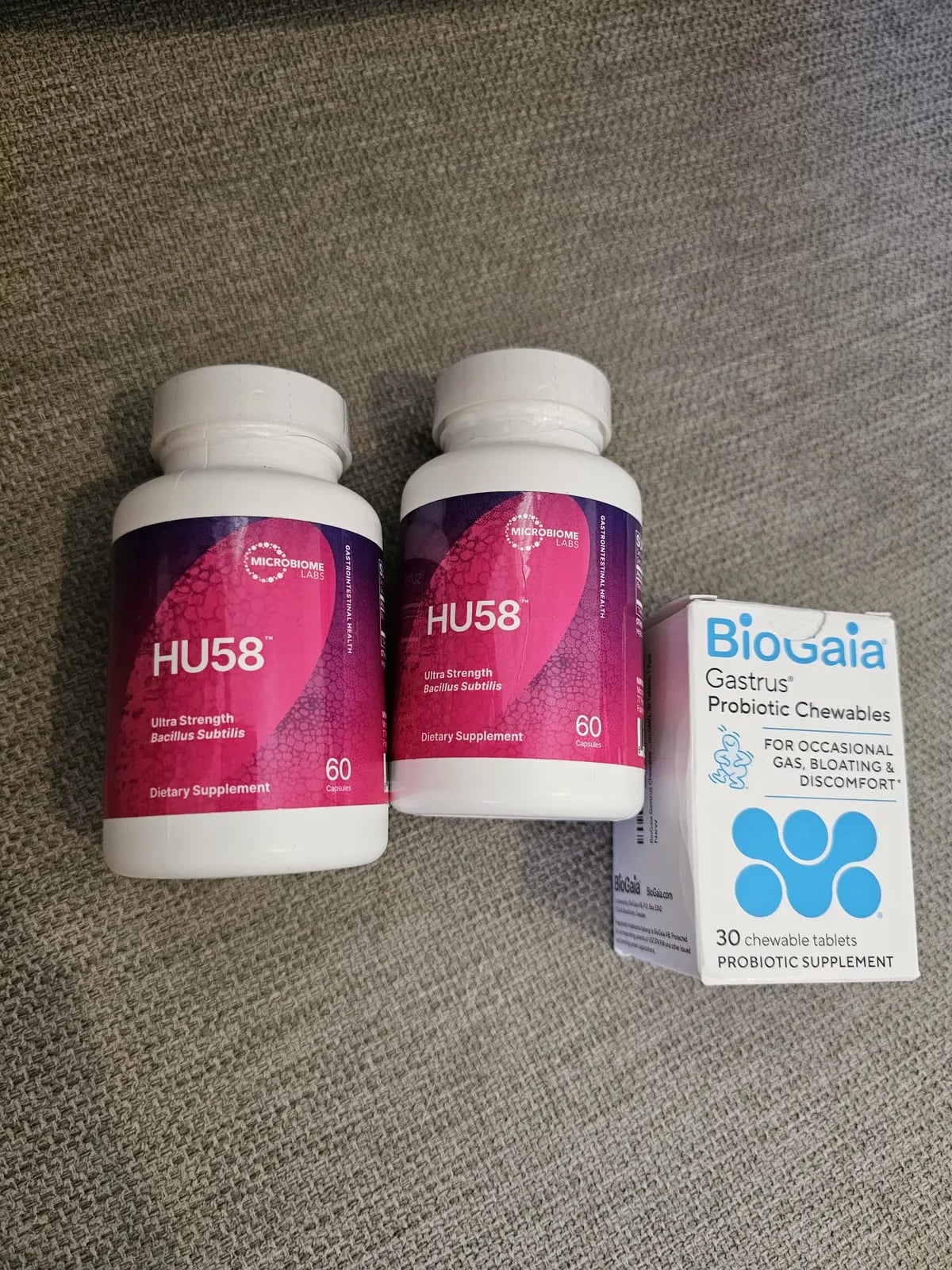
Some deliveries just make your week. A friend of ours just got back from the States and brought me something I'd been waiting on for a while: a fresh supply of Bacillus subtilis HU58.
If you've been following along, you know we've made Dr. Davis's SIBO yogurt religiously for three years now — the classic triple-strain version, a fresh batch every couple of weeks, and we genuinely love it. But the recipe has evolved, and I've finally got what I need to catch up.
#What actually changed
In his 2025 update, Dr. Davis swapped Bacillus coagulans for Bacillus subtilis HU58 as the third strain in the SIBO yogurt — joining L. reuteri and L. gasseri.
It's not a random tweak. HU58 is a hardy, spore-forming probiotic that tends to ferment more reliably than coagulans, and it brings a little more firepower to the gut: it produces a range of bacteriocins (natural antimicrobial compounds) and helps break down the biofilms that troublesome bacteria hide behind. For a yogurt built to push back SIBO, that's a meaningful upgrade.
I dig into the full reasoning and the updated method in The 2025 SIBO Yogurt Update.
#Why I'm a little nervous (and a lot excited)
Here's the honest part: we love the old recipe. Three years of thick, creamy, reliable batches makes you loyal, and swapping out a strain feels like messing with a good thing.
But the whole point of this yogurt is the gut benefit — and if HU58 is the stronger anti-SIBO player, I want it in the jar. I'm genuinely curious how it'll change the texture and the tang. B. coagulans gave us a lovely, mild set; I have no idea yet how HU58 compares once it's fermented.
#Getting ready
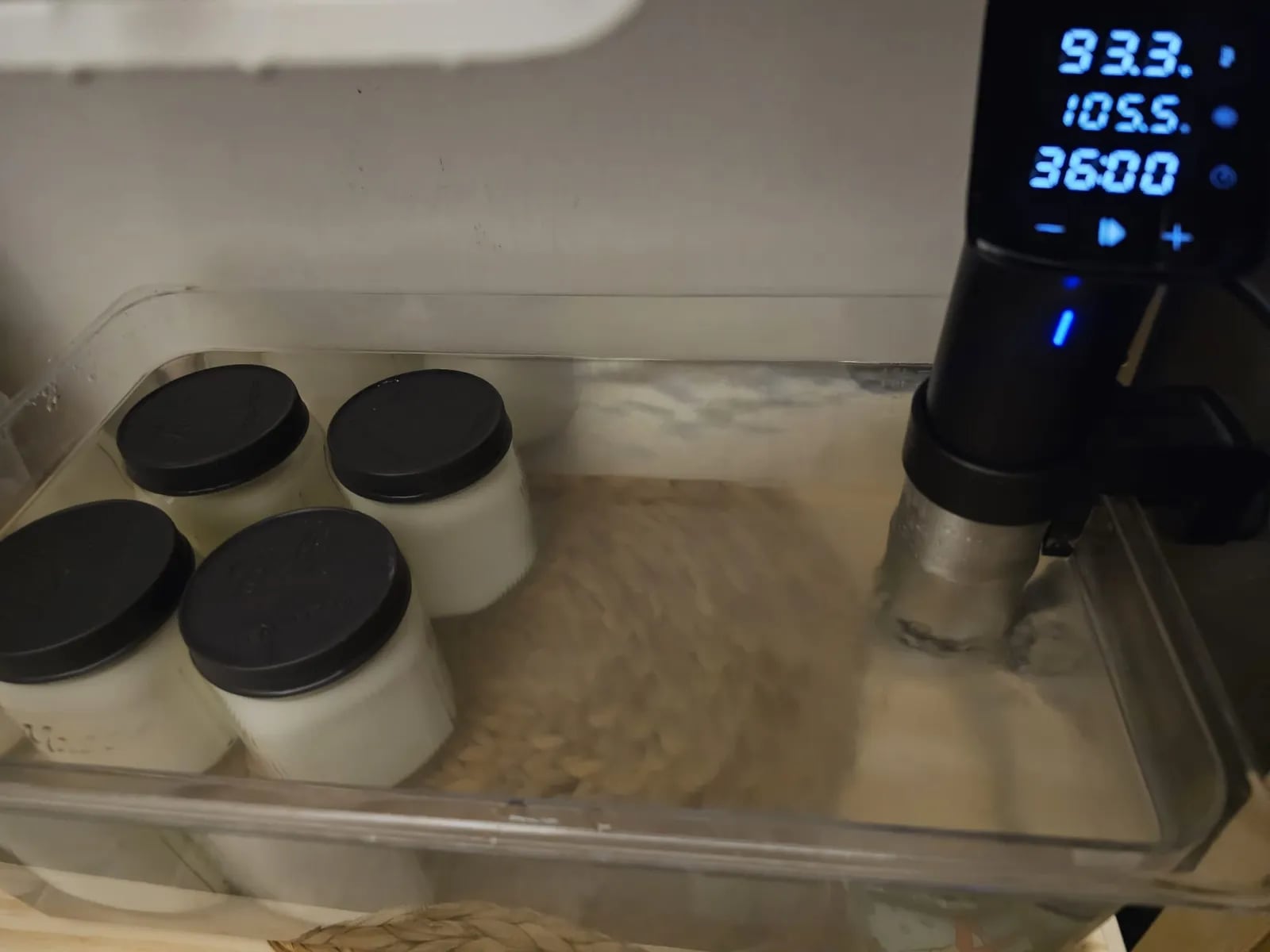
The good news: my core setup doesn't change — same sous-vide rig and Mason jars, same prebiotic fiber. The twist is that I'm running this as a two-part ferment, because HU58 (a Bacillus subtilis) likes gentler conditions than the Lactobacillus strains:
- L. reuteri + L. gasseri together — my usual 106°F for 36 hours.
- HU58 on its own — a cooler ~98.5°F (in the 90–100°F range) for 24 hours, right around body temperature, which suits the Bacillus better.
Then I combine the two at serving time. Fermenting the HU58 separately means it isn't competing with the Lactobacillus strains, and each gets the temperature and time it actually wants.
#Stay tuned
I'm making my first HU58 batch this week, and I'll report back with the full verdict: texture, taste, how it sets, and whether it earns a permanent spot in our rotation.
If you've already made the switch to HU58, I'd love to hear how it went for you. Either way — here's to the next batch. 🥛
#Where to Get HU58
The B. subtilis HU58 culture used in the 2025 SIBO yogurt update: