#Key Takeaways
- Coconut milk works beautifully for both L. reuteri and SIBO yogurt, delivering the same probiotic benefits as dairy versions with a few coconut-specific adjustments.
- Ferment longer, not shorter: coconut milk yogurt needs a full 48 hours — hold 100°F for L. reuteri and 106°F for the three-strain SIBO version.
- Pre-heat and thicken: unlike dairy, canned coconut milk is heated to ~180°F, then thickened with guar gum and raw potato starch (plus a little sugar the microbes eat) so it doesn't separate.
- Add the culture last, and feed it: blending kills microbes, so the starter goes in only after the base cools; the potato starch (and, for SIBO, a spoon of inulin) feeds the bacteria in place of dairy's lactose.
- Choose canned, full-fat, clean coconut milk: just coconut and water (guar gum is fine) — avoid xanthan, gellan and carrageenan, and skip the thin cartons.
- Vegan yogurt opens doors: these dairy-free versions make therapeutic probiotics accessible to vegans and the dairy-sensitive.
Have you ever wanted to share the magic of probiotic yogurt with someone who doesn't do dairy? Here's how I learned that the benefits of L. reuteri and SIBO yogurt aren't locked behind a dairy-only door.
#The Neighbours Who Sheltered Us
I have to tell you about our neighbours, because this recipe honestly exists because of them.
Our building is old — built from little more than sea sand, with no bomb shelter of its own. During the recent war, when the sirens went off in the middle of the night, our only option was to run: my partner eight months pregnant, our old dog in tow, about two minutes down the street to the public underground shelter. It's probably safer down there, but it's cramped, far, and stinking — and some nights the booms started before we'd even made it.
Our neighbours across the street live in a renovated building with proper shelters. When the sirens went off, people there would open up for anyone from the street — there is a real solidarity in most of the population here — and it filled up, crowded as it sometimes got (ours is an old, central neighbourhood without many buildings like that). But the main door only opens with a chip, and on those crazy 2 a.m. runs there was not always someone around to buzz us in. So they handed us one of their own chips — pure compassion for my very pregnant partner, and a safe place seconds from our door that we could reach at any hour. We ended up befriending them, and a whole crowd of neighbourhood folks, down in those shelters. If a war has a perk, maybe that's it.
Our baby has since been born. We're alive, we're together, and we're still fermenting — and I don't take a second of that for granted.
Those neighbours happen to be vegan. They once sweetly gave me a vegan yogurt starter to try, and I wanted to give something real back. I'd been living on the therapeutic L. reuteri yogurt and SIBO yogurt I make, and I kept thinking: why should dairy-eaters be the only ones who get this? So I went down a rabbit hole to make coconut-milk versions I could hand them in a jar. My partner and I still prefer the dairy originals, honestly — but our neighbours' reviews were genuinely enthusiastic, and it opened a door I'm really glad I walked through.
#Why Coconut Milk Works for Probiotic Yogurt
Can you really get the same benefits from plant-based yogurt? Yes—coconut milk can host L. reuteri and other probiotic strains with the same therapeutic potential as dairy versions, though the process takes a few thoughtful adjustments.
The science is encouraging. Research shows that Lactobacillus reuteri can ferment non-dairy substrates¹, including fruit pulp, soy, almond, and coconut milk. The bacteria don't care whether their home is dairy or plant-based—they just need the right conditions to thrive.
But coconut milk is mostly water and fat, and it lacks two things dairy provides naturally:
- Lactose — the natural sugar that feeds probiotic bacteria during fermentation
- Protein structure — the casein that gives dairy yogurt its thick, creamy body
That's why coconut milk needs added prebiotics — the bacteria need food to multiply into those high probiotic counts — and it's why we thicken it (with guar gum and a little potato starch) so it sets like yogurt instead of splitting into water and oil.
The good news? Coconut brings its own perks: it's naturally low in carbohydrate, and coconut has shown anti-fungal activity against Candida albicans, which makes it interesting for gut health.
#The Key Differences: Coconut vs. Dairy Fermentation
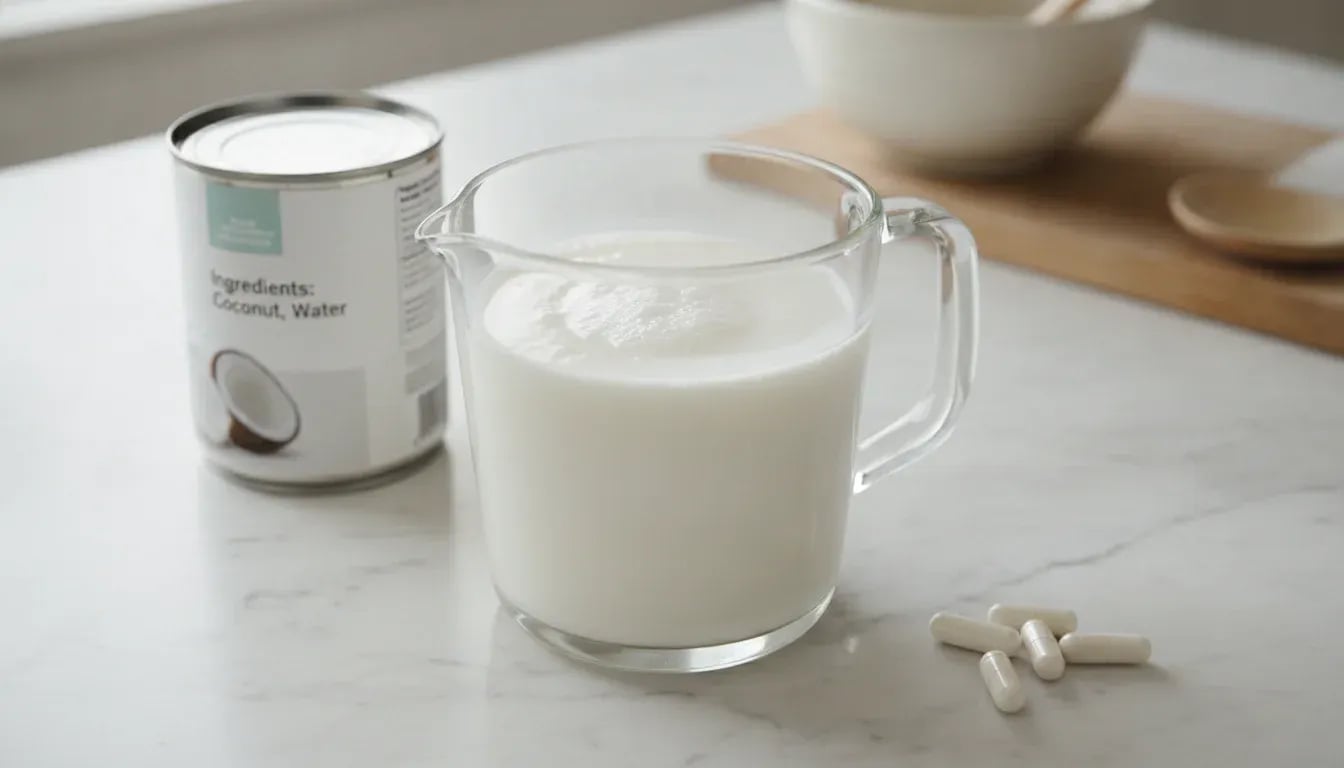
What changes when you swap dairy for coconut milk? The bacteria and the core principle are identical — a long, low ferment to build therapeutic counts — but coconut milk behaves differently in three specific ways: it needs pre-heating, it needs a thickener to stay uniform, and it needs a longer ferment.
#Temperature: match the strain, not the milk
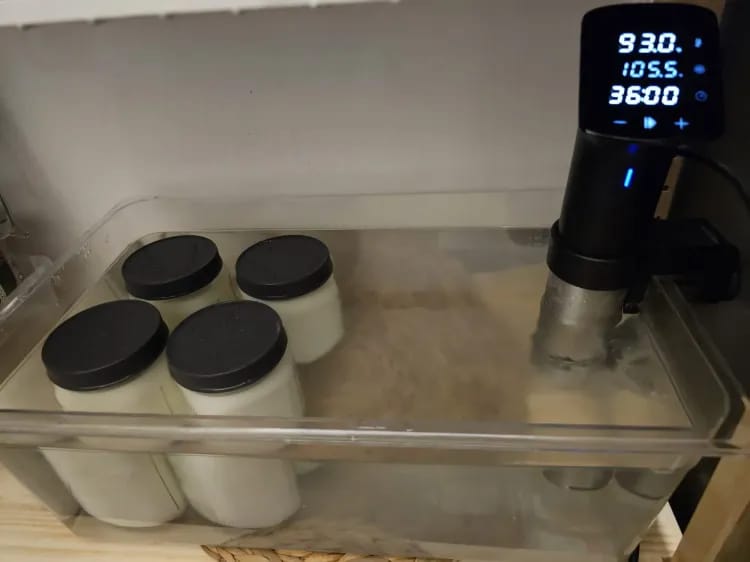
Use the same temperature you'd use for the dairy version of that yogurt. For L. reuteri, that's about 100°F. For the three-strain SIBO yogurt, it's 106°F. Coconut doesn't want a different temperature than dairy — it wants steady, precise control, so a low-temp yogurt maker or a sous vide in a water bath is ideal. A good instant-read thermometer helps you hit the pre-heat and cool-down targets below. For the full gear breakdown, see our L. reuteri yogurt equipment guide.
#Fermentation time: longer, not shorter
This is the one people get backwards. Coconut milk yogurt needs 48 hours — longer than the dairy versions — to reach a thick, rich result. Don't cut it short; give it the full two days.
#Pre-heat the coconut milk (you don't do this with dairy)
Unlike already-pasteurized dairy, which you don't preheat, canned coconut milk should be heated to about 180°F (just as it begins to bubble), then cooled. This, together with the thickener below, is what keeps it from splitting into water and oil over the long ferment.
#The thickener: guar gum (skip the gelatin and agar)
Coconut milk naturally separates, so Dr. Davis's method leans on guar gum plus raw potato starch to keep it uniform — not gelatin (not vegan anyway), not agar. A little sugar goes in too; don't let that alarm you — the microbes eat it during the ferment, leaving essentially none behind. (Exact amounts are in the recipe below.)
#Prebiotics: still essential
Coconut milk doesn't have dairy's lactose to feed the bacteria, so the potato starch — and, for SIBO, a spoon of prebiotic fiber or inulin — does double duty: thickening and feeding the culture so it multiplies into those big probiotic counts.
#Choosing the Right Coconut Milk
Does the brand of coconut milk really matter? Absolutely—the wrong coconut milk can completely sabotage your fermentation.
Here's what to look for:
#The Ideal Ingredient List
Your coconut milk should contain:
- Coconut extract or coconut pulp
- Water
- That's it
Some brands include guar gum, and this appears to be acceptable in small amounts. However, you want to avoid:
- Gellan gum
- Carrageenan
- Xanthan gum
- Any other stabilizers or emulsifiers
These additives can interfere with the culturing process, preventing proper fermentation or creating off textures.
#Full-Fat vs. Light
Always choose full-fat coconut milk from a can. The fat content contributes to texture and mouthfeel. Light coconut milk or coconut milk beverages from cartons won't work—they're too watered down and often contain stabilizers.
#Brand Consistency Matters
Here's something I learned the hard way: consistency depends heavily on the coconut milk brand you use. Some brands produce thicker yogurt naturally, while others create a thinner result even with the same amount of thickener.
My advice? Once you find a brand that works well for you, stick with it. Take notes on your first few batches so you can adjust thickener amounts if needed.
#Making Vegan L. Reuteri Yogurt: The Process
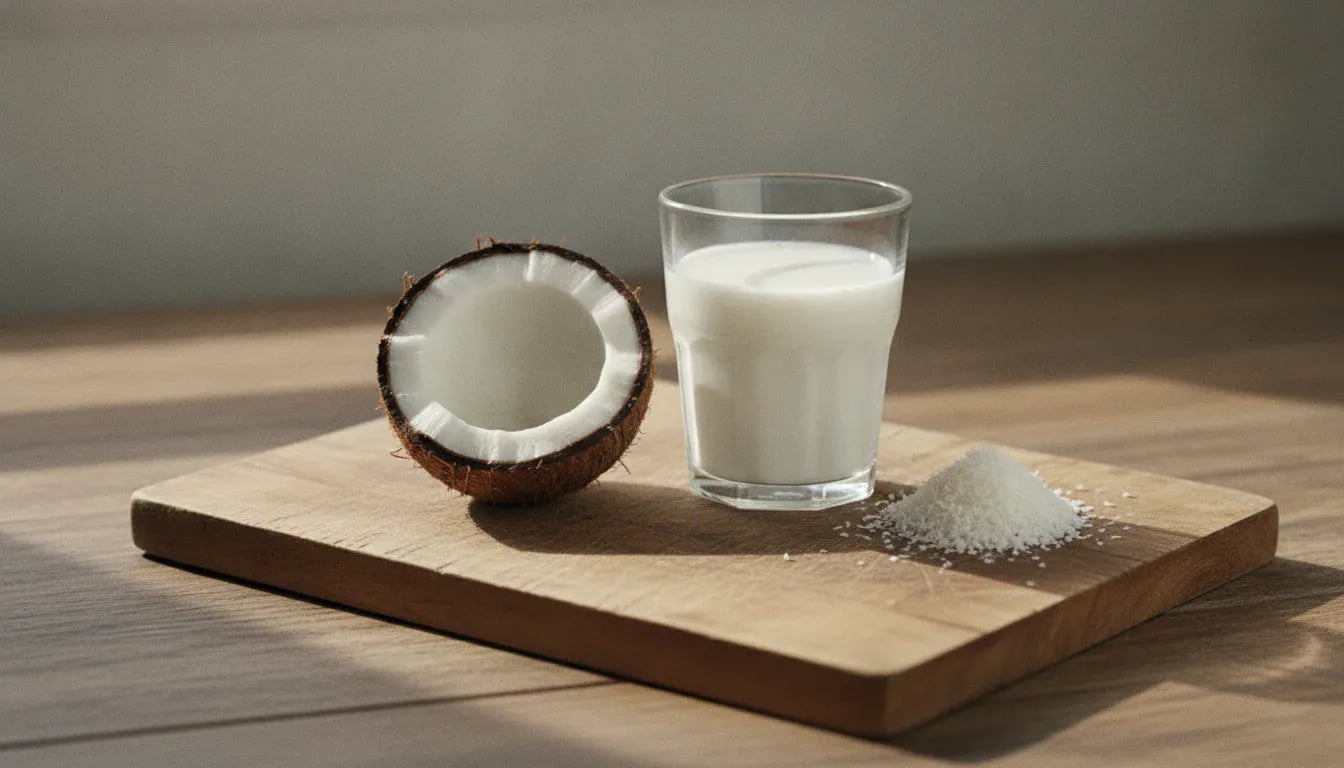
How do you actually make it? Here's Dr. Davis's coconut-milk method in my own words. One can makes about two servings — just scale everything up proportionally for a bigger batch.
You'll need:
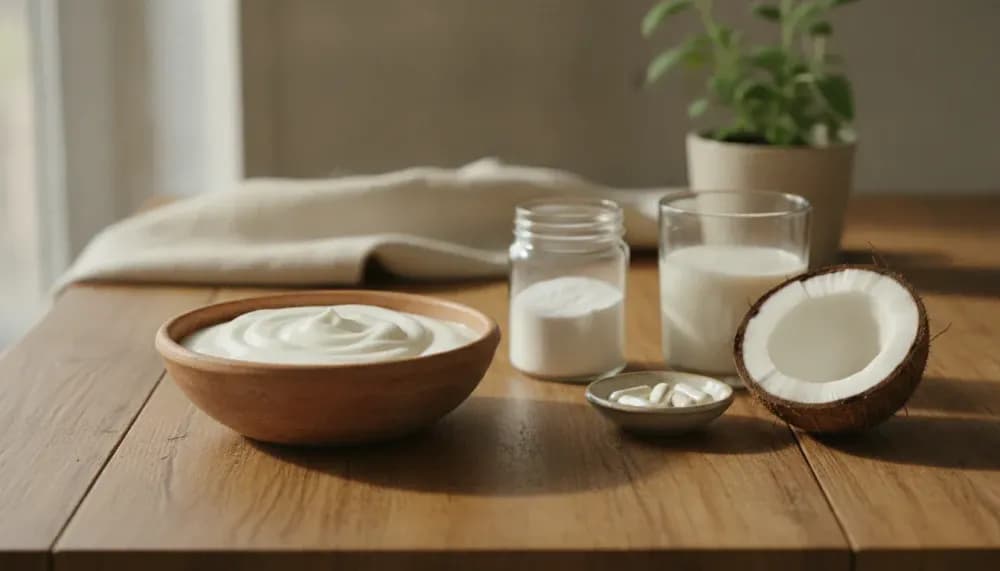
- 1 (13.5 oz) can full-fat coconut milk — canned only (see "Choosing the Right Coconut Milk" above)
- ¾ teaspoon guar gum
- 2 tablespoons sugar (the microbes consume it)
- 1 tablespoon raw potato starch
- 1–2 tablespoons of a previous L. reuteri batch, or 10 crushed BioGaia Gastrus tablets, or a purpose-made L. reuteri starter
Not sure which to choose? See our guide to the best L. reuteri starter cultures.
Steps:
- Pre-heat. In a saucepan, heat the coconut milk over medium heat to 180°F (or until it just begins to bubble). Take it off the heat and let it cool for about 5 minutes.
- Blend in the thickeners. Add the guar gum, sugar, and potato starch to the warm (not hot) coconut milk and blend with a stick blender — or in a blender — for at least a minute, until it thickens to roughly the consistency of heavy cream.
- Cool, then add the culture LAST. Let the mixture cool to 100°F. The culture goes in only now, because blending would kill the microbes. Stir your L. reuteri starter in until evenly mixed.
- Ferment 48 hours at 100°F. Pour into clean glass jars and hold a steady 100°F for a full 48 hours in your yogurt maker or sous vide bath.
- Chill. Refrigerate for at least a few hours; it firms up as it cools. For the next batch, just save 1–2 tablespoons of this one as your starter.
The texture is a little different from dairy — creamy, gently sweet from the coconut, with that fermented tang. A touch of separation is normal; stir it back in.
#Making Vegan SIBO Yogurt with Coconut Milk
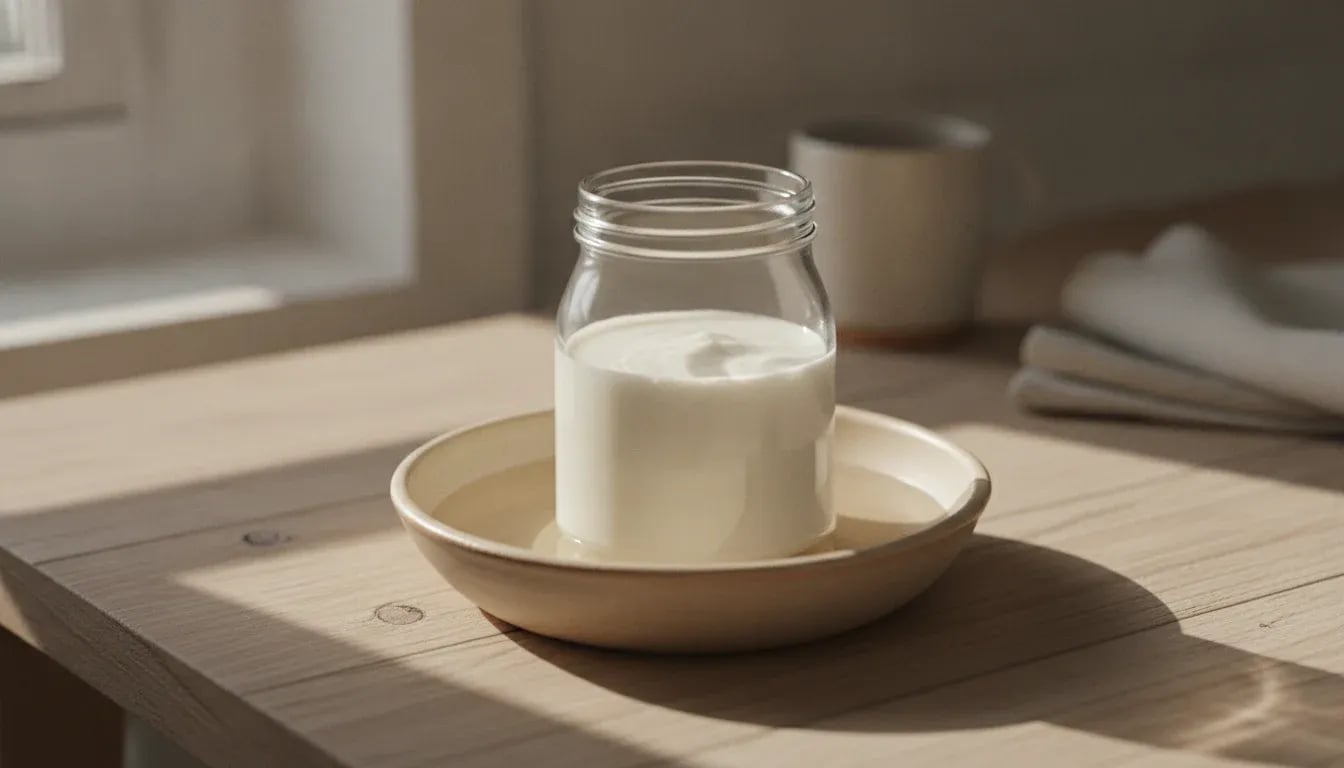
Can you make the three-strain SIBO yogurt in a coconut version? Yes — same base and method as above, with two changes: the strains, and the temperature.
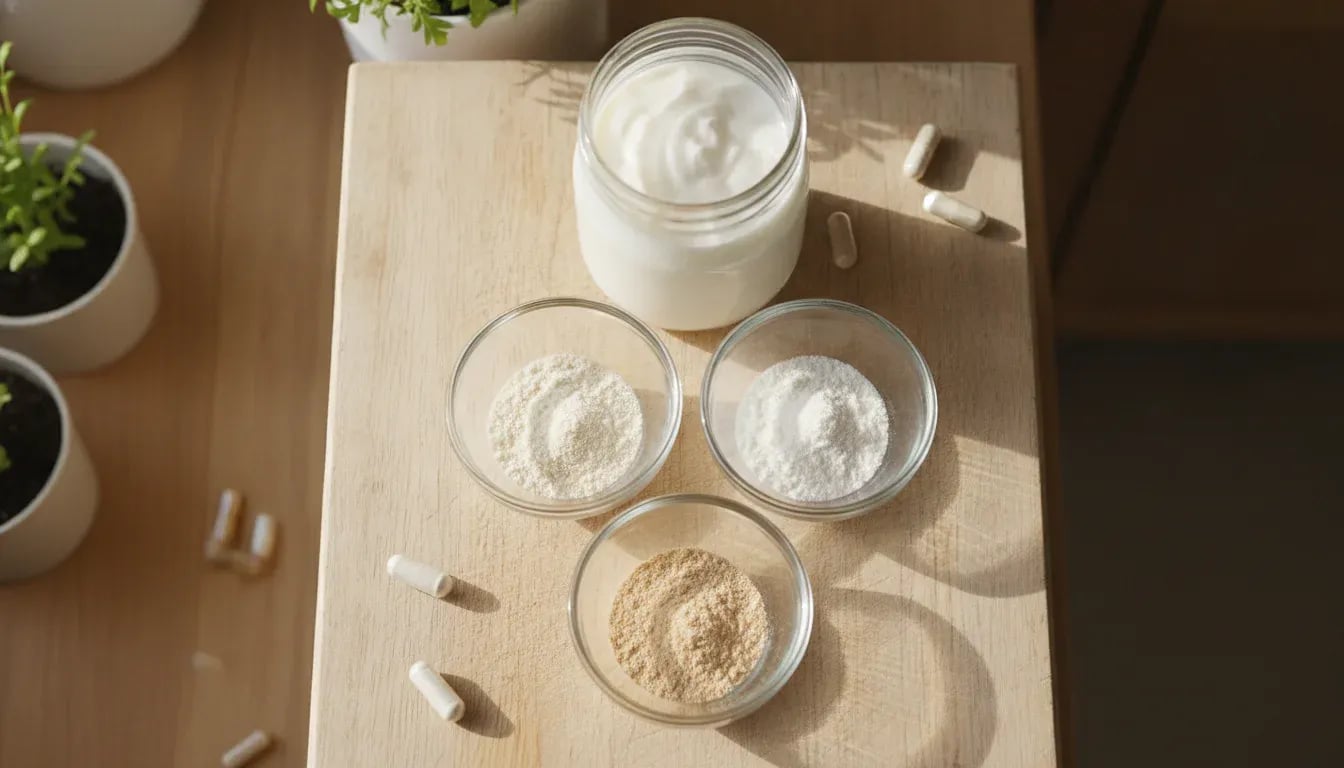
If you're new to it, SIBO yogurt is a triple-strain ferment:
- L. reuteri — 10 crushed BioGaia Gastrus tablets (or 2 tbsp of a prior L. reuteri batch)
- L. gasseri BNR17 — 1 capsule of Dr. Mercola BioThin (or 2 tbsp of a prior L. gasseri batch)
- B. coagulans GBI-30 — 1 capsule of Schiff Digestive Advantage (or 2 tbsp of a prior B. coagulans batch)
Prepare the coconut base exactly as in the L. reuteri recipe — pre-heat to 180°F, blend in the guar gum, sugar and potato starch, and add 2 tablespoons of prebiotic fiber (inulin or raw potato starch). Cool it, then stir in all three strains last.
The key difference: ferment at 106°F — the temperature the SIBO strains want — for the full 48 hours that coconut needs. Fermenting all three together on purpose keeps the potent L. gasseri from over-growing and triggering too fast a die-off.
Want it thicker? Add a little more guar gum next time — not gelatin or agar. But a slightly looser set is perfectly fine; the probiotics develop just the same.
#Troubleshooting Common Issues
What if your coconut yogurt doesn't turn out right? Most issues have simple fixes once you know what went wrong.
#Problem: Yogurt Is Too Thin
Possible causes:
- Not enough guar gum, or it wasn't blended in well
- The coconut milk was a thin, low-fat brand (or a carton)
- Didn't chill long enough
Solutions:
- Add a little more guar gum next batch, and blend a full minute until it's heavy-cream thick before cooling
- Use a full-fat canned coconut milk
- Chill 8–12 hours instead of a few
#Problem: Yogurt Separated or Looks Grainy
Possible causes:
- Fermentation temperature ran too high
- The coconut milk contained stabilizers (xanthan/gellan) that interfered
- You skipped or under-did the 180°F pre-heat
Solutions:
- Hold the target temperature steadily (100°F for L. reuteri, 106°F for SIBO), not higher
- Switch to a cleaner coconut milk (just coconut + water; guar gum is fine)
- Pre-heat to 180°F and blend the thickeners in well — that's what keeps it uniform
- A little separation is normal; stir or blend it smooth (still perfectly good)
#Problem: No Tangy Flavor
Possible causes:
- Fermentation time was too short
- Temperature was too low
- The starter was old or inactive
Solutions:
- Give it the full 48 hours
- Verify your temperature is holding steady
- Use a fresh starter, or a spoon of a lively previous batch
#Problem: Yogurt Tastes Off or Bitter
Possible causes:
- Contamination from unclean equipment
- It fermented far too long
- The coconut milk was old or rancid
Solutions:
- Sanitize jars and tools with boiling water first
- Stick to about 48 hours; don't leave it days longer
- Use fresh coconut milk and check the date
- When in doubt, toss it and start fresh
#Creative Ways to Use Your Vegan Probiotic Yogurt
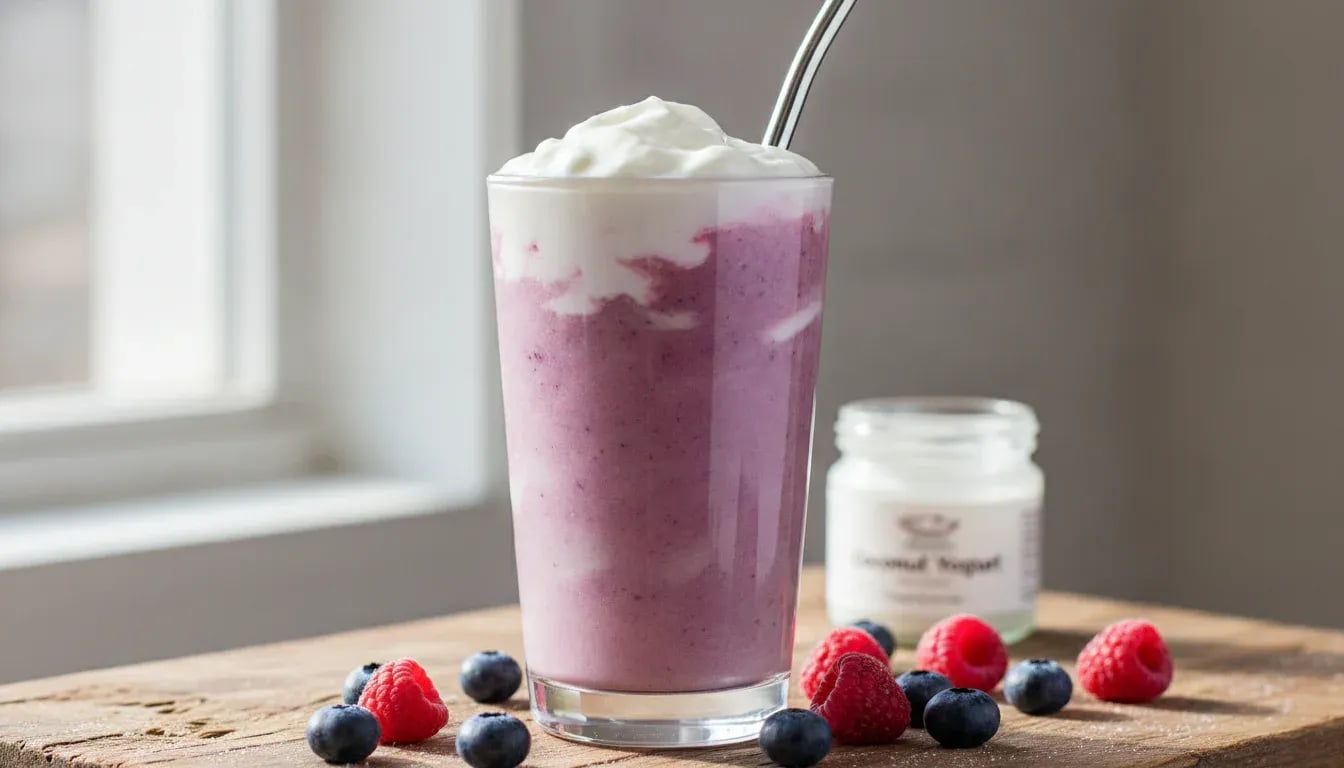
What can you do with coconut-based L. reuteri or SIBO yogurt? The same creative applications as dairy versions—smoothies, dressings, desserts, and more—with the added bonus of being completely plant-based.
Here are some of my favorite uses:
#Smoothie Base
Coconut yogurt makes an incredibly creamy smoothie base. Blend it with:
- Frozen berries
- Banana
- Spinach or kale
- A scoop of plant-based protein powder
- A splash of plant milk if needed
The mild coconut flavor plays well with tropical fruits especially.
#Salad Dressings and Sauces
The tangy flavor works beautifully in:
- Creamy herb dressings (blend with fresh dill, garlic, lemon)
- Tahini-yogurt sauce for Buddha bowls
- Spicy sriracha-yogurt drizzle
- Cucumber-mint raita (yes, vegan raita!)
#Breakfast Bowls
Top your coconut yogurt with:
- Granola and fresh berries
- Chia seeds and sliced almonds
- Cacao nibs and coconut flakes
- A drizzle of maple syrup
#Baking and Cooking
Use it as you would dairy yogurt in:
- Vegan muffins and quick breads (adds moisture and tang)
- Marinades for tofu or tempeh
- Creamy pasta sauces
- Vegan tzatziki
The possibilities really are endless. And just like with dairy yogurt, you're getting those therapeutic probiotics in every bite.
If you're looking for more fermented plant-based inspiration, check out our Fermented Cashew Milk recipe or explore Vegan Kimchi for another probiotic-rich option.
#The Bigger Picture: Why Vegan Probiotic Yogurt Matters
When I first started making these vegan versions for my neighbors, I thought of it as a nice gesture—a way to share something I loved with people who couldn't have the dairy version.
But the more I've thought about it, the more I realize it's bigger than that.
Therapeutic probiotics shouldn't be exclusive. The research on L. reuteri's benefits for mood, skin, oxytocin production, and social bonding—or L. gasseri's metabolic effects, or B. coagulans' digestive support—these benefits should be accessible to everyone, regardless of dietary choices or restrictions.
Vegans, people with dairy allergies, those with lactose intolerance, individuals following certain cultural or religious dietary practices—they all deserve access to these powerful probiotic foods.
And here's what really excites me: non-dairy probiotic foods are increasingly important¹ not just as alternatives, but as innovations in their own right. Coconut milk brings its own anti-fungal properties. It's naturally low-carb. It opens doors to flavor combinations and culinary applications that dairy yogurt can't touch.
My neighbors loved their coconut yogurt. They've been using it in smoothies, on their breakfast bowls, and apparently in some kind of vegan curry sauce that I need to get the recipe for. They've told their vegan friends about it. And that ripple effect—that sharing of knowledge and possibility—that's what fermentation is all about.
Whether you're making this for yourself, for a loved one, or for a kind neighbor who showed up when you needed them most, you're participating in something beautiful: making healing food accessible, one batch at a time.
A note on health information: The information shared here is for educational purposes only and is not intended as medical advice. While L. reuteri, L. gasseri, and B. coagulans have been studied for various health applications, individual results vary. Always consult with a healthcare professional before making changes to your diet, especially if you have existing health conditions, SIBO, or are taking medications.
#References & Further Reading
The method here adapts Dr. William Davis's published L. reuteri and triple-strain SIBO yogurt protocols to a dairy-free, coconut-milk base.
- “Production of Probiotic Passion Fruit Drink Using Lactobacillus reuteri and Microencapsulation via Spray Drying,” journal Foods — PMC7143088. Evidence that L. reuteri readily ferments a non-dairy (fruit) substrate.
Disclaimer: This article is for informational and educational purposes only. It is not intended to be a substitute for professional medical advice, diagnosis, or treatment. Individual results may vary. The health benefits discussed are based on preliminary research and anecdotal reports. Please consult your healthcare provider before beginning any new dietary practice, especially if you have a medical condition, digestive issues like SIBO, or take medications. Probiotic foods may not be appropriate for everyone, particularly those who are immunocompromised.