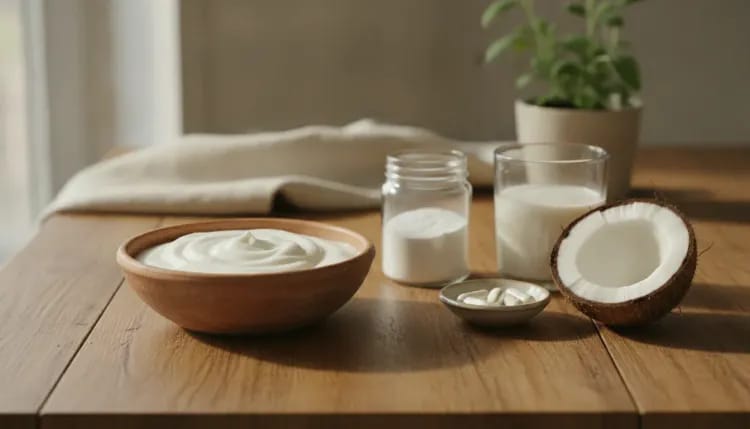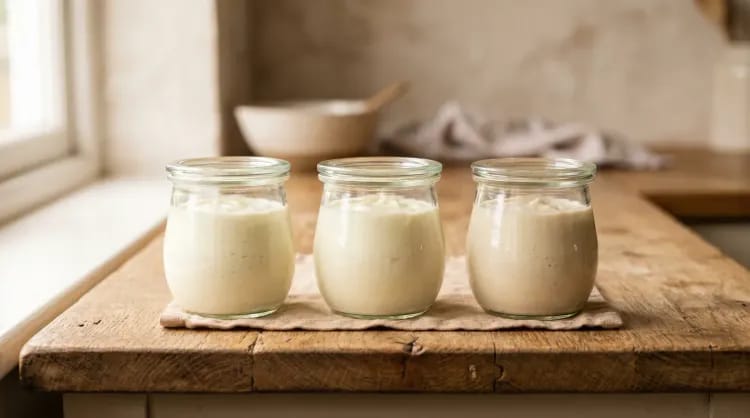
For years, making L. reuteri yogurt started the same slightly awkward way: crush ten BioGaia Gastrus tablets into powder, hope you didn't leave any stubborn chunks, and whisk them in. It worked — I've made plenty of good yogurt that way — but it was always the fiddliest part of the whole process.
In 2025, Dr. William Davis simplified it. Instead of crushing tablets, you empty a single MyReuteri capsule. I've made yogurt this way, and I'll be honest with you: it's easier, it's more comfortable, and it's probably a little more foolproof. Here's the method, what changed, and how to get a thick, creamy result.
#Quick answer: the MyReuteri method in brief
To make L. reuteri yogurt the easy way: whisk the contents of one MyReuteri capsule and 1 tablespoon of inulin (prebiotic fiber) into a quart of half-and-half or milk, then ferment at around 97–100°F for 36 hours. Strain if you like it thick. For every future batch, just stir in a couple of tablespoons of your last batch — you can reseed almost indefinitely this way. In practice the flavor stays great for about 7–10 batches before it’s worth starting fresh with a new capsule.
#What changed in 2025
In the original Super Gut recipe, you crushed about 10 BioGaia Gastrus tablets to get roughly 2 billion CFUs — enough to reliably kick off fermentation. The problem Dr. Davis flagged is that tablets can lose potency in shipping and storage (heat in trucks and warehouses), so even a careful crush didn't always work.
His fix: purpose-made MyReuteri capsules in higher counts (10, 20, or 50 billion CFU) that you simply empty into the mix — no crushing, higher starting counts, more reliable results. It's the same L. reuteri yogurt you already know; the update is just an easier, more consistent on-ramp. (Source: Dr. Davis, L. reuteri Yogurt Made Easier, 2025.)
#My honest experience
I've used both the crushed-tablet method and MyReuteri, and for me they both make good yogurt — this is fine-tuning, not night and day. I still reach for BioGaia Gastrus fairly often, mostly because it's easy for me to source where I am. But the MyReuteri method is genuinely more comfortable to use, and I'd trust it a bit more than a hand-crush that might leave under-broken bits. If someone asked me which to start with, I'd say MyReuteri.
(For what it's worth, these days I personally make the full triple-strain SIBO yogurt — L. reuteri plus two other powerhouse strains, L. gasseri and B. coagulans — but this single-capsule reuteri method is the backbone of it, and exactly where I tell anyone to start. If you want the upgraded version, here's my triple-strain SIBO yogurt recipe.)
#The method, step by step
You'll need:
- 1 MyReuteri capsule (for the first batch; then reuse your own yogurt) — or the all-in-one MyReuteri Complete with the inulin already included
- 1 quart (4 cups) half-and-half or whole milk
- 1–2 tablespoons inulin or prebiotic fiber
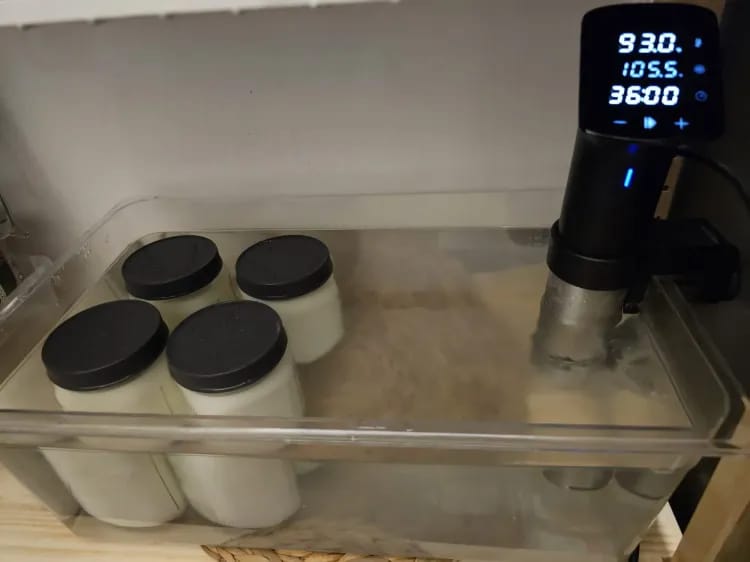
- A temperature-controlled setup — a low-temp yogurt maker or a sous vide in a water-bath container holds the low temperature this yogurt needs
- Clean wide-mouth mason jars (or dedicated glass yogurt jars) with good leak-proof lids for fermenting and storing
Steps:
- Make a slurry. Whisk the capsule contents and inulin into a couple of tablespoons of the dairy until smooth — this prevents clumping. Add the rest of the dairy and stir.
- Ferment low and long. Hold at roughly 97–100°F for 36 hours. This long, low ferment is what builds L. reuteri to hundreds of billions of CFUs — far beyond any store-bought yogurt. (It also means ordinary yogurt makers that only hit 108°F+ won't work; you need low-temperature control.)
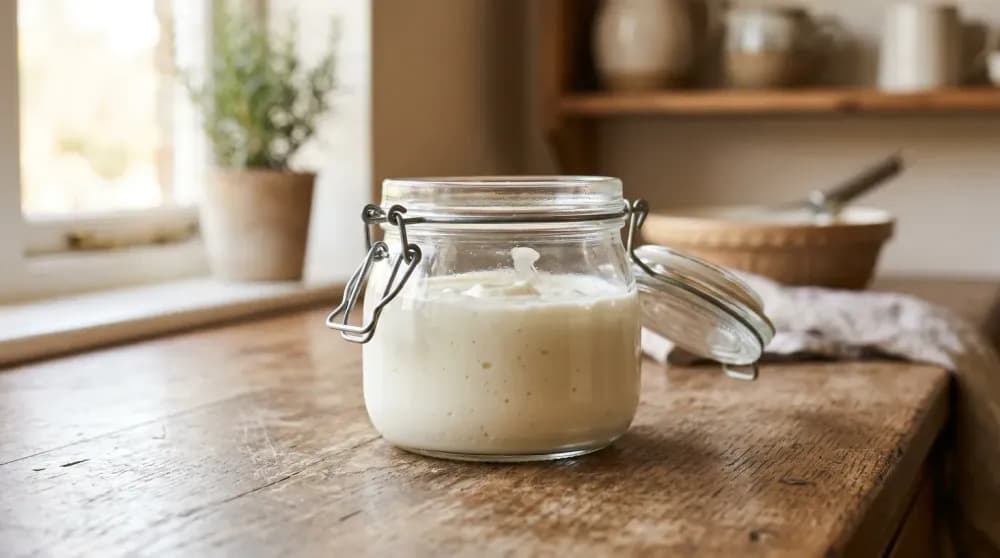
- Chill, then strain if you like. It thickens as it cools. For a thick, Greek-style result, strain in a yogurt strainer.
- Reseed. For your next batch, skip the capsule — just stir in 2 tablespoons of this batch. You can keep reseeding almost indefinitely; realistically the flavor stays great for about 7–10 batches, and when it starts to fade a little, start fresh with a new capsule. (You can even freeze a little yogurt as backup starter.)
#Community tips for a creamier, less "cheesy" batch
Your first batch might separate into curds and whey — this is extremely common, and it doesn't mean you failed. Fermenters who've dialed it in report a few tricks worth knowing (these are community-reported techniques, not official steps):
- Denature the milk first. Heating the dairy to ~180°F for 10–15 minutes before cooling and inoculating gives a firmer, less-splitty curd.
- Add a spoon of skim milk powder. Extra protein makes it thicker and silkier — the same principle behind French-style yogurt.
- Pre-hydrate the microbes. Some report that stirring in the culture, then resting it in the fridge overnight before fermenting, yields a smoother, more milk-forward flavor and less of the "stinky cheese" note.
- Watch your temperature. Several fermenters find the low end (97–98°F) gives a more even set than 100°F+, which can split into curds on top and liquid below.
As always, results vary — treat your first couple of batches as calibration.
If separation keeps happening batch after batch, I go deeper into the fixes in why your L. reuteri yogurt isn't working.
#Is MyReuteri worth it?
Straight talk: as a probiotic, it's pricey, and plenty of reviewers say so. But as a yogurt starter, the per-batch math flips — one capsule doesn’t just make one quart — you can stretch a single capsule across about 4 quarts to start, then reseed almost endlessly with a spoonful of the previous batch. That’s many quarts of yogurt from one capsule before the taste nudges you to restart — each serving carrying hundreds of billions of CFUs for pennies. You can absolutely use cheaper L. reuteri capsules; you're partly paying for a consistent, purpose-built strain and for the person who openly taught the whole method. Whether that trade is worth it is up to you — but judge it per batch, not per bottle. If you want the full breakdown of the options, see my comparison of the best L. reuteri starter cultures.
#The bottom line
The MyReuteri method is the same beloved L. reuteri yogurt with the most annoying step removed. If you're just starting out — or you're tired of crushing tablets — it's the easiest reliable way in. Make your first batch, expect to fine-tune, and reseed from there. Slow, patient bacteria; slow, patient you.
New to the whole thing? Start with the full SIBO yogurt recipe, or read up on the 2025 HU-58 update if you're building the three-strain version. And if you want to kit out your setup properly, here's my full L. reuteri yogurt equipment guide.
This article reflects my personal experience making yogurt at home, plus reports from the fermentation community. It is not medical advice, and nothing here is intended to diagnose, treat, cure, or prevent any disease. Individual responses to probiotics vary — please consult a qualified healthcare provider before changing your diet or supplement routine.
References
- Davis, W. L. reuteri Yogurt Made Easier (2025). drdavisinfinitehealth.com/2025/07/l-reuteri-yogurt-made-easier
- Davis, W. SIBO Yogurt. drdavisinfinitehealth.com/2022/03/sibo-yogurt