
Muscle Gain on L. Reuteri Yogurt: The Unexpected Anti-Aging Effect
Important Disclaimer: This article is based on personal experience and publicly available research. It is not medical advice, nor is it intended to diagnose, treat, cure, or prevent any disease. The author is not a medical professional, and the experiences shared are individual results that may not be typical. Always consult with a qualified healthcare provider before making any changes to your diet, supplement routine, or treatment plan. The statements in this article have not been evaluated by the FDA. By reading this article, you acknowledge that you are responsible for your own health decisions.
You're eating your L. reuteri yogurt for better sleep. Or clearer skin. Or gut health. Then something unexpected happens.
The number on your scale goes up.
But your jeans fit better. Your face looks leaner. And when you catch your reflection, there's more... definition.
What's happening? You're experiencing what might be the most underappreciated benefit of Limosilactobacillus reuteri: the reversal of age-related muscle loss through oxytocin restoration.
Dr. William Davis, cardiologist and author of Super Gut, reports gaining 13 pounds of muscle in three weeks after starting L. reuteri yogurt—accompanied by a reduction in waist circumference. His strength increased so dramatically that weights he hadn't touched in 40 years suddenly felt manageable again.
Is this too good to be true? Let's examine the science, the realistic expectations, and how to track whether this unexpected anti-aging effect is happening in your body.
The Hidden Muscle Crisis: What Sarcopenia Is Stealing From You
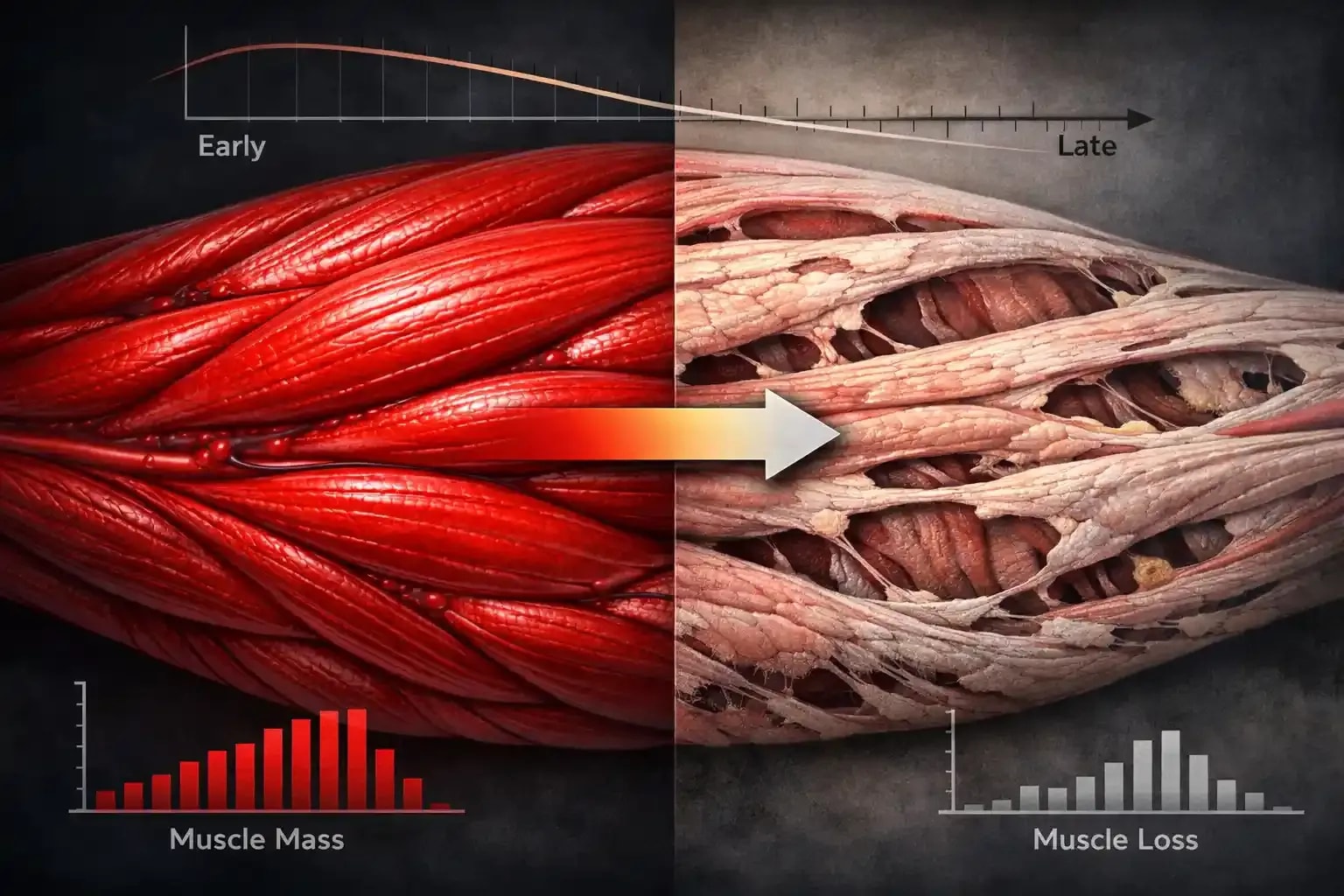
Before we dive into L. reuteri's effects, you need to understand what's silently happening to your muscles right now—especially if you're over 30.
The Shocking Statistics of Age-Related Muscle Loss
Starting around age 30, you begin losing muscle mass. This isn't a maybe—it's a biological certainty called sarcopenia.
| Age Range | What's Happening to Your Muscles |
|---|---|
| 30-50 | Losing 3-5% of muscle mass per decade |
| 50-60 | Loss accelerates to 1-2% per year |
| 60+ | Can accelerate to 3% per year |
| Lifetime total | Most adults lose 30-35% of their muscle mass |
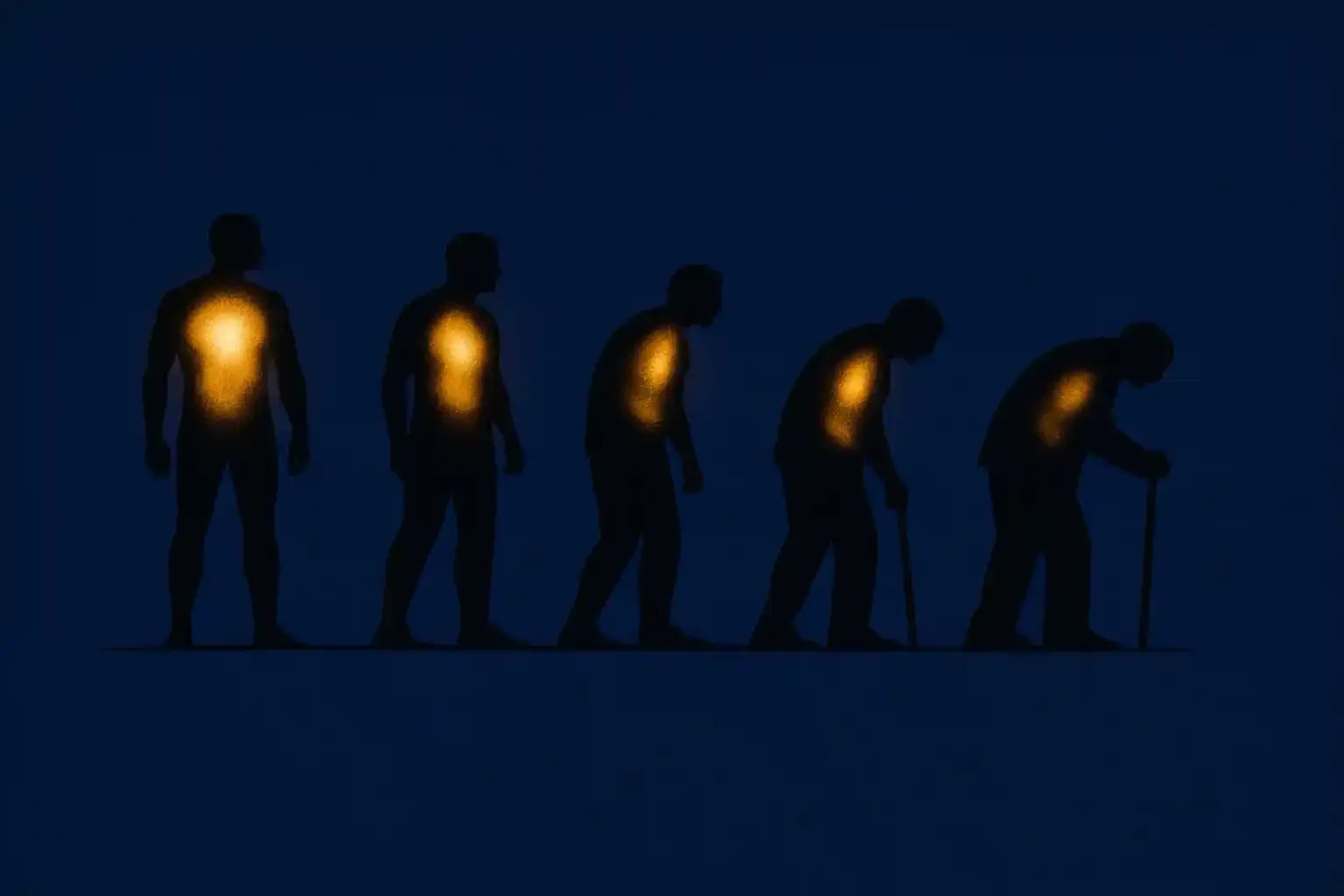
You've seen it. That relative in their 70s with skinny arms and legs. The neighbor who can't climb stairs anymore. The parent who seems to shrink every year.
This isn't just cosmetic. Sarcopenia is directly linked to falls, fractures, hospitalizations, loss of independence, and earlier death. The CDC officially classified it as a reportable disease in 2016.
Why This Matters: Muscle Isn't Just for Bodybuilders
Your muscle mass affects nearly everything:
- Metabolic rate: More muscle burns more calories at rest
- Blood sugar regulation: Muscle is a glucose sink—less muscle means worse insulin sensitivity
- Bone density: Muscles pulling on bones keeps them strong
- Hormone production: Muscle tissue influences testosterone, growth hormone, and more
- Fall prevention: Strong muscles = better balance = fewer broken hips
- Independent living: Can you carry groceries? Get out of a car? Climb stairs?
The conventional wisdom says muscle loss is inevitable—slow it down with protein and resistance training, but accept the decline.
But what if there's another factor? What if a missing microbe is accelerating the loss?
The L. Reuteri-Oxytocin-Muscle Connection

Here's where it gets interesting.
Oxytocin: More Than the "Love Hormone"
You probably know oxytocin as the bonding hormone—the one released during hugs, breastfeeding, and sex. But oxytocin does something else that researchers only recently discovered: it's essential for muscle maintenance and regeneration.
A landmark 2014 study from UC Berkeley (Elabd et al., published in Nature Communications) found that:
- Oxytocin levels decline significantly with age
- Mice lacking oxytocin develop premature sarcopenia—early muscle wasting
- Injecting oxytocin into aged mice restored muscle regeneration to near-youthful levels
- The muscle stem cells in old mice essentially "woke up" when given oxytocin
The study's cross-sections are striking: shrunken, atrophied muscle fibers in old mice versus plump, full-volume muscle cells after oxytocin treatment—cells that looked indistinguishable from young mice.
How L. Reuteri Boosts Oxytocin
This is where L. reuteri enters the picture.
When you consume high-count L. reuteri yogurt, the bacteria colonize your gut and trigger a cascade that reaches your brain. Specifically:
- L. reuteri activates the vagus nerve—the superhighway between your gut and brain
- The vagus nerve signals your hypothalamus to release oxytocin
- Oxytocin levels increase by 300%+ according to animal studies (Poutahidis et al., MIT)
- This sustained oxytocin boost affects muscle, skin, mood, and more
It's not a supplement pill. It's not a hormone injection. It's a gut microbe that's supposed to be there, triggering a hormonal cascade that's supposed to happen naturally.
Most modern humans have lost L. reuteri due to antibiotics, processed foods, and C-section births. We're oxytocin-deficient not because of a prescription—but because of a missing microbe.
Dr. Davis's 13-Pound Claim: Extraordinary Results Examined

Let's address the elephant in the room: Dr. William Davis claims he gained 13 pounds of muscle in three weeks while losing waist circumference—and he only works out 15-20 minutes once per week.
The Original Report
From his Infinite Health blog post "Muscle Up" (April 2023):
"Tracking body composition via a bioimpedance scale, I gained 13 pounds over the first three weeks of consumption accompanied by a reduction in waist circumference. I am not particularly fond of going to the gym, so I go about once per week for 15-20 minutes to use the weight machines. I typically handled weights like 130 pounds in a lat pulldown for 10 repetitions. This promptly increased to 200 pounds for 10 repetitions, weight I had last handled 40+ years earlier at age 19."
Breaking Down What This Means
Is 13 pounds of muscle in 3 weeks possible?
Honestly? That's extraordinary. For context, a natural lifter doing everything right (optimal training, nutrition, sleep) might gain 1-2 pounds of muscle per month. Gaining 13 pounds of lean mass in 3 weeks is not typical by any standard.
However, Dr. Davis's explanation offers an interesting hypothesis: muscle memory and restoration vs. new growth.
The "Restoration" Hypothesis
Dr. Davis suggests that oxytocin doesn't just build new muscle—it may restore muscle you used to have:
"My suspicion is that the boost in oxytocin experienced with restoration of L. reuteri means you experience restoration of muscle you had when you were younger—if you were more heavily muscled during your younger years, you are likely to regain more muscle than other people."
He cites a 67-year-old former special forces soldier who appeared heavily muscled despite being physically incapable of doing a single pushup due to shoulder injuries. The man attributed his unexplained muscle to L. reuteri yogurt consumption.
This is speculative. But it suggests that those who were athletic in their youth might see larger effects than those who never built significant muscle mass.
My Personal Experience: A Year of Daily L. Reuteri Yogurt

I want to be upfront: I can't separate what might be placebo from what's physiologically real. But I can tell you what I've observed in my own body.
This past year—eating L. reuteri yogurt every single day—has been by far my best year of training. And I've been training for decades.
I feel noticeably stronger. More energized. More motivated. More capable in my workouts. The changes in my body are visible, and I'm genuinely happy to say I'm in one of the best shapes I've been in many, many years—perhaps since high school, which was a very long time ago.
But here's what I think matters even more than the muscle and strength gains: the reduction in inflammation.
I've struggled with psoriasis and fibromyalgia for years. Severe, life-affecting inflammation. Since committing to daily L. reuteri yogurt, I've seen meaningful improvements in both conditions. This isn't just about looking better in the mirror—it's about having less pain, more energy for daily life, and a body that feels like it's working with me instead of against me.
Does L. reuteri yogurt deserve all the credit? I honestly don't know. I've also been consistent with training, mindful of nutrition, and focused on sleep. But the yogurt is the one variable that changed—and the results followed.
Take my experience for what it is: one person's story. Your mileage may vary. But when I look at the research on oxytocin, inflammation, and muscle maintenance, my results don't seem like a coincidence.
What the Survey Data Shows
Dr. Davis conducted an informal survey of L. reuteri yogurt users (84 respondents):
| Effect | Results |
|---|---|
| Increased strength and/or muscle gain | 50% reported moderate increase; 26% reported no change |
| Improved skin | 60.7% reported moderate improvement or better |
| Deeper sleep | 62% reported moderate improvement or better |
| Reduced appetite | 57.8% reported moderate reduction or more |
| Increased libido | 39.7% reported moderate increase or greater |
The takeaway: About half of users report noticeable strength or muscle benefits. This isn't a 100% guarantee, but it's a meaningful percentage.
The Science: What Research Actually Shows

Let's separate what's proven from what's promising but preliminary.
Established in Research
1. Oxytocin receptors exist in skeletal muscle Your muscles have the hardware to respond to oxytocin signals. (Elabd et al., 2014; numerous subsequent studies)
2. Oxytocin-deficient mice develop premature sarcopenia Without oxytocin, muscle wasting begins earlier and progresses faster. (Elabd et al., 2014)
3. Oxytocin administration reverses muscle aging in mice Old mice given oxytocin regenerate muscle at near-youthful rates. The effects appear within days. (Elabd et al., 2014)
4. L. reuteri increases oxytocin in animal models The specific strains ATCC PTA 6475 and DSM 17938 reliably boost oxytocin through vagal nerve stimulation. (Poutahidis et al., MIT, 2013)
5. Oxytocin reduces protein breakdown (anti-catabolic effect) Oxytocin receptor stimulation suppresses muscle protein degradation pathways. (ScienceDirect, 2021)
6. Human trial shows muscle gain with intranasal oxytocin A pilot study of 21 older adults with sarcopenic obesity found that oxytocin administration led to a 2.25 kg (about 5 pounds) increase in lean muscle mass over 8 weeks. (Espinoza et al., 2021)
Promising but Preliminary
1. L. reuteri improves exercise performance in mice A 2024 study found that L. reuteri ID-D01 enhanced exercise endurance, increased muscle tissue weight, and reduced fatigue markers in mice. (ScienceDirect, 2024)
2. Synergistic effects of multiple strains A 2025 study in Scientific Reports found that combining L. johnsonii and L. reuteri produced greater muscle mass and strength improvements than either alone—suggesting multi-strain yogurt might be more powerful.
3. Dr. Davis's human observations While not formal clinical trials, his clinical practice observations and community reports suggest meaningful effects in humans.
What We Still Don't Know
- Optimal dosing (how many CFUs? How much yogurt per day?)
- How long effects take to appear in humans
- Whether everyone responds equally (likely not)
- Long-term safety and sustainability of effects
- Exact mechanisms in human (vs. mouse) physiology
Why Your Scale Goes UP While Your Waist Shrinks
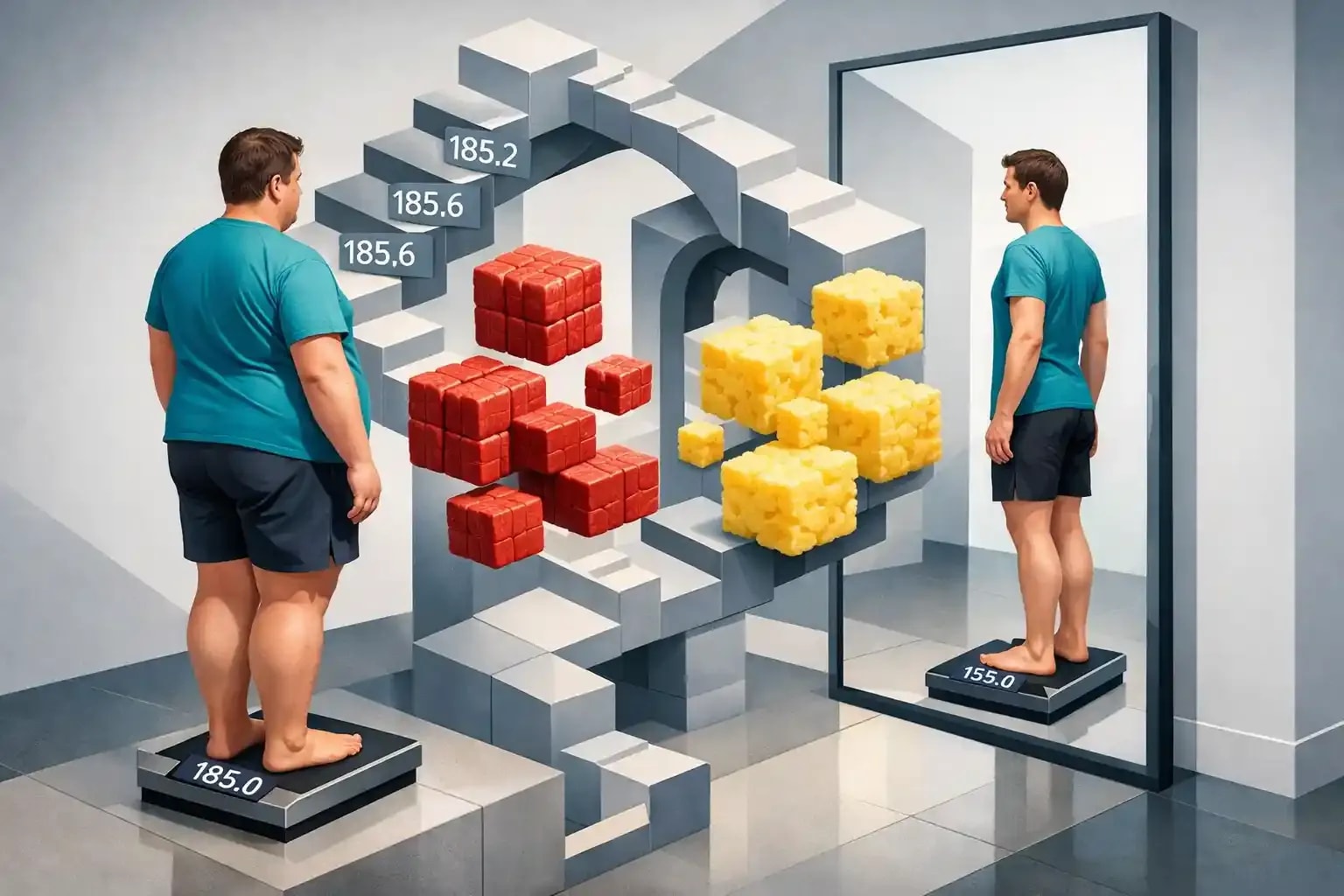
This confuses people: How can I be gaining weight but looking leaner?
The Body Composition Shift
L. reuteri yogurt appears to trigger two simultaneous processes:
- Muscle gain (via oxytocin's anabolic effects)
- Abdominal fat loss (via oxytocin's effects on cortisol and metabolism)
Muscle is denser than fat. A pound of muscle takes up less space than a pound of fat. So you can gain 5 pounds of muscle, lose 3 pounds of fat, see your waist shrink... and still show a net 2-pound gain on the scale.
A Real-World Example
From Dr. Davis's blog, a community member reported:
- Weight gained: 5 pounds
- Waist measurement: unchanged or reduced
- Clothes fit: better
The math: She likely lost fat and gained muscle, with muscle gain exceeding fat loss. Net scale weight went up, but body composition improved dramatically.
Why This Matters for Your Mindset
If you're using L. reuteri yogurt and fixating on scale weight, you're measuring the wrong thing. A 150-pound person with 30% body fat looks and functions very differently from a 150-pound person with 20% body fat.
How to Track Your Muscle Gains: The Body Composition Guide
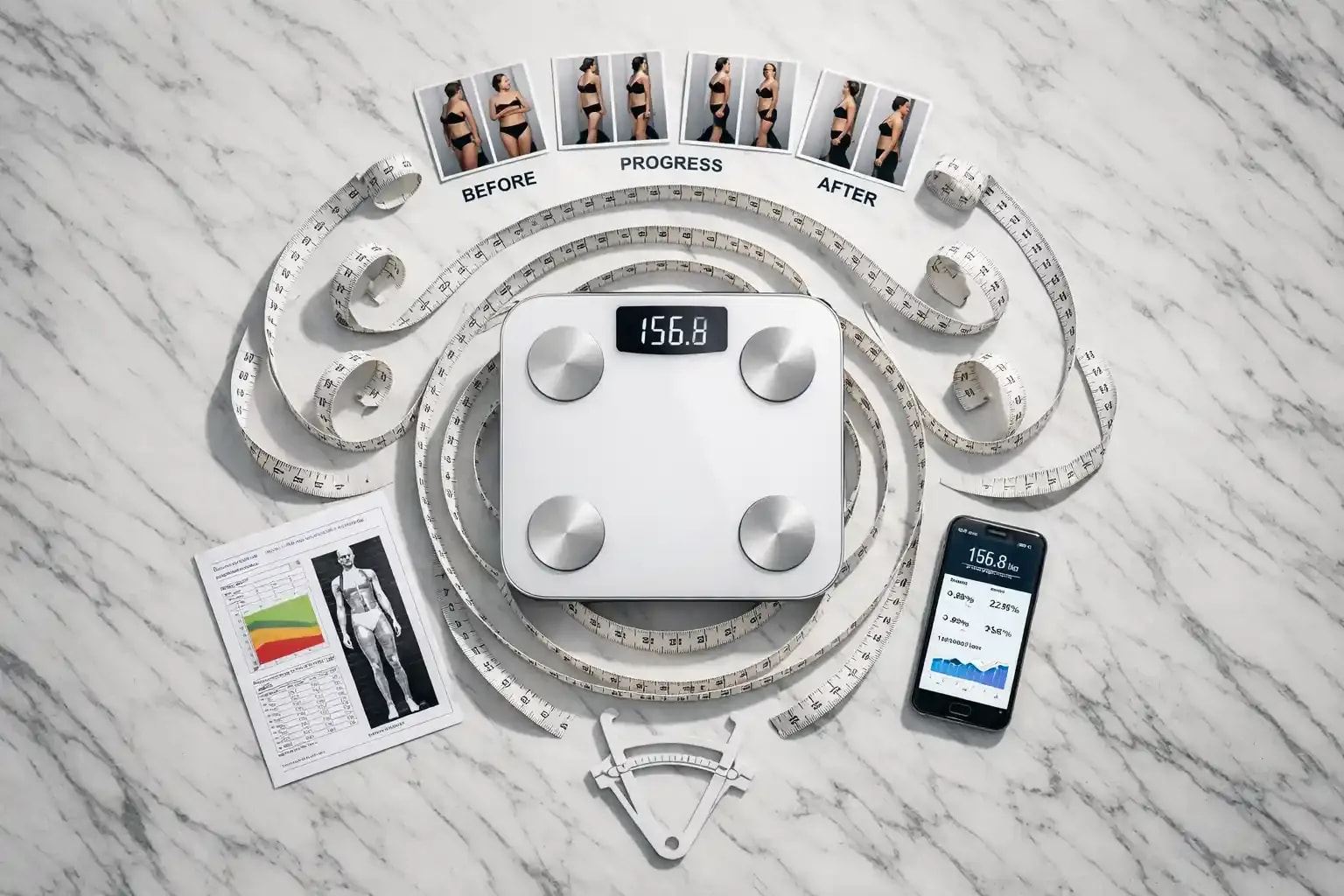
You can't track what you don't measure. Here's how to actually know if L. reuteri is affecting your muscle mass.
Option 1: Bioimpedance Scale (Home Tracking)
This is what Dr. Davis uses—a scale that sends a small electrical current through your body to estimate fat mass vs. lean mass.
Pros:
- Convenient (step on at home anytime)
- Tracks trends over time
- Affordable ($30-200)
- Many models sync with apps
Cons:
- Not highly accurate for single measurements
- Affected by hydration, recent exercise, meal timing
- Results can vary by 5-8% from true values
Best practices for bioimpedance accuracy:
- Measure at the same time daily (morning, after bathroom, before eating)
- Use the same scale every time
- Don't measure after exercise, alcohol, or caffeine
- Track weekly averages, not daily fluctuations
- Focus on trends over weeks and months, not day-to-day changes
Recommended body composition scales:
| Scale Type | Best For | Features |
|---|---|---|
| Withings Body Comp | Most accurate home tracking | 8 electrodes, visceral fat, nerve health, app sync |
| Renpho Smart Scale | Budget-friendly | 13 metrics, Bluetooth app, affordable |
| Eufy Smart Scale P2 Pro | Best value mid-range | ITO coating, 16 metrics, multiple user profiles |
Look for scales with at least 4 electrodes (feet only) for trend tracking, or 8 electrodes (feet + handheld) for better accuracy.
Option 2: DEXA Scan (Clinical Accuracy)
The gold standard for body composition.
Pros:
- Highly accurate (±1-2%)
- Shows regional distribution (where you're gaining/losing)
- Tracks bone density too
- Medical-grade data
Cons:
- Costs $50-150 per scan
- Requires visiting a clinic
- Not practical for weekly tracking
- Small radiation exposure
Best use: Get a baseline DEXA before starting L. reuteri, then repeat after 3-6 months to see real changes.
Option 3: The Low-Tech Methods
Sometimes simple is best:
Waist measurement: Measure at your navel, same time each day. If it's shrinking while weight stays stable or increases, you're likely gaining muscle and losing fat.
Progress photos: Take front, side, and back photos in consistent lighting, same poses, every 2-4 weeks. Visual changes are often more dramatic than scale changes.
Strength tracking: If you're lifting, track your weights and reps. Significant strength increases (especially without hard training) suggest muscle gain.
The "clothes test": How do your pants fit? Your shirts? This is crude but meaningful. Muscle gain with fat loss typically means tighter shirts (arms, chest) but looser pants (waist).
Maximizing Muscle Benefits: The Synergy Strategies
If you want to amplify L. reuteri's muscle-building potential, combine it with these evidence-based strategies.
Strategy 1: Light Resistance Training

Dr. Davis reports significant strength gains with just 15-20 minutes of weight training once per week. You don't need to become a gym rat.
Why it works: Oxytocin appears to enhance the muscle-building response to resistance training. Think of it as making your muscles more sensitive to growth signals.
Minimum effective dose:
- 1-2 sessions per week
- 15-30 minutes per session
- Focus on compound movements (squats, deadlifts, rows, presses)
- Progressive overload (gradually increase weight or reps)
Home gym essentials for resistance training:
| Equipment | Why It Helps |
|---|---|
| Adjustable Dumbbells | Space-efficient, progressive overload |
| Resistance Bands Set | Portable, joint-friendly, variable resistance |
| Pull-Up Bar | Upper body compound movement essential |
Even minimal equipment allows for effective compound movements. Start with what you have—even bodyweight exercises count.
The synergy: L. reuteri + resistance training may produce better results than either alone.
Strategy 2: Collagen Peptides
Dr. Davis specifically recommends combining L. reuteri with collagen peptide supplementation.
The logic: Oxytocin increases collagen deposition in skin and connective tissue. Providing the raw materials (collagen peptides) enhances this effect.
Suggested dose: 10-20 grams of collagen peptides daily
Recommended collagen supplements:
- Vital Proteins Collagen Peptides – Grass-fed, unflavored, dissolves easily
- Sports Research Collagen Peptides – Budget-friendly, high quality
Additional benefits: Better skin elasticity, reduced loose skin after weight loss, joint support
Strategy 3: Adequate Protein Intake
Your muscles can't grow without protein building blocks.
Target: 0.7-1.0 grams of protein per pound of bodyweight (or 1.6-2.2g per kg)
Distribution matters: Spread protein across meals (20-40g per meal) rather than eating it all at once
Quality sources: Eggs, meat, fish, dairy, legumes, or high-quality protein supplements
Strategy 4: Creatine Supplementation
Well-established for muscle strength and mass.
Dose: 5 grams of creatine monohydrate daily (the simplest, most researched form)
Recommended creatine:
- Thorne Creatine – NSF certified, pharmaceutical grade
- NOW Sports Creatine Monohydrate – Budget-friendly, micronized
Why combine with L. reuteri: If oxytocin is enhancing muscle protein synthesis and creatine is improving muscle energy production, you're attacking the problem from multiple angles.
Strategy 5: Sufficient Sleep
Oxytocin supports deeper sleep. Deeper sleep supports growth hormone release. Growth hormone supports muscle repair and growth.
The virtuous cycle: L. reuteri → better sleep → more growth hormone → better muscle recovery → better results
Realistic Expectations: What to Actually Expect

Let's be honest about outcomes.
The Variability Problem
Not everyone responds equally. Dr. Davis's survey showed 50% saw strength/muscle benefits—which means 50% didn't notice dramatic changes.
Factors that may affect your response:
- Your starting oxytocin levels
- Whether you have functional L. reuteri receptors
- Your athletic history (former athletes may see larger "restoration" effects)
- Your current activity level
- Your baseline muscle mass
- Your age and hormonal status
- The quality and potency of your yogurt
A Realistic Timeline
| Timeframe | What to Expect |
|---|---|
| Weeks 1-2 | Possibly nothing visible; internal changes beginning |
| Weeks 3-4 | Some users report noticeable strength or appearance changes |
| Months 1-2 | Clearer body composition shifts visible in photos and measurements |
| Months 3-6 | Best time for before/after comparisons; full effects emerging |
| 6+ months | Sustained benefits with continued use |
What "Success" Looks Like for Most People
Forget the 13-pound-in-3-weeks outlier. For most people, realistic success looks like:
- Gradual strength increases (10-20% over 2-3 months)
- Slight body composition improvement (visible but not dramatic)
- Better muscle recovery after exercise
- Maintaining muscle during weight loss (not losing lean mass with fat)
- Feeling "firmer" or "more toned" without significant scale changes
The Bigger Picture: Why This Matters Beyond Vanity

Muscle gain from L. reuteri isn't about looking better in a swimsuit (though that's nice). It's about:
Metabolic health: More muscle improves insulin sensitivity and blood sugar regulation
Longevity: Muscle mass is one of the strongest predictors of healthy aging
Independence: Strong muscles mean you stay self-sufficient longer
Injury prevention: Falls are the leading cause of injury death in older adults—stronger muscles mean fewer falls
Quality of life: Can you play with your grandchildren? Carry your groceries? Travel independently?
The standard approach to aging accepts muscle loss as inevitable. L. reuteri suggests another possibility: that some of this loss is due to a missing microbe and depleted oxytocin—and it may be partially reversible.
Frequently Asked Questions
Does L. reuteri actually build muscle?
Animal research strongly supports oxytocin's role in muscle maintenance and regeneration. L. reuteri boosts oxytocin. Human clinical trials with intranasal oxytocin have shown muscle mass increases. Dr. Davis reports significant muscle gains in his practice. However, large-scale controlled human trials specifically with L. reuteri yogurt for muscle gain have not been conducted. The evidence is promising but not definitive.
How much L. reuteri yogurt should I eat for muscle benefits?
Dr. Davis recommends ½ cup daily, which provides approximately 200+ billion CFUs of the appropriate strains. Some users consume more; there's no established upper limit, but ½ cup appears sufficient for most reported benefits.
Do I need to exercise to gain muscle from L. reuteri?
Exercise enhances the effects. Dr. Davis's observations suggest that even minimal resistance training (15-20 minutes weekly) combined with L. reuteri produces notable strength increases. However, some users report muscle maintenance or improvement without additional exercise—particularly the "restoration" of previously-held muscle.
Will L. reuteri help me lose fat AND gain muscle simultaneously?
This is the reported body composition shift: muscle gain plus abdominal fat loss. The scale may stay stable or even increase while waist circumference decreases. This is due to oxytocin's effects on both muscle protein synthesis and fat metabolism.
How long until I see muscle changes?
Variable. Some report changes within 3-4 weeks (like Dr. Davis). Others take 2-3 months to notice differences. Track body composition over months, not days. Take photos and measurements rather than relying on scale weight alone.
Can L. reuteri help with sarcopenia in elderly people?
This is the most exciting potential application. The UC Berkeley research specifically showed oxytocin restoring muscle in aged mice. A human trial with intranasal oxytocin showed muscle gains in older adults with sarcopenic obesity. L. reuteri yogurt offers a potential food-based approach to the same mechanism, though specific clinical trials in elderly populations are needed.
Is the muscle gain permanent?
Unknown. The logical assumption is that continued L. reuteri consumption maintains the oxytocin boost and its downstream effects. Stopping consumption likely means losing the enhanced oxytocin levels over time, though whether this reverses muscle gains isn't established.
What strains of L. reuteri are best for muscle effects?
The oxytocin-boosting effects have been demonstrated with strains ATCC PTA 6475 and DSM 17938 (found in BioGaia Gastrus). Dr. Davis's proprietary MyReuteri strain is also reported effective. Use yogurt made with these specific strains rather than generic L. reuteri products.
Recommended starter cultures:
- BioGaia Gastrus – Contains both key strains (DSM 17938 + ATCC PTA 6475)
Essential yogurt-making equipment:
- Anova Precision Cooker Pro – Gold standard for exact temperature maintenance
- Anova Precision Cooker 3.0 – Great balance of power and price
- Ultimate Probiotic Yogurt Maker – Dedicated yogurt maker with 48-hour timer
The Bottom Line: An Unexpected Gift
You probably didn't start making L. reuteri yogurt for muscle gain. Most people come for the gut health, sleep benefits, or skin improvements.
But this unexpected anti-aging effect may be one of the most significant. In a culture obsessed with muscle-building supplements, protein powders, and hormone therapies, here's a different approach: restore a missing microbe that triggers your body's natural muscle-maintenance system.
Is it a magic bullet? No. Will everyone gain 13 pounds in three weeks? Definitely not.
But speaking from personal experience—after a year of daily L. reuteri yogurt, I'm in the best shape I've been in decades. Stronger, more energized, with visible changes and meaningful improvements in the chronic inflammation that once held me back. Is it the yogurt? The training? The combination? I can't prove causation, but I know what changed and I know what followed.
If you're already making L. reuteri yogurt, you might be getting a bonus benefit you didn't expect. And if you're losing muscle mass with age—as nearly all of us are—this offers a potential intervention that doesn't require prescriptions, injections, or hours in the gym.
Track your progress. Measure your body composition. Add some resistance training if you can. And see what your body does when you restore what was lost.
Related Resources
- The Yogurt Awakening: Dr. Davis's L. Reuteri Recipe
- Why Your L. Reuteri Yogurt Isn't Working: 8 Hidden Mistakes
- Dr. Davis SIBO Yogurt Recipe: Triple-Strain Guide
- The Histamine Paradox: When L. Reuteri Yogurt Makes Things Worse
- L. Reuteri Yogurt and Sleep: The Science Behind Deeper Rest

References
-
Elabd, C., et al. (2014). "Oxytocin is an age-specific circulating hormone that is necessary for muscle maintenance and regeneration." Nature Communications, 5, 4082. https://www.nature.com/articles/ncomms5082
-
Poutahidis, T., et al. (2013). "Microbial symbionts accelerate wound healing via the neuropeptide hormone oxytocin." PLOS ONE, 8(10), e78898. https://journals.plos.org/plosone/article?id=10.1371/journal.pone.0078898
-
Espinoza, S.E., et al. (2021). "Intranasal Oxytocin Improves Lean Muscle Mass and Lowers LDL Cholesterol in Older Adults with Sarcopenic Obesity: A Pilot Randomized Controlled Trial." Journal of the American Geriatrics Society, 69(9), 2505-2514. https://pmc.ncbi.nlm.nih.gov/articles/PMC8567747/
-
Davis, W. (2023). "Muscle Up." Dr. Davis Infinite Health Blog. https://drdavisinfinitehealth.com/2023/04/muscle-up/
-
Davis, W. (2020). "I'm gaining weight with the L. reuteri yogurt!" Dr. Davis Infinite Health Blog. https://drdavisinfinitehealth.com/2020/06/im-gaining-weight-with-the-l-reuteri-yogurt/
-
von Schwartzenberg, R.J., et al. (2021). "Oxytocin induces anti-catabolic and anabolic effects on protein metabolism in the female rat oxidative skeletal muscle." Life Sciences, 276, 119436. https://www.sciencedirect.com/science/article/abs/pii/S0024320521006512
-
Walston, J.D. (2012). "Sarcopenia in older adults." Current Opinion in Rheumatology, 24(6), 623-627. https://pmc.ncbi.nlm.nih.gov/articles/PMC4066461/
-
Shin, J., et al. (2024). "Limosilactobacillus reuteri ID-D01 improves exercise performance and reduces muscle fatigue in C57BL/6 mice through regulation of oxidative capacity." Journal of Functional Foods, 114, 106053. https://www.sciencedirect.com/science/article/pii/S1756464624001270
-
Kim, S.W., et al. (2025). "Discovery of intestinal microorganisms that affect the improvement of muscle strength." Scientific Reports. https://www.nature.com/articles/s41598-025-15222-2
-
UC Berkeley News (2014). "'Trust hormone' oxytocin helps old muscle work like new, study finds." https://news.berkeley.edu/2014/06/10/oxytocin-helps-muscle-regeneration/
-
Harvard Health (2023). "Age and muscle loss." https://www.health.harvard.edu/exercise-and-fitness/age-and-muscle-loss
-
Cleveland Clinic (2025). "Sarcopenia (Muscle Loss): Symptoms & Causes." https://my.clevelandclinic.org/health/diseases/23167-sarcopenia