
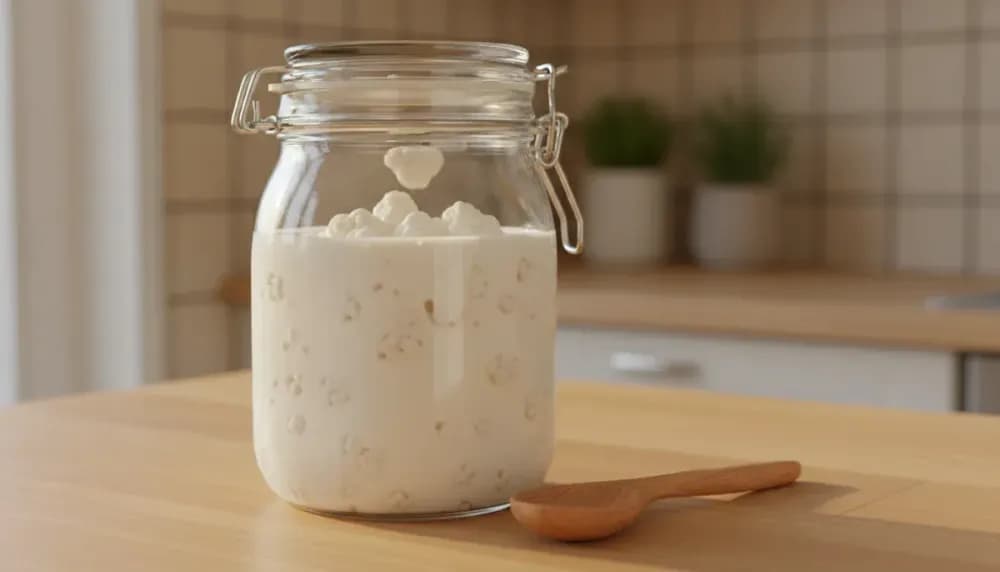
Have you ever looked at your kefir grains and wondered if you're doing this whole thing right? Maybe they're sitting in your fridge right now, and you're not quite sure if they're happy, dormant, or quietly giving up on you.
Here's the beautiful truth: kefir grains are remarkably resilient. They're living communities of bacteria and yeast that have survived for centuries, passed from hand to hand, adapting to different milks, temperatures, and even the occasional neglectful fermenter (we've all been there). Understanding how to care for them isn't about perfection—it's about learning their rhythms and working with their natural resilience.
In this guide, we'll explore how to feed your grains so they stay vibrant, how to store them when life gets busy, and how to revive them when they need a little extra love. Whether you're brand new to kefir or you've got a jar of forgotten grains calling your name, let's figure this out together.
#What Are Kefir Grains, Really?
Before we dive into care and feeding, let's get clear on what we're actually working with. Kefir grains aren't grains at all—they're gelatinous clusters of bacteria and yeast living together in a polysaccharide matrix called kefiran. Think of them as tiny, self-contained fermentation factories.
This symbiotic community (often called a SCOBY, similar to kombucha's mother culture) contains dozens of beneficial microorganisms. The bacteria and yeast work together, feeding on the lactose in milk and producing lactic acid, carbon dioxide, and trace amounts of alcohol. The result? That tangy, slightly effervescent kefir you love.
What makes kefir grains special is their ability to reproduce. Unlike commercial starter cultures that eventually weaken, healthy kefir grains actually grow over time, allowing you to share them with friends or expand your kefir production. They're living heirlooms, passed down through generations of fermenters.
#The Living Ecosystem Inside
Research suggests that kefir grains contain a remarkably diverse microbial community. Scientists have identified various Lactobacillus species, Leuconostoc, Acetobacter, and yeasts like Saccharomyces and Kluyveromyces, all working in concert. This diversity is what gives kefir its complex flavor and impressive probiotic profile.
The bacteria produce lactic acid, which gives kefir its characteristic tang and helps preserve it. The yeasts contribute subtle flavors and that gentle fizz. Together, they create an environment that's inhospitable to harmful bacteria—a self-protecting ecosystem that's been thriving for thousands of years.

#How to Feed Your Kefir Grains
Feeding kefir grains is beautifully simple: give them fresh milk, and they'll do the rest. But like any living thing, they have preferences and rhythms worth understanding.
#The Basic Feeding Ratio
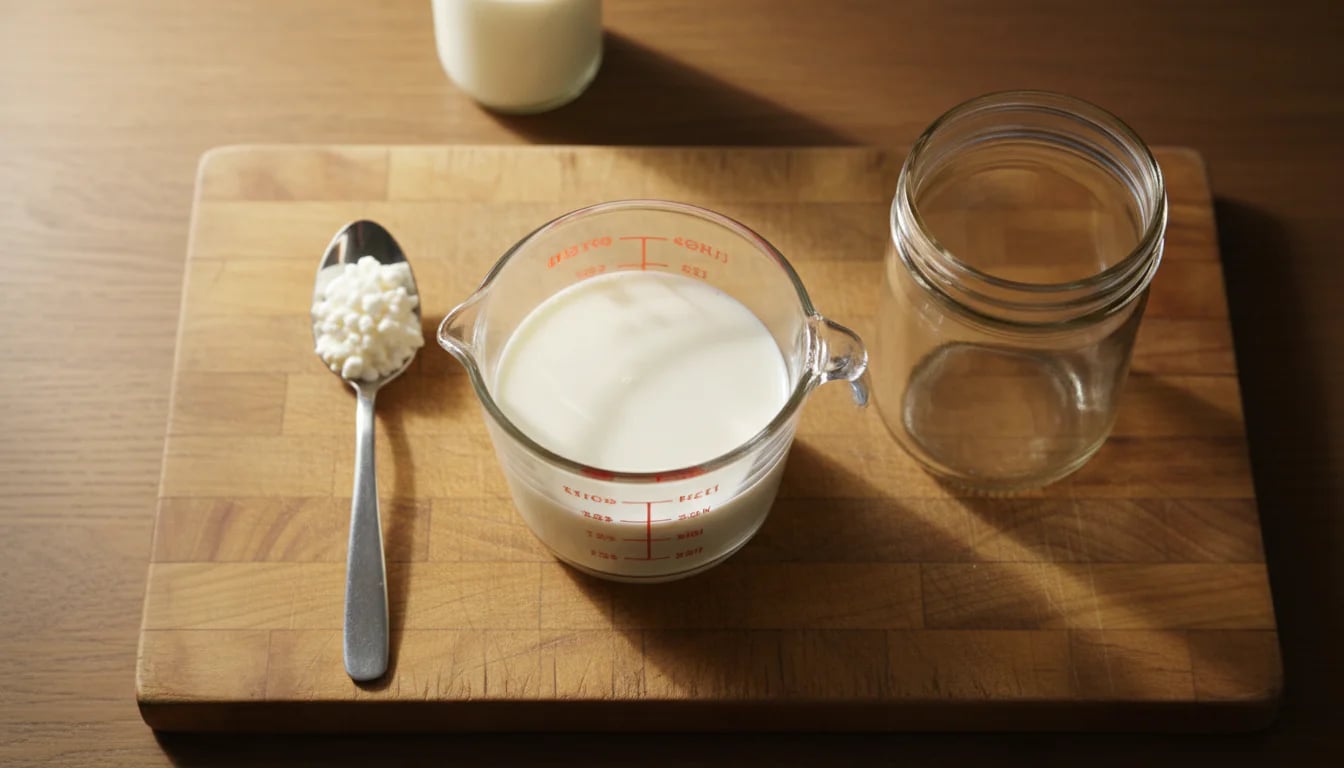
A good starting point is one tablespoon of kefir grains to one cup of milk. This ratio gives your grains enough food without overwhelming them. If you have more grains, scale up proportionally—two tablespoons to two cups, and so on.
You might notice your grains multiply over time. When they do, you have options: increase your milk quantity to make more kefir, share extras with friends, or compost the excess. Some fermenters even blend extra grains into smoothies for an extra probiotic boost.
#Choosing Your Milk
Kefir grains are remarkably adaptable, but they do have preferences. Whole milk provides the fat and nutrients that help grains thrive and multiply. The bacteria and yeast feed primarily on lactose (milk sugar), but they also benefit from the proteins and fats.
You can use:
- Whole cow's milk: The gold standard for grain health and growth
- Goat's milk: Works beautifully, produces a milder kefir
- Sheep's milk: Rich and creamy, grains love it
- Low-fat or skim milk: Will work, but grains may grow more slowly
- Non-dairy milks: Possible, but grains need regular "rest" periods in dairy milk to stay healthy
Raw milk, pasteurized, or ultra-pasteurized all work, though some fermenters report that grains are happiest with pasteurized (not ultra-pasteurized) milk. The key is consistency—sudden changes can stress your grains.
#The Feeding Rhythm
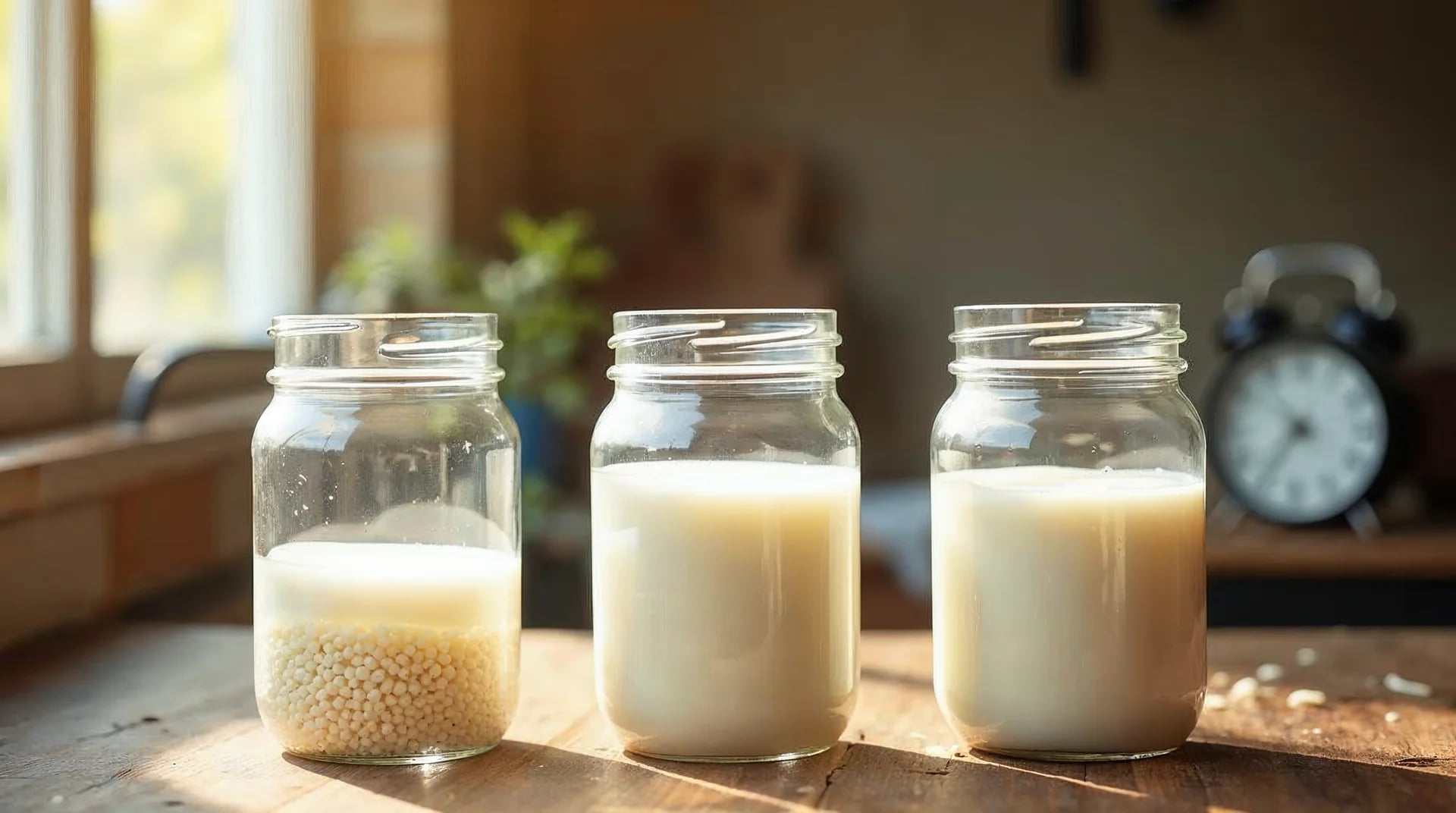
At room temperature (68-78°F), kefir grains typically ferment milk in 12-48 hours. The warmer your kitchen, the faster the fermentation. You'll know it's ready when the milk thickens and develops that characteristic tangy smell.
Here's the rhythm:
- Strain out your grains (stainless steel is fine — only avoid reactive metals like aluminum or copper in prolonged contact with the acidic ferment)
- Transfer grains to a clean jar
- Add fresh milk
- Cover loosely (grains need to breathe)
- Let sit at room temperature until the next batch is ready
You don't need to rinse your grains between batches—they're happiest with a thin coating of kefir on them. Rinsing can actually stress them and slow fermentation.
#Storing Kefir Grains: When You Need a Break
Life happens. Maybe you're traveling, feeling overwhelmed, or just need a break from daily kefir making. The good news? Your grains can wait for you.
#Short-Term Storage (Up to 2 Weeks)
For a brief pause, simply:
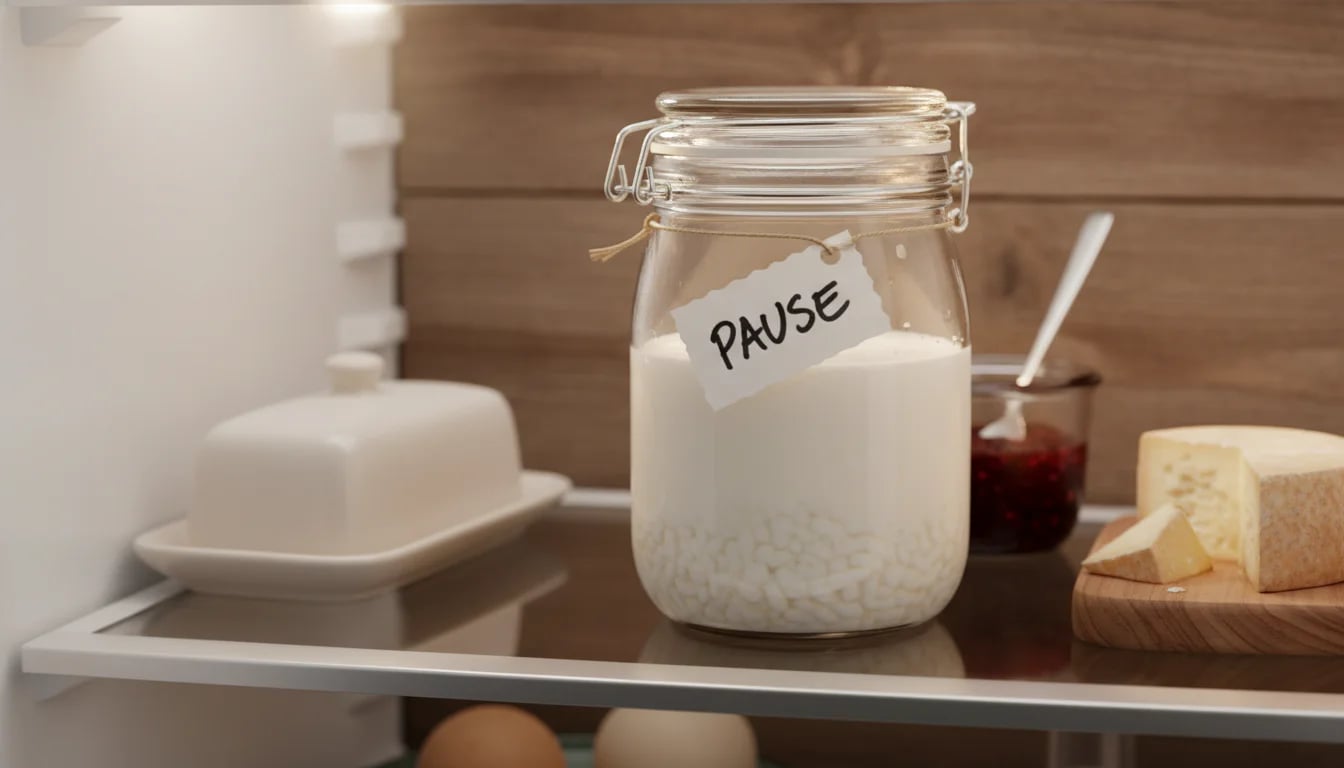
- Place your grains in fresh milk (use a bit more milk than usual—about 2 cups per tablespoon of grains)
- Cover the jar
- Store in the refrigerator
The cold slows fermentation dramatically. Your grains will continue working, just very slowly. When you return, you might find very thick, tangy kefir—perfectly normal. Strain it out, and your grains should be ready to resume their regular schedule after one or two room-temperature batches.
#Long-Term Storage (Weeks to Months)
For longer breaks, you have several options:
Refrigerator Method: Change the milk about weekly. This suits short-to-medium breaks — roughly a couple of weeks up to about a month; for longer pauses, freeze or dry your grains instead. Expect a few batches to fully wake them up when you restart.
Freezer Method: Rinse grains gently, pat dry, and freeze in a small amount of milk or dry in a sealed container. Frozen grains can last 6-12 months. When reviving, expect a longer recovery period—sometimes 1-2 weeks of daily feeding before they're back to full strength.
Dehydration Method: Rinse grains, spread on parchment paper, and air-dry at room temperature for 3-5 days until completely dry and hard. Store in a sealed container in a cool, dark place. Dried grains can last years and are perfect for sharing by mail. Rehydration takes patience—several days of soaking in fresh milk, changed daily.
#A Note on Grain Health
The longer grains are stored, the more recovery time they'll need. This is totally normal. Think of it like waking up from hibernation—they need time to rebuild their population and get back into rhythm. Be patient and gentle with them during this transition.
#How to Revive Struggling or Dormant Grains
Sometimes grains need extra care. Maybe they've been stored too long, exposed to extreme temperatures, or contaminated with something they didn't like. Here's how to bring them back.
#Signs Your Grains Need Help
You might notice:
- Fermentation taking much longer than usual (3+ days with no thickening)
- Grains looking slimy, discolored, or developing an off smell
- Kefir tasting unpleasantly bitter or "off"
- Grains not multiplying or even shrinking
- Separation happening too quickly (whey separating within hours)
Don't panic. Most of these issues are reversible with patience and consistent care.
#The Revival Protocol
Step 1: Fresh Start Rinse your grains gently in filtered or dechlorinated water to clear accumulated debris. (Rinsing won't selectively remove "bad" bacteria — it just clears buildup and can strip some of the protective kefiran coating, so do it sparingly and mainly when reviving struggling grains.)
Step 2: Small Batches Start with a small amount of fresh, whole milk—just enough to cover the grains. This concentrates their efforts and helps them rebuild their population.
Step 3: Daily Feeding For the first week, change the milk every 24 hours, even if fermentation hasn't completed. You're essentially giving them fresh food and removing waste products. Discard or use the kefir (it might not taste great initially, but it's usually safe).
Step 4: Patience Revival can take anywhere from a few days to two weeks. You'll know they're recovering when:
- Fermentation speeds up
- The kefir tastes pleasantly tangy (not bitter or off)
- Grains start to look plumper and whiter
- You notice slight growth
Step 5: Gradual Increase Once they're fermenting consistently in 24 hours, gradually increase the milk quantity back to your normal ratio.
#When to Let Go
Sometimes, despite our best efforts, grains don't recover. If after two weeks of daily feeding you see no improvement—or if grains develop a truly foul smell or visible mold—it might be time to start fresh with new grains. It's not a failure; it's just part of working with living cultures.
Many fermentation communities are happy to share grains. You might also explore other fermented beverages like kombucha or jun tea while you wait for new kefir grains.
#The Bigger Picture: Why Kefir Grains Matter
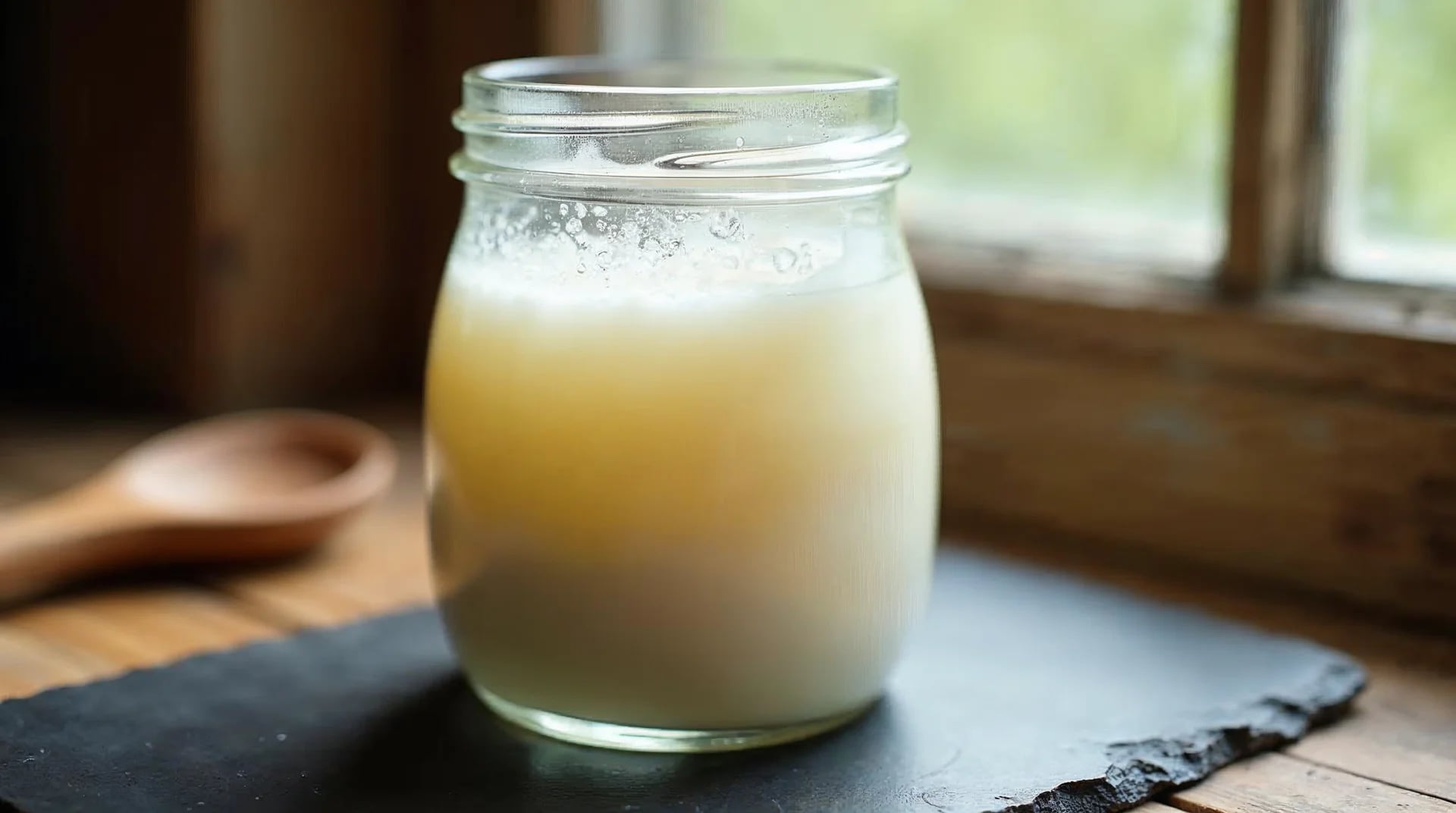
Beyond the practical care and feeding, there's something profound about maintaining kefir grains. You're participating in an ancient tradition of food preservation and probiotic cultivation that predates refrigeration, pasteurization, and modern medicine.
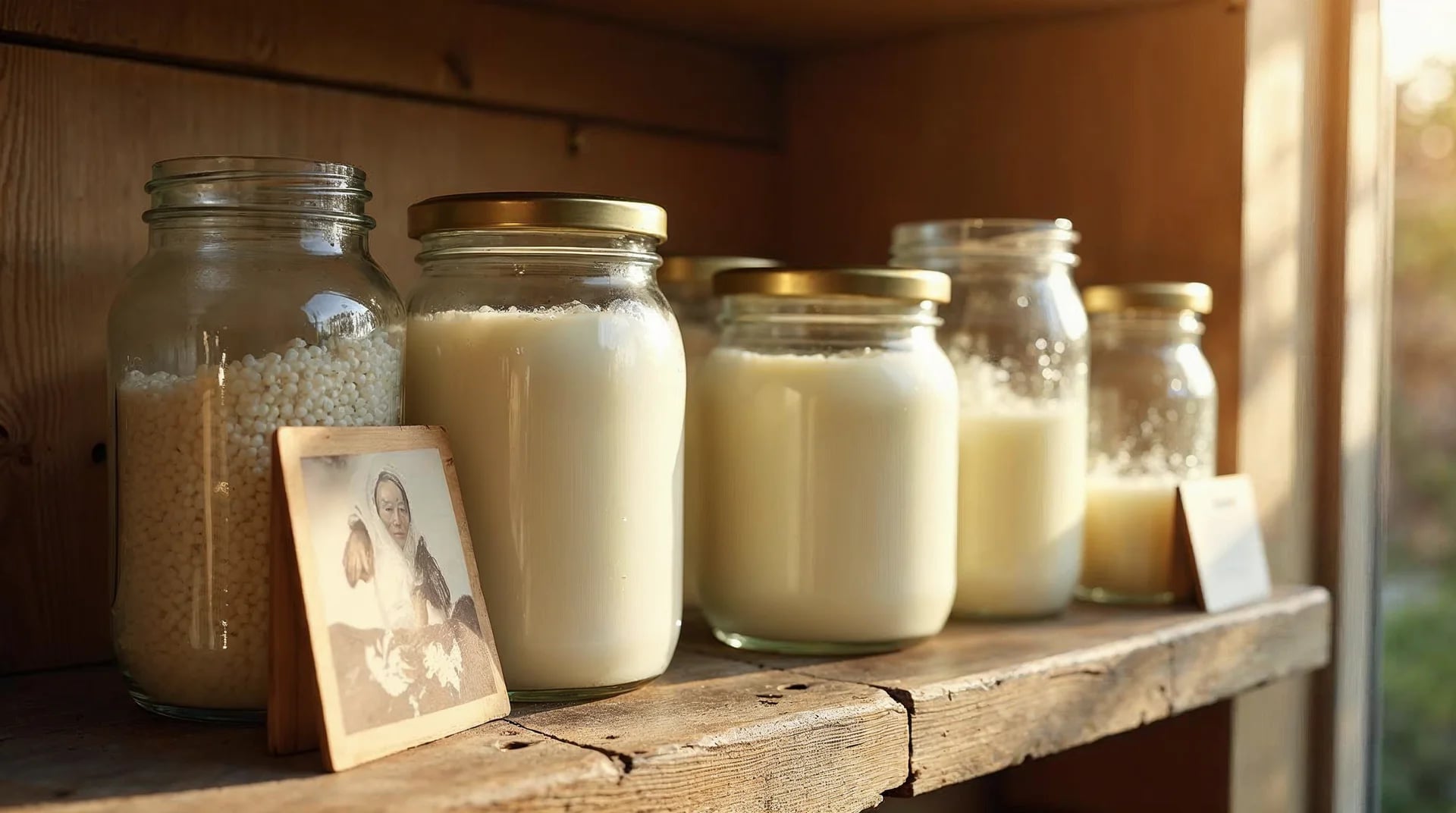
Every time you strain your grains and add fresh milk, you're continuing a chain of care that stretches back centuries. The grains you're tending might be descendants of cultures that nourished people in the Caucasus Mountains generations ago. They've survived wars, migrations, and the industrialization of our food system.
Studies on gut health suggest the diverse microbial communities in kefir may support digestive wellness, with early (mostly preliminary) research also exploring effects on immune function and the gut-brain axis. But beyond the science, there's the simple satisfaction of creating nourishing food with your own hands, of working with living cultures that respond to your care.
#Building a Relationship with Your Grains
You might find, as many fermenters do, that caring for kefir grains becomes a small daily ritual—a moment of connection with the microbial world that's usually invisible to us. You'll learn to read your grains' signals, to understand their rhythms, to know when they're happy or stressed.
This isn't just about making a probiotic beverage (though that's wonderful too). It's about slowing down, paying attention, and participating in the transformation that happens when we work with, rather than against, the natural world.
Some fermenters name their grains. Others talk to them. It might sound silly, but there's wisdom in treating these living cultures with affection and respect. They're doing remarkable work, after all—turning simple milk into a complex, nourishing food that's been sustaining humans for millennia.
#Your Kefir Journey Starts Here
Whether you're just beginning with your first tablespoon of grains or you're reviving a jar that's been sitting in your fridge for months, remember this: kefir grains are resilient, forgiving, and remarkably adaptable. They want to thrive. Your job is simply to provide fresh milk, a comfortable temperature, and a little patience.
You don't need fancy equipment or perfect conditions. A jar, some milk, a strainer, and consistent care are all it takes. The grains will teach you what they need—you just have to pay attention.
Start simple. Feed your grains daily if you can, or weekly if that's what works for your life. Store them when you need a break. Revive them when you're ready to return. There's no perfect way to do this, only your way.
And when you pour that first glass of tangy, creamy kefir you made yourself—knowing that you've nurtured these living cultures and they've transformed simple milk into something extraordinary—you'll understand why fermenters have been tending these grains for generations.
The microbes are waiting. The milk is ready. Your kefir journey begins with a single batch.
Disclaimer: This article is for informational and educational purposes only. It is not intended to be a substitute for professional medical advice, diagnosis, or treatment. Individual results may vary. Please consult your healthcare provider before beginning any new dietary practice, especially if you have a medical condition or take medications.