
Important Disclaimer: This article is based on personal experience and publicly available research. It is not medical advice, nor is it intended to diagnose, treat, cure, or prevent any disease. The author is not a medical professional, and the experiences shared are individual results that may not be typical. Always consult with a qualified healthcare provider before making any changes to your diet, supplement routine, or treatment plan. The statements in this article have not been evaluated by the FDA. By reading this article, you acknowledge that you are responsible for your own health decisions.
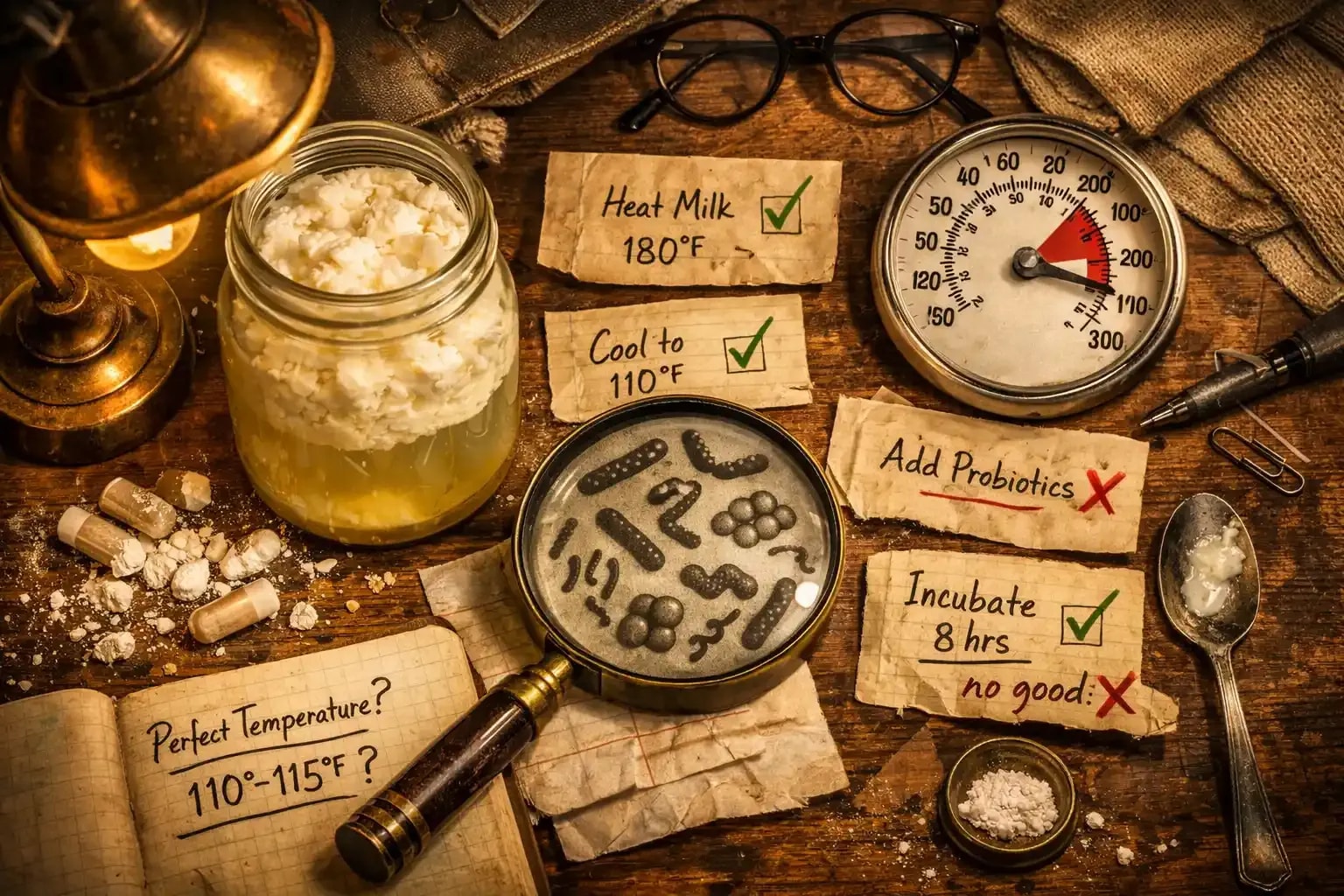
You've done everything right. Crushed the tablets. Measured the milk. Set the timer for 36 hours. And yet... liquid disappointment. Or cottage cheese chaos. Or worse—yogurt that looks perfect but delivers zero benefits.
You're not alone. And more importantly, you're not doing anything fundamentally wrong.
After three years of making L. reuteri yogurt for my family—and helping dozens of frustrated fermenters troubleshoot their failures—I've identified the eight hidden culprits that sabotage even the most careful yogurt makers. Some are obvious once you know them. Others are counterintuitive enough that even experienced fermenters miss them entirely.
The good news? Every single one of these mistakes is fixable. Often with adjustments you can make before your next batch hits the water bath.
Let's diagnose what's really going wrong.
Key Takeaways
- Temperature is the #1 killer: L. reuteri needs 97–100°F; most yogurt makers and Instant Pots run at 110–115°F and cook it. Verify with your own thermometer.
- Feed the culture: skipping prebiotic fiber (inulin or Prebio Plus) leaves you with thin, low-count yogurt.
- A separated first batch is normal, not a failure — batch #2 (using the first as starter) comes out smooth.
- Weak starter fails silently: old BioGaia tablets can be mostly dead; a healthy batch shows thickening by 12–16 hours.
- Give it 6–8 weeks: this is a microbiome intervention, not a drug — benefits build gradually, and mild early die-off is a good sign.
What Is L. Reuteri Yogurt and Why Does It Fail?
L. reuteri yogurt is a specialized fermented dairy product made with Lactobacillus reuteri (now reclassified as Limosilactobacillus reuteri), a probiotic bacterium that once lived in nearly all human guts but has been lost by 96% of modern Americans. Unlike conventional yogurt fermented for 4-8 hours at 110-115°F, L. reuteri yogurt requires 36 hours at body temperature (97-100°F) to achieve therapeutic bacterial counts of 200+ billion CFUs per half-cup serving.
The unique fermentation requirements are precisely why L. reuteri yogurt fails more often than regular yogurt. Standard yogurt-making equipment and techniques don't work. The bacteria are temperature-sensitive, slow-growing, and easily outcompeted by environmental contaminants.
This guide addresses every common failure point based on Dr. William Davis's protocols from Super Gut, community troubleshooting reports, and three years of personal experimentation.
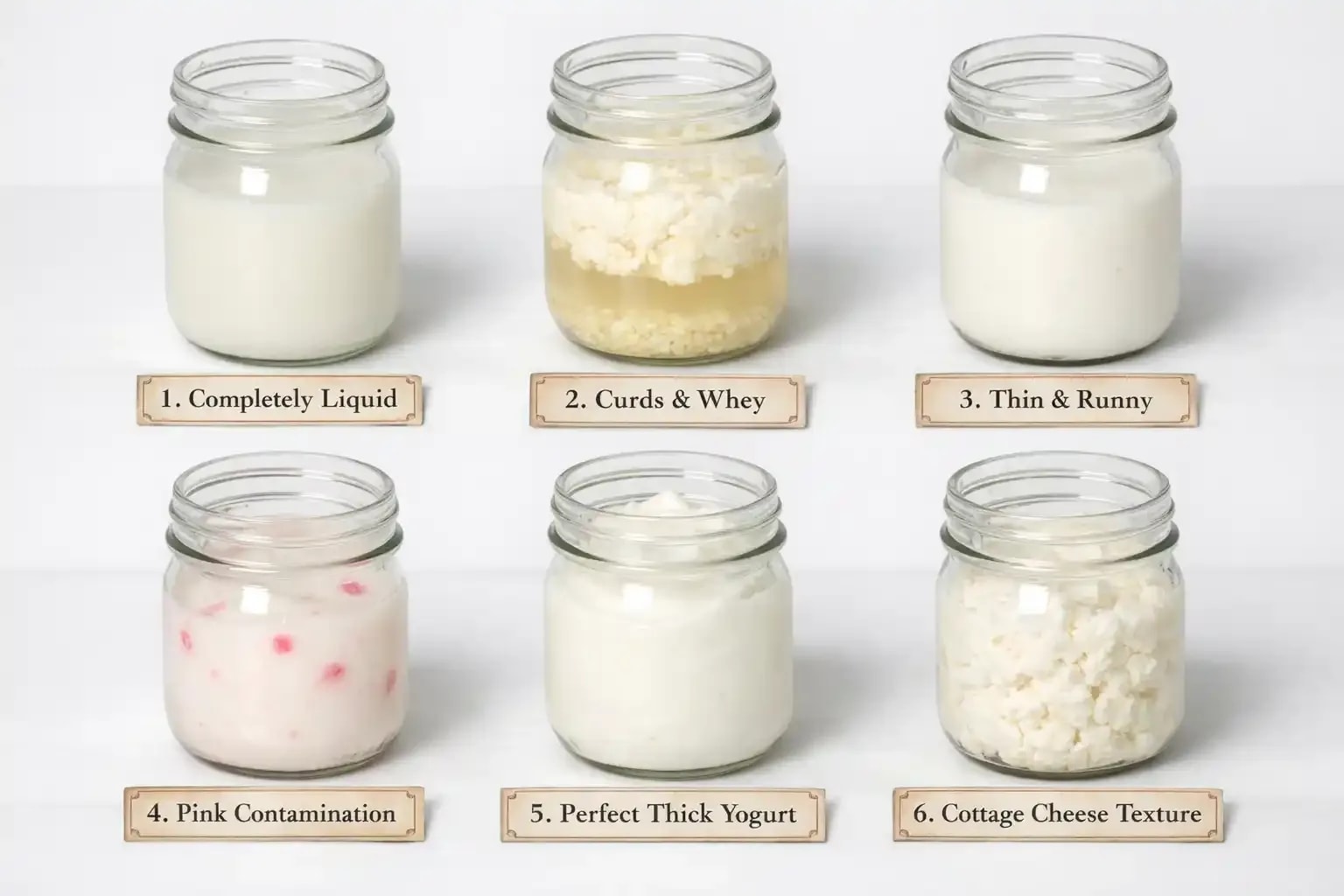
Quick Diagnosis: What Does Your Failed Batch Look Like?
Before diving into the eight mistakes, let's figure out which ones are most likely affecting you:
| Your Symptom | Most Likely Culprits |
|---|---|
| No thickening at all | Mistake #1 (Temperature too high), #2 (Weak Starter) |
| Complete separation (curds + whey) | Mistake #7 (Milk Type), #3 (Missing Prebiotic), or normal first-batch effect |
| Thin, runny texture | Mistake #1 (Temperature too low), #6 (Too Many Generations) |
| Bad smell or pink/orange spots | Mistake #4 (Contamination) |
| Yogurt looks good but no health benefits | Mistake #5 (Starting Too Fast), #8 (Timeline Expectations) |
| Inconsistent results batch to batch | Mistake #6 (Generation Drift), #4 (Contamination) |
| Digestive distress after eating | Mistake #5 (Die-Off Reactions) |
Now let's fix them.
Mistake #1: Wrong Fermentation Temperature (The Silent Killer)
Why Temperature Is the #1 Cause of L. Reuteri Yogurt Failure
The Problem: L. reuteri isn't like the bacteria in regular yogurt. Standard yogurt cultures (Lactobacillus bulgaricus and Streptococcus thermophilus) thrive at 110-115°F. L. reuteri starts dying at those temperatures.
This is the number one reason for failed batches, and it's especially cruel because your equipment might be the problem—not you.
The Science: L. reuteri evolved inside human bodies. It thrives at body temperature (97-100°F) and begins experiencing significant die-off at 109-110°F. At 115°F or higher, you're essentially killing the bacteria before fermentation even begins.
L. Reuteri Temperature Guide: The Danger Zone
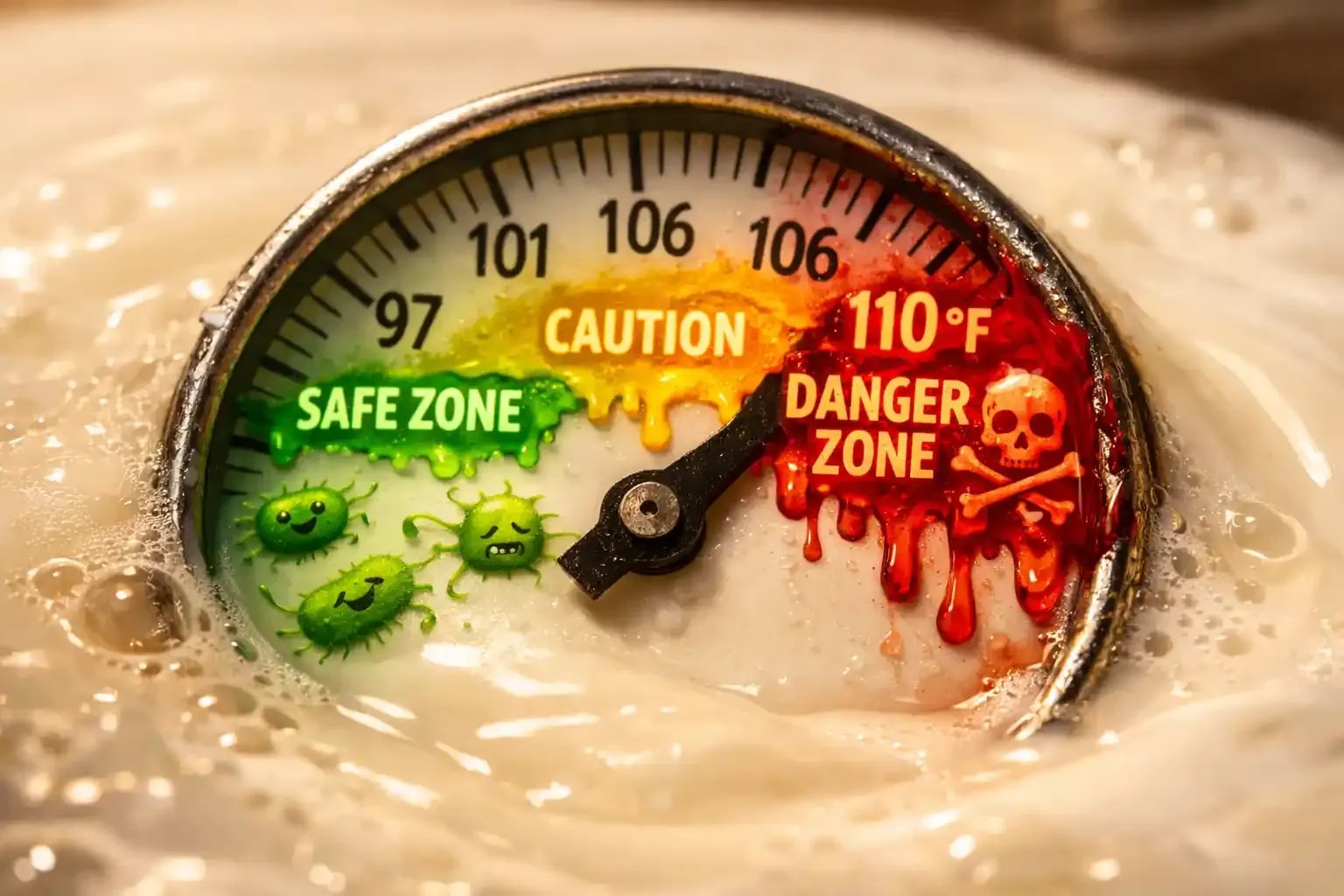
| Temperature | What Happens to L. Reuteri |
|---|---|
| Below 95°F | Slow reproduction, thin results, low CFUs |
| 97-100°F | Optimal growth zone for L. reuteri |
| 100-106°F | Acceptable for SIBO yogurt blends (compromise for multiple strains) |
| 107-109°F | Stress zone—variable results |
| 110°F+ | Bacterial die-off begins |
| 115°F+ | Near-complete bacteria death |
Why Your Yogurt Maker or Instant Pot Might Be Killing Your L. Reuteri
Many yogurt makers and Instant Pots are pre-set for conventional yogurt—which means they heat to 110-115°F by default. Some don't even display the temperature; they just have a "yogurt" button that quietly incinerates your L. reuteri.
Even devices with temperature settings can be inaccurate. I've tested yogurt makers that displayed "100°F" while actually running at 112°F. That's not a minor calibration error—that's the difference between success and failure.
How to Fix Temperature Problems
-
Test your equipment before sacrificing another batch. Fill your fermentation vessel with water, set your device to 100°F, wait 30-60 minutes, then check with an independent thermometer (not the one built into your device).
-
If your device runs hot: Lower the setting. If it displays 100°F but reads 108°F, try setting it to 92-94°F and retest.
-
If your device has no adjustable temperature: You need a different device. A sous vide precision cooker is the gold standard because it maintains exact temperatures indefinitely. An adjustable-temperature yogurt maker with precise settings also works well — see our complete L. reuteri yogurt equipment guide for the full setup.
-
Check the yogurt temperature, not just the water. One commenter on Dr. Davis's blog discovered his water bath was 98°F but the yogurt inside was 112°F due to how heat conducted through his jar. Use a probe thermometer in the actual yogurt mixture.
Related reading: The Yogurt Awakening: Dr. Davis's L. Reuteri Recipe covers the complete method with proper temperature guidance.
Mistake #2: Using Expired or Weak Starter Cultures

Why Your L. Reuteri Starter Might Be Dead
The Problem: Your starter is the seed. If the seed is dead, nothing grows—no matter how perfect your conditions.
The Science: L. reuteri bacteria are living organisms. They degrade over time, especially when exposed to heat, moisture, or improper storage. That bottle of BioGaia Gastrus that's been sitting in your bathroom cabinet for 18 months? It might contain mostly dead bacteria.
Signs Your L. Reuteri Starter Is Too Weak
- No thickening whatsoever after 12-16 hours (healthy batches show early signs by then)
- Dramatically thinner results compared to your first batches
- Loss of the characteristic mild, slightly tangy smell
How to Fix Weak Starter Problems
-
Check expiration dates. Seems obvious, but many people overlook this.
-
Store tablets properly. BioGaia products should be refrigerated after opening. Keep capsules in a cool, dry place away from bathroom humidity.
-
Use the right potency for your starter:
- BioGaia Gastrus: 10 tablets for first batch (provides ~200 million CFUs total of DSM 17938 + ATCC PTA 6475)
- BioGaia Osfortis: 1 capsule (provides 5 billion CFUs of ATCC PTA 6475)
- Oxiceutics MyReuteri: Now available in 50 billion CFU—currently the preferred starter
-
Consider the saved starter method. After making a successful batch, freeze portions in ice cube trays. These frozen cubes can serve as reliable starter for months, bypassing the need to rely on potentially degraded tablets.
Pro Tip: If using the generational method (using previous batch as starter), your subsequent batches should contain dramatically more CFUs than your retail tablets—50-300 billion vs. 200 million. So if batch #3 suddenly fails, the problem isn't your starter; look elsewhere.
Mistake #3: Skipping the Prebiotic (Starving Your Bacteria)

Why Prebiotic Fiber Is Essential for L. Reuteri Yogurt
The Problem: You're inviting bacteria to a 36-hour party but forgetting to serve food.
The Science: The prebiotic fiber (inulin or Prebio Plus) isn't just for texture—it's the primary food source that allows L. reuteri to multiply exponentially during the extended fermentation. Without it, bacteria consume the milk's lactose but may exhaust their food supply before reaching optimal counts.
As Dr. William Davis explains, prebiotic fiber enables "greater bacterial counts, since bacteria feed on the fibers, as well as for better texture and mouthfeel."
L. Reuteri Yogurt: With vs. Without Prebiotic Fiber
| With Prebiotic | Without Prebiotic |
|---|---|
| Thick, creamy texture | Often thin, runny |
| Higher CFU counts (200+ billion) | Lower bacterial multiplication |
| Better taste | More acidic, less pleasant |
| Reliable fermentation | Variable results |
How to Fix Prebiotic Problems
-
Use 2 tablespoons of prebiotic fiber per quart of milk. This applies to both first batches and recultured batches.
-
Choose the right prebiotic:
- Inulin: Most commonly recommended, widely available
- Prebio Plus: Donna Schwenk's blend, specifically formulated for L. reuteri
- Raw potato starch (unmodified): Alternative option
-
Make a slurry first. Don't just dump prebiotic into the milk—it clumps. Mix your crushed tablets or starter yogurt with the prebiotic fiber and 2 tablespoons of milk to create a smooth slurry, then incorporate into the rest of the milk.
-
If your batches are separating excessively: Try reducing prebiotic to 1 tablespoon. Sometimes the bacteria become overactive with too much food, producing excess acid that causes aggressive separation.
Related reading: Dr. Davis SIBO Yogurt Recipe: Triple-Strain Guide includes detailed instructions on proper prebiotic use.
Mistake #4: Contamination from Inadequate Sanitization

How Contamination Ruins L. Reuteri Yogurt Batches
The Problem: Invisible invaders are competing with—and potentially defeating—your L. reuteri.
The Science: Your kitchen, utensils, and even your plumbing harbor millions of environmental bacteria and yeasts. These organisms don't care about your health goals; they just want to colonize that warm, nutritious milk you've prepared. If they establish a foothold before L. reuteri dominates, you get competition at best and contamination at worst.
Warning Signs of Contaminated L. Reuteri Yogurt
- Pink, orange, or unusual colored spots on surface
- Off-putting or "wrong" smell (not the mild tangy/cheesy scent of L. reuteri)
- Stringy, slimy, or unusually gelatinous texture
- Bitter aftertaste (distinct from normal pleasant tang)
- Mold growth (any fuzzy patches)
If you see any of these warning signs: Discard the batch. Don't try to salvage it.
The Complete Sanitization Protocol for L. Reuteri Yogurt
One frustrated commenter on Dr. Davis's blog shared a breakthrough after "over a dozen bad batches": boiling all equipment for 10 minutes before each batch. Not hot water. Not dishwasher. Boiling.
Here's the full sanitization protocol:
-
Boil mason jars, lids, spoons, and all utensils for 10 minutes. This exceeds what canning standards require and eliminates bacteria that survive lesser methods.
-
Let equipment cool naturally before adding milk and starter. Don't rush this—hot equipment will kill your starter.
-
Use clean, fresh ingredients. Don't use milk that's been open for a week.
-
Cover loosely during fermentation (plastic wrap or a loose lid) so airborne contaminants stay out while fermentation gas escapes — this is Dr. Davis's recommendation. Note: if you ferment in a sous-vide water bath, fill the water only to the milk level (not over the lids) so a loose lid won't let water in — or screw plastic lids on securely and fully submerge instead.
-
Keep the fermentation vessel away from air vents, fans, and foot traffic. Air movement spreads environmental microbes.
-
Wash hands thoroughly before handling anything. Your skin bacteria are among the most likely contaminants.
Pro Tip: If you've had multiple contamination failures, consider your water source. Some households have plumbing that harbors bacteria. Using filtered or bottled water for rinsing equipment after boiling can help.
Mistake #5: Starting Too Fast (Die-Off Reactions)
What Are L. Reuteri Die-Off Symptoms?
The Problem: Your yogurt is working perfectly. Your body just isn't ready for it.
This mistake is different from the others because the yogurt isn't failing—you're having an adverse reaction. And paradoxically, it's often a sign that the yogurt is doing exactly what it should.
The Science: If you have SIBO (Small Intestinal Bacterial Overgrowth), dysbiosis, or an imbalanced gut microbiome, introducing powerful antimicrobial probiotics can trigger what's called a Herxheimer reaction (or "die-off"). As L. reuteri produces bacteriocins that kill harmful bacteria, those dying organisms release endotoxins. Your body's response to those endotoxins can feel like the flu—or worse.
Common L. Reuteri Die-Off Symptoms
- Headaches
- Bloating, gas, digestive distress
- Fatigue
- Brain fog
- Skin breakouts
- Anxiety or mood changes
- Disrupted sleep
These symptoms typically appear within hours of consuming the yogurt and may last 24-72 hours.
How to Prevent and Manage Die-Off Reactions
-
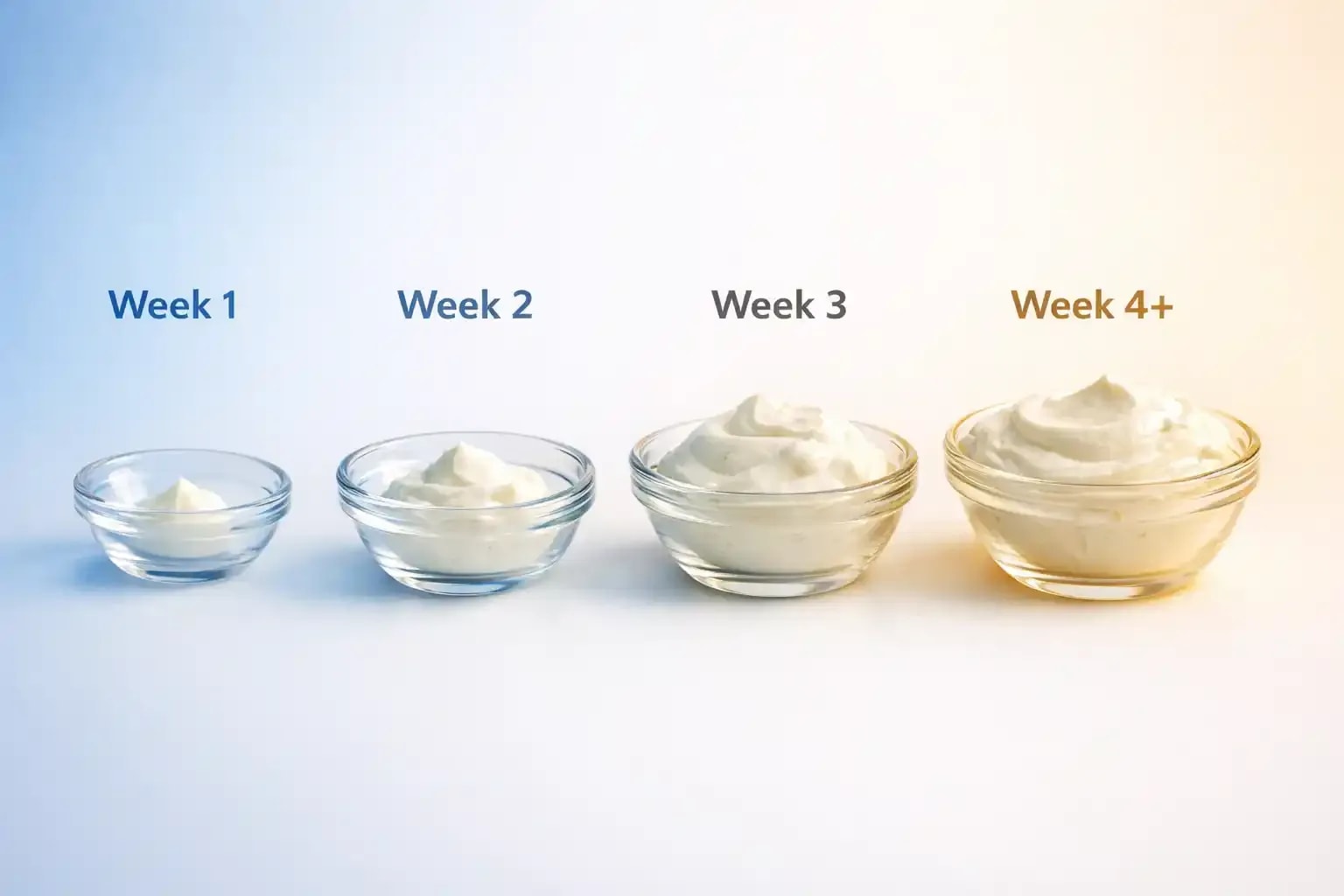
Start with a much smaller dose. Instead of a full ½ cup, begin with 1-2 tablespoons. Stay at this dose for 3-5 days before increasing.
-
Increase gradually. Move from 2 tablespoons to ¼ cup, then to ½ cup over 2-3 weeks.
-
Use activated charcoal when symptoms appear. Dr. Davis recommends 1,000 mg in capsule form when die-off symptoms strike. The charcoal binds endotoxins and typically reduces symptoms within minutes. Important: Only take charcoal when symptoms occur—it also binds beneficial nutrients.
-
Don't jump straight to SIBO yogurt. If you're new to L. reuteri, start with L. reuteri-only yogurt before attempting the triple-strain SIBO blend. Many people "jump in at the SIBO blend" without establishing tolerance first.
L. Reuteri Yogurt Gradual Introduction Protocol
| Week | Daily Amount | Notes |
|---|---|---|
| 1 | 1-2 tablespoons | Start here, assess tolerance |
| 2 | ¼ cup | Increase if no significant reactions |
| 3 | ⅓ cup | Approaching therapeutic dose |
| 4+ | ½ cup | Full therapeutic dose |
Related reading: The Histamine Paradox: Why L. Reuteri Yogurt May Help Histamine Intolerance discusses die-off reactions in the context of histamine and SIBO.
Mistake #6: Batch Reculturing Beyond Safe Generations
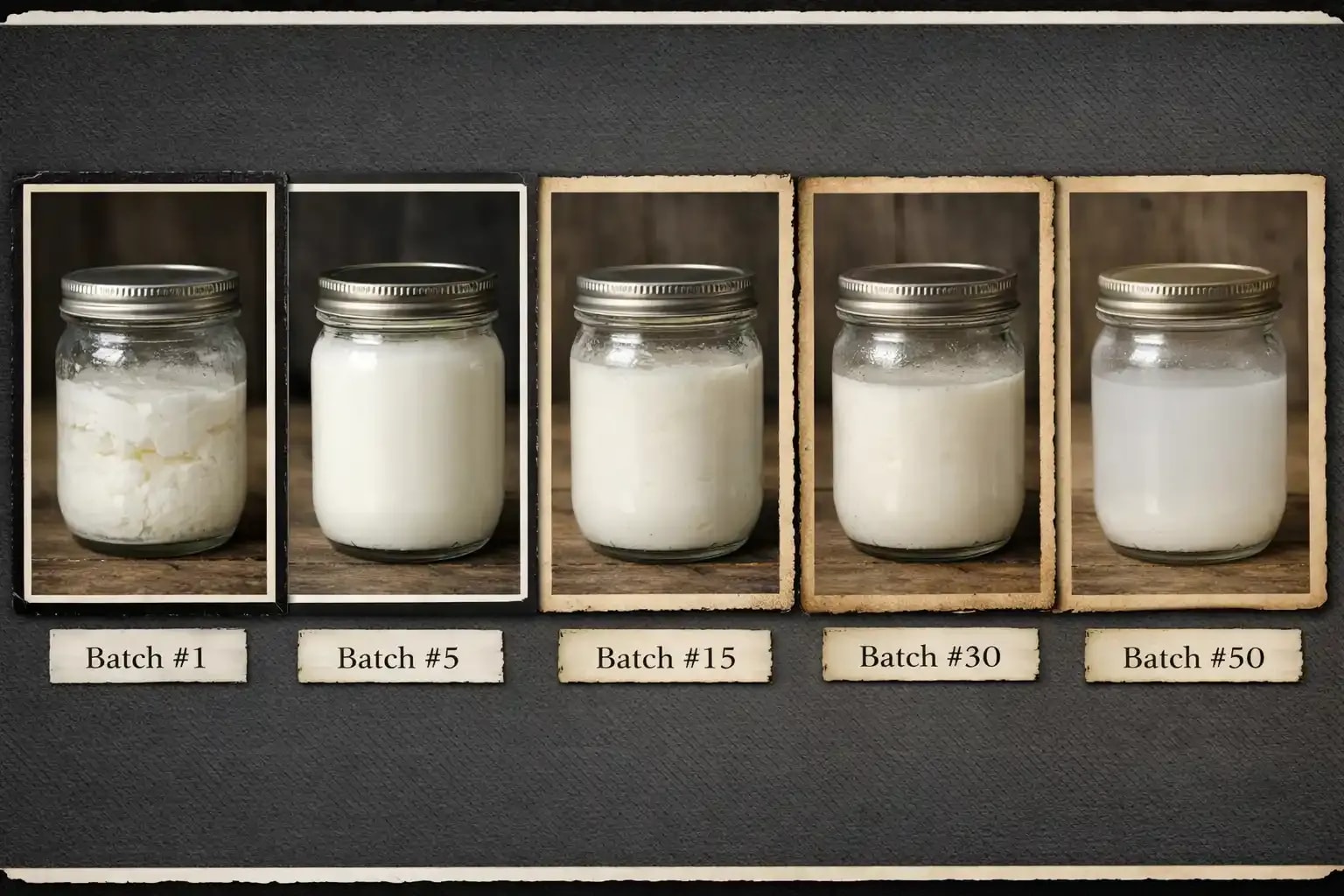
How Many Times Can You Reculture L. Reuteri Yogurt?
The Problem: Your yogurt is slowly transforming into something that's no longer L. reuteri-dominant.
The Science: The generational method—using a portion of your previous batch as starter for the next—is economical and usually produces thicker, creamier yogurt. But it's not infinitely sustainable.
With each generation, small changes accumulate:
- Environmental bacteria may establish low-level presence
- Strain ratios can drift (especially in multi-strain SIBO yogurt)
- Bacteriophages (viruses that attack bacteria) can build up
- The original L. reuteri population may gradually be overtaken
Maximum Reculturing Generations for L. Reuteri Yogurt
| Yogurt Type | Generational Limit | Why |
|---|---|---|
| L. reuteri only | Up to 100+ generations* | Single strain, stable if uncontaminated |
| SIBO triple-strain | 8-10 generations maximum | Strain competition causes population drift |
| Any yogurt with issues | Start fresh immediately | Don't try to "fix" a problematic line |
*Dr. Davis has reportedly made 100+ generations of single-strain L. reuteri yogurt without issues—but this assumes perfect contamination prevention and consistent technique.
Signs of Generation Drift in L. Reuteri Yogurt
- Gradually thinning texture over multiple batches
- Changing taste profile
- Reduced health benefits
- Increased separation in later generations
How to Fix Generation Drift Problems
-
Track your generations. Keep a simple log: "Batch #1 (from tablets), Batch #2, Batch #3..."
-
Use the saved starter method. After making a successful first or second batch:
- Freeze 2-tablespoon portions in ice cube trays
- Store frozen cubes in a sealed container
- Each cube becomes "generation 1" starter, bypassing drift concerns
-
Start fresh if anything seems off. If texture, taste, or effects change noticeably, don't keep reculturing hoping it will improve. Start over with fresh tablets or frozen starter.
-
For the 2025 SIBO recipe specifically: ferment L. reuteri and L. gasseri together (106°F/36h), and ferment B. subtilis HU58 separately (~90–100°F/24h), then combine at serving. Dr. Davis recommends this because HU58 ferments faster and prefers cooler, shorter conditions.
Mistake #7: Wrong Milk Type (The UHT Debate)

What Is the Best Milk for L. Reuteri Yogurt?
The Problem: Your milk might be sabotaging your texture—or your first-batch separation is completely normal and you don't know it.
The Science: Dr. Davis's original recipe calls for half-and-half (which is widely available in the US as a 50/50 mix of whole milk and light cream). But milk type dramatically affects results.
Milk Type Comparison for L. Reuteri Yogurt
| Milk Type | Expected Result | Notes |
|---|---|---|
| Half-and-half (UHT/ultra-pasteurized) | Thick, creamy | Best first-batch results |
| Whole milk (UHT) | Good, slightly less thick | Common alternative |
| Raw milk | Often separates | Needs pre-heating to 195°F |
| Goat milk | Thin, typically separates | Natural for this milk type |
| Low-fat milk | Thin results | Not recommended |
| Non-dairy (coconut, etc.) | Requires guar gum, very different process | See specialized recipes |
Why UHT Milk Works Best for L. Reuteri Yogurt
Ultra-High Temperature (UHT) pasteurized milk has a significant advantage for first batches: the high-temperature processing denatures lactoglobulin proteins, allowing them to form a protein mesh that thickens the yogurt. Non-UHT milk may need to be pre-heated to 195°F (90°C) for 10 minutes to achieve the same effect.
Why First-Batch Separation Is Often Normal
Here's what trips up many people: first batches commonly separate into curds and whey, regardless of milk type. This isn't failure—it's the bacteria "waking up" from dormancy.
From Donna Schwenk at Cultured Food Life: "The first batch with a new sachet can often (but not always) separate into strong curds and whey and have a strong cheesy smell. If you use this strong batch as a starter... the next batch will have little or no separation and be creamy."
How to Fix Milk-Related Problems
-
For first batches: Use UHT half-and-half or UHT whole milk. Most organic milk is ultra-pasteurized.
-
If you can't find UHT milk: Heat your milk to 195°F (90°C), hold for 10 minutes, then cool to 100°F before adding starter.
-
Don't judge by first batch. Wait until batch #2 or #3 (using previous batch as starter) before evaluating your success.
-
If later batches still separate: Review other factors—temperature, contamination, generation drift. Persistent separation in recultured batches suggests another problem.
-
Separation is still beneficial. A separated batch contains the same CFUs as a smooth batch. The bacteria live in both the curds and whey. Consume both, or use the separated batch to start your next (likely smoother) batch.
Mistake #8: Expecting Instant Results (Timeline Misalignment)

How Long Does L. Reuteri Yogurt Take to Work?
The Problem: You've eaten L. reuteri yogurt for five days and don't feel like a superhuman. Must be broken.
The Science: L. reuteri isn't a drug that kicks in after one dose. It's a microbiome intervention—you're attempting to restore bacteria that most modern humans have lost entirely. This takes time.
The bacteria must:
- Survive stomach acid and reach your small intestine
- Establish colonization (L. reuteri uniquely colonizes the upper GI tract, not just the colon)
- Begin producing bacteriocins, signaling molecules, and metabolites
- Influence your gut-brain axis and immune system
- Accumulate enough population for noticeable effects
What People Notice Over Time (Everyone's Different)
There's no fixed schedule here — L. reuteri yogurt is a slow microbiome shift, not a drug, and responses vary a lot. Some people notice changes within a couple of weeks, others take a few months, and some notice little. Treat the ranges below as what some people report, not a promise:
| Timeframe | What some people report |
|---|---|
| Days 1-7 | Often nothing yet — maybe subtle digestive changes, or mild die-off if your gut is imbalanced. |
| Weeks 2-4 | For some, sleep or digestion is the first thing to shift. |
| Weeks 4-8 | Skin and overall well-being may start to feel different for responders. |
| Months 2-3+ | Where bigger changes happen, this is usually when they settle in. Some also describe feeling calmer or more socially at ease — often linked to L. reuteri's oxytocin effect, though that evidence is mostly from animal studies so far. |
Give it at least 6-8 weeks of daily ½-cup servings before deciding whether it's working for you — and remember that "not much changed" is a real, valid outcome for some people too.
Why Individual Responses to L. Reuteri Vary So Much
Some people notice changes within days. Others need months. Factors affecting response time include:
- Starting microbiome composition
- Presence of SIBO or dysbiosis
- Diet and lifestyle factors
- Strain selection (ATCC PTA 6475 provides more oxytocin effects than DSM 17938)
- Dose consistency
How to Optimize Your L. Reuteri Results
-
Commit to at least 6-8 weeks before evaluating whether it's "working."
-
Track specific metrics. Don't rely on vague feelings. Note:
- Sleep quality (use a tracker if possible)
- Skin condition (take photos)
- Mood patterns
- Digestive symptoms
- Energy levels
-
Ensure consistent dosing. Half a cup daily is the therapeutic target. Occasional consumption won't build the same microbiome presence.
-
Consider other factors. L. reuteri yogurt isn't magic that overrides a terrible diet, chronic stress, or other health issues. It works best as part of a comprehensive approach.
-
Check your expectations. The benefits are real and often profound—but they're not universal. Some people respond dramatically; others notice modest improvements. Both are valid outcomes.
Still Not Working? Advanced Troubleshooting

If you've addressed all eight mistakes and still struggle:
Equipment Deep-Dive
- Test your thermometer against a second thermometer
- Consider upgrading to a sous vide cooker for precise temperature control (and compare the Anova models to pick the right one)
- Rule out inconsistent power supply affecting heating elements
Starter Verification
- Order fresh BioGaia Gastrus or Osfortis directly from a reputable supplier
- Try a different starter source (Cultured Food Life's LR Superfood, MyReuteri)
- Verify you're using the correct strains (ATCC PTA 6475 and/or DSM 17938)
Process Audit
- Ferment the full 36 hours (L. reuteri growth accelerates dramatically after hour 24-30)
- Don't open the container during fermentation
- Refrigerate immediately after fermentation completes
Environmental Factors
- Move fermentation away from kitchen areas with high traffic
- Avoid fermenting near active sourdough starters or kefir (cross-contamination risk)
- Ensure stable room temperature (water baths compensate, but extreme fluctuations add stress)
The Bottom Line
L. reuteri yogurt isn't hard to make—but it does demand respect for the biology involved. These bacteria survived inside human guts for millennia before antibiotics and processed foods wiped them out. They know how to thrive. We just need to create the conditions they require.
When troubleshooting, start with temperature. It's the most common failure point and the easiest to verify. Then work through contamination, starter quality, and the other factors systematically.
And remember: a separated first batch, a slow start to noticing benefits, or a mild die-off reaction aren't signs of failure. They're signs that you're on the right track and just need patience.
Your microbiome took decades to reach its current state. Restoring L. reuteri takes weeks to months—but the results are worth the investment.
L. Reuteri Yogurt Troubleshooting Checklist

Use this quick reference before and during every batch:
✅ Temperature verified at 97-100°F with independent thermometer
✅ Starter fresh and properly stored (check expiration date)
✅ 2 tablespoons prebiotic fiber (inulin) per quart
✅ All equipment boiled for 10 minutes and cooled
✅ Starting with small doses if new to L. reuteri
✅ Tracking batch generations (fresh start every 8-10 for SIBO blend)
✅ Using UHT milk or pre-heated non-UHT milk
✅ Committing to 6-8 weeks before evaluating results

Related Resources
- The Yogurt Awakening: Dr. Davis's L. Reuteri Recipe — Complete beginner's guide to making L. reuteri yogurt
- Dr. Davis SIBO Yogurt Recipe: Triple-Strain Guide — Advanced recipe combining L. reuteri, L. gasseri, and B. coagulans
- The 2025 SIBO Yogurt Update: B. Subtilis Replaces B. Coagulans — Latest protocol changes from Dr. Davis
- SIBO and Fermented Foods: Safe vs. Harmful Guide — Which fermented foods help or hurt SIBO
- The Histamine Paradox: L. Reuteri and Histamine Intolerance — Why L. reuteri may help rather than worsen histamine issues

References
-
Davis, W. (2022). Super Gut: A Four-Week Plan to Reprogram Your Microbiome, Restore Health, and Lose Weight. Hachette Go.
-
"Troubleshooting L. reuteri yogurt." Dr. William Davis Blog. https://drdavisinfinitehealth.com/2024/10/troubleshooting-l-reuteri-yogurt/
-
"L reuteri Yogurt: Do's and Don'ts." Dr. William Davis Blog. https://drdavisinfinitehealth.com/2021/07/l-reuteri-yogurt-dos-and-donts/
-
"L. reuteri yogurt FAQ's." Dr. William Davis Blog. https://drdavisinfinitehealth.com/2019/08/l-reuteri-yogurt-faqs/
-
"Headaches, bloating, diarrhea with L. reuteri." Dr. William Davis Blog. https://drdavisinfinitehealth.com/2024/11/headaches-bloating-diarrhea-with-l-reuteri/
-
"L. Reuteri Superfood Starter FAQs." Cultured Food Life.
-
"Is Your L. Reuteri Yogurt Separating?" Cultured Food Life.
-
"How to make L.Reuteri Fermented Dairy." Luvele. https://www.luvele.com/blogs/recipe-blog/how-to-make-l-reuteri-yogurt
-
"LR FAQs." Cutting Edge Cultures.

Recommended
BioGaia Gastrus - L. Reuteri Probiotic Starter
Recommended
Micro Ingredients Organic Inulin FOS Fiber Powder, 2.2 lbs