
One's an ancient wildchild with a commune of microbes. The other's a precision-engineered bacterial SWAT team. Here's how to choose.
The Great Fermented Showdown Nobody Asked For (But Your Gut Desperately Needs)
Here's the thing about gut health advice: everyone's got an opinion, and most of it sounds like it was written by a robot who's never actually had a stomach ache.
I've been there. Bloated after every meal like someone inflated a balloon animal in my intestines. Brain fog so thick I'd forget why I walked into rooms. That special kind of fatigue where you're tired of being tired of being tired.
So I did what any reasonable person does — I fell down a fermentation rabbit hole and emerged months later, covered in kefir splatter, clutching a yogurt maker like a sacred artifact, and talking to jars of bacteria like they were old friends.
(They are old friends now. Don't judge.)
Along the way, I discovered two fermented foods that changed everything: kefir — that ancient, fizzy, slightly weird drink your Eastern European grandmother probably swore by — and SIBO yogurt (also called L. reuteri yogurt), a modern therapeutic creation that sounds like something from a sci-fi novel but is actually just very patient bacteria doing very specific work.
They're both fermented. They're both dairy-based (usually). They both promise gut miracles.
But here's what nobody tells you: they do completely different things.
Choosing between them without understanding this is like choosing between a meditation retreat and a targeted antibiotic — both potentially healing, but for very different situations.
Let me break it down for you, minus the clinical jargon and plus some actual honesty about what it's like to ferment your way back to feeling human.
What Is Kefir? The Ancient Wildchild Explained

A Love Letter to Microbial Chaos
Kefir is old. Like, shepherds-in-the-Caucasus-mountains-accidentally-discovering-fermented-milk-in-leather-pouches old. The name comes from the Turkish word "keyif," which roughly translates to "feeling good after eating."
(The Turks understood the assignment.)
For centuries, kefir grains were passed down through families like heirlooms. They were considered sacred — gifts from the gods, not to be shared with outsiders. People fought over these little cauliflower-looking blobs of bacteria and yeast.
And honestly? I get it now.
How Kefir Fermentation Actually Works
Here's the beautiful chaos of kefir: you drop these weird, squishy grains into milk, leave them alone at room temperature for a day or so, and they transform everything.
The grains aren't actually grains — they're a living community. Bacteria and yeasts — a single culture typically hosts a dozen or more species — all wrapped up in a polysaccharide matrix called kefiran. They've evolved together over centuries to work as a team.
When you add milk, they wake up. The bacteria start converting lactose to lactic acid (which is why kefir is tangy and usually fine for lactose-intolerant folks). The yeasts do their yeast thing, creating that slight effervescence — that tiny fizz that makes kefir feel alive in a way commercial yogurt never does.
After 18-24 hours, you strain out the grains (they're reusable forever if you treat them right), and you've got kefir.
No special equipment. No precise temperatures. No anxious thermometer-checking.
Just... trust the process. Let the microbes do what they've been doing for thousands of years.
(There's a mindfulness lesson in there somewhere, but I'll let you find it yourself.)
Kefir's Probiotic Diversity: Why It Matters
Here's where kefir gets really interesting.
Commercial yogurt typically contains 1-5 bacterial strains. Maybe 6 billion CFUs if you're lucky.
Kefir? 12+ active probiotic strains plus beneficial yeasts. Around 15-20 billion CFUs per serving.
That's not just more bacteria — it's a whole ecosystem. Different species doing different jobs. Some produce vitamins. Some crowd out pathogens. Some make compounds that feed other beneficial bacteria.
And those yeasts? They're kefir's secret weapon. Saccharomyces species that support bacterial growth, help fight harmful fungi, and contribute to that characteristic tanginess that makes kefir taste like... well, like something alive.
Because it is alive. That's the whole point.
The Health Benefits of Kefir
General gut maintenance — Think of it as daily ecosystem support for your microbiome.
Microbial diversity — You're introducing a wide range of species that work together synergistically.
Lactose tolerance — The ferment breaks down much of the lactose (kefir is low-lactose, though not lactose-free), making it tolerable for many lactose-intolerant folks.
Immune modulation — Kefir may influence inflammation markers and immune response, though most evidence so far is from animal and lab studies.
Gut-brain connection — Early, mostly preclinical studies suggest kefir may influence GABA production, potentially supporting mood and stress resilience.
Antimicrobial properties — Kefir has shown effectiveness against pathogens like E. coli and Salmonella in research.
Forgiveness — Let's be honest: kefir is really hard to mess up.
Kefir is the gentle daily practice. The meditation cushion of fermented foods. It doesn't target specific problems — it supports the whole system.
What Is SIBO Yogurt? The Precision Strike Explained

When Your Gut Needs a SWAT Team, Not a Commune
Now let's talk about something different.
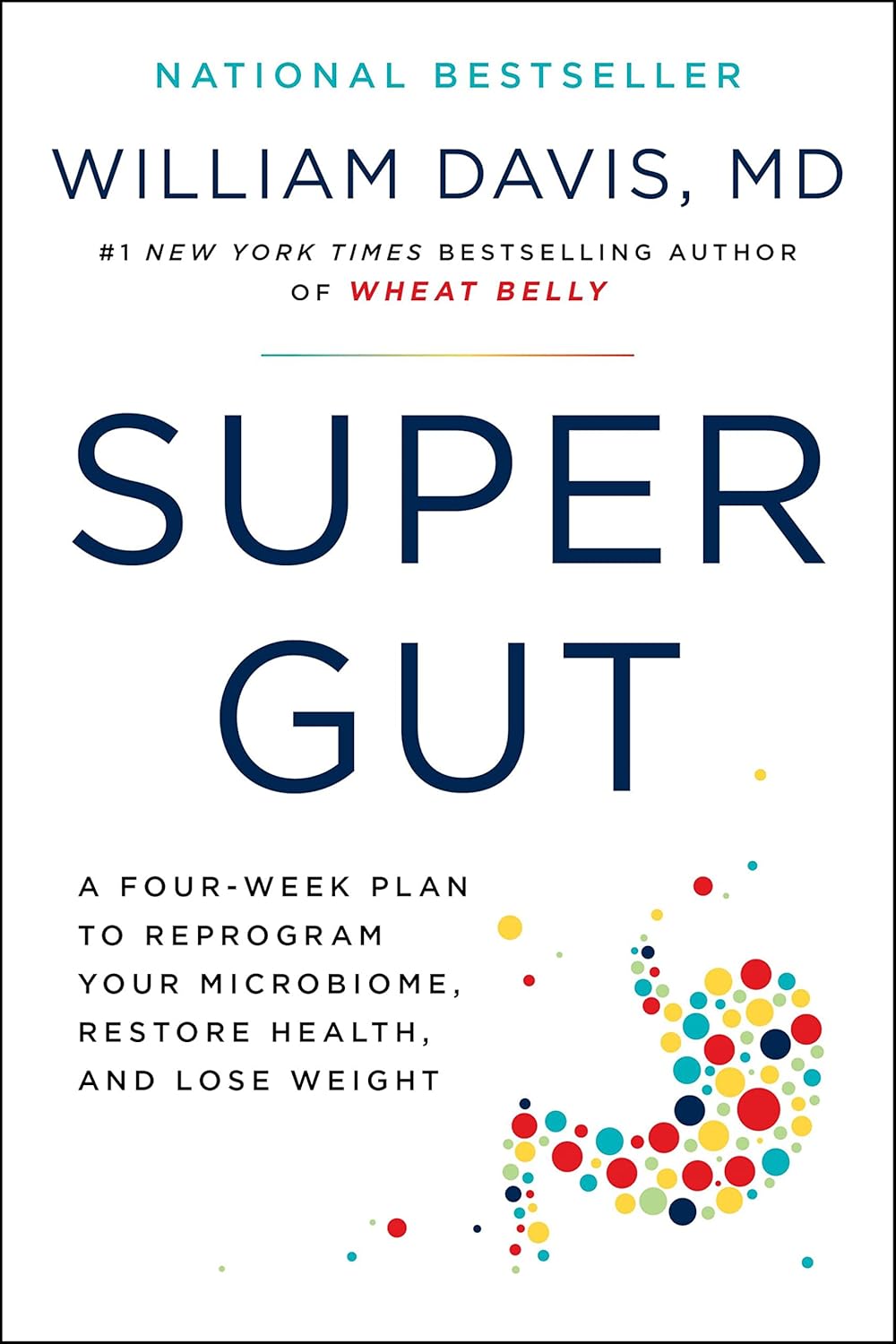
SIBO yogurt emerged from Dr. William Davis (the Wheat Belly guy, now author of Super Gut) asking a very specific question:
What if we could ferment bacteria that actually reach and go to work in the upper digestive tract — not just the colon — producing natural antibiotics against the harmful stuff?
See, here's the problem with most probiotics: they end up in your colon. Fine for general gut health. Not so helpful if your problem is in your small intestine — which is where SIBO happens.
What Is SIBO? (And Why It's Such a Nightmare)
SIBO stands for Small Intestinal Bacterial Overgrowth. It's when bacteria that should stay in your colon migrate upward into your small intestine and throw a party where they're not invited.
The symptoms? Bloating after eating (especially carbs and fiber). Brain fog. Fatigue. Food sensitivities that seem to multiply. That fun thing where foods you used to tolerate suddenly make you feel awful.
Some estimates suggest up to half of people with IBS actually have SIBO. It's absurdly common and absurdly underdiagnosed.
Traditional treatment involves antibiotics like rifaximin, which work about 50% of the time and don't address why the bacteria overgrew in the first place.
Dr. Davis looked at this and thought: What if food could do this better?
The Three Strategic Bacterial Strains in SIBO Yogurt
SIBO yogurt uses three specific bacterial strains chosen for their ability to:
- Reach and act in the upper GI tract (stomach, duodenum, jejunum, ileum — not just the colon) while you're consuming them
- Produce bacteriocins — natural antibiotic compounds that kill harmful bacteria
Here's the lineup:
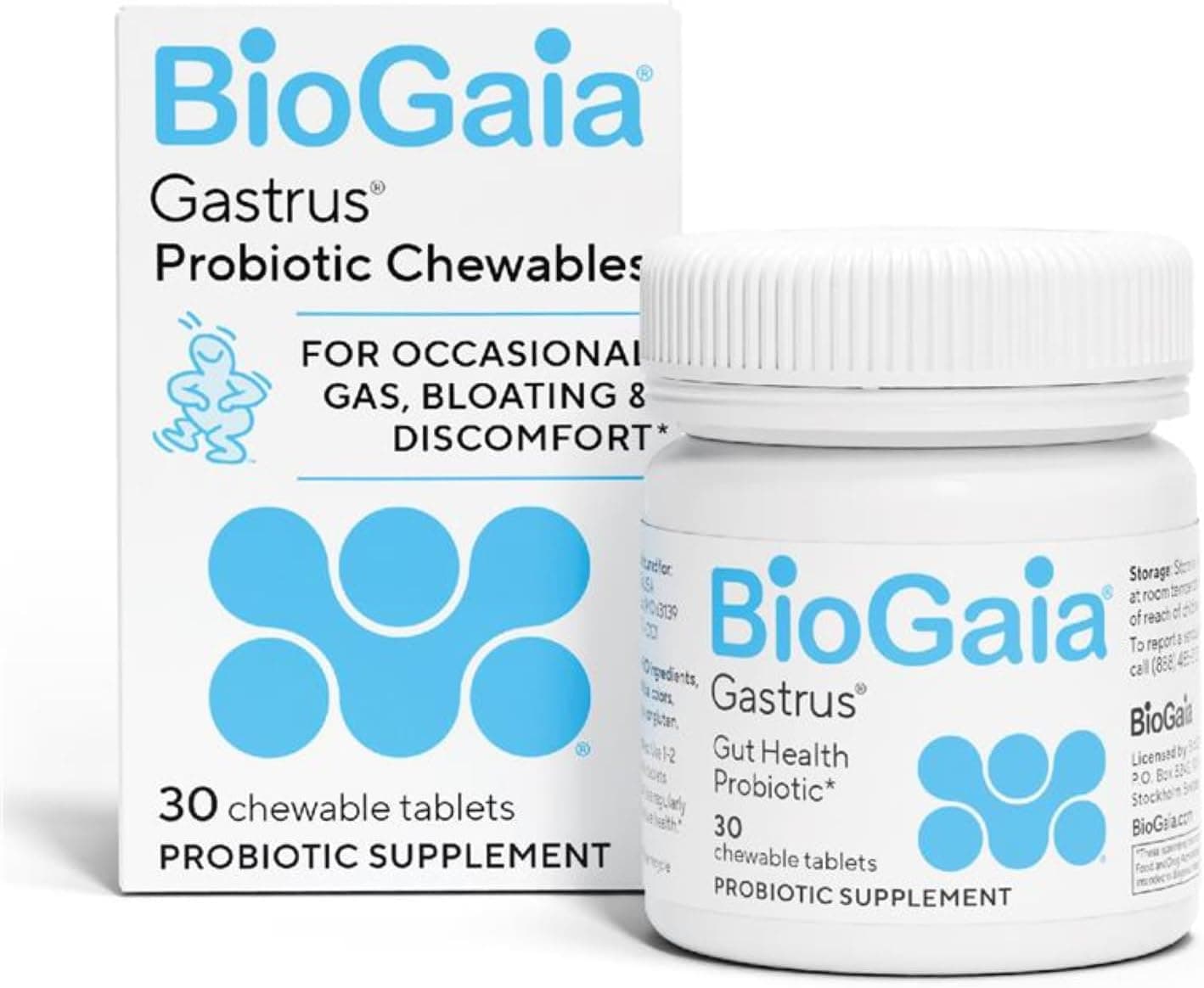
Lactobacillus reuteri (BioGaia Gastrus tablets)
This is the star of the show. L. reuteri produces up to 4 bacteriocins, including the powerhouse reuterin. It's so effective as an antibacterial that microbiologists have literally used it to clean bacterial production vats. Beyond gut health, L. reuteri has been linked — largely in animal and early human studies — to oxytocin production (the "feel-good" hormone), better sleep, and skin benefits. Here's the kicker: most humans used to have L. reuteri naturally, but antibiotics and modern life wiped it out of most people's microbiomes.
Lactobacillus gasseri BNR17
This strain produces up to 7 different bacteriocins — a full antimicrobial arsenal. It's naturally at home in the small intestine, which is exactly where you need it for SIBO. L. gasseri is so potent that Dr. Davis specifically designed the SIBO yogurt recipe to moderate its counts.
Bacillus coagulans GBI-30,6086
This one produces additional bacteriocins and has shown effectiveness against IBS symptoms in clinical research.
⚡ 2025 update: Dr. Davis has since replaced B. coagulans with Bacillus subtilis HU58 as the third strain. This also changed the method: heat-tolerant B. coagulans could ferment right alongside reuteri and gasseri at 106°F, but HU58 prefers cooler temperatures, so it's now cultured separately at ~98.5°F for about 24 hours and combined afterward — making the current recipe a two-part ferment. We've kept the original B. coagulans version below for reference; for the current method see our 2025 SIBO Yogurt Update.
The Precise Fermentation Requirements for SIBO Yogurt
Here's where SIBO yogurt diverges completely from kefir's forgiving nature.
You can't just dump these bacteria in milk and hope for the best. They need:
Specific temperature: 106°F (41°C)
Not 100°F (that's for L. reuteri yogurt alone or coconut milk versions). Not 110°F (that'll kill them). Exactly 106°F for the mixed SIBO yogurt. This precision is non-negotiable.
Extended fermentation: 36 hours
Not 12 hours. Not 24 hours. The full 36 hours allows bacterial populations to multiply exponentially, reaching therapeutic counts that supplements simply can't match.
Prebiotic fiber (inulin or raw potato starch)
This feeds the bacteria, helping them multiply faster and reach higher counts.
Precise equipment
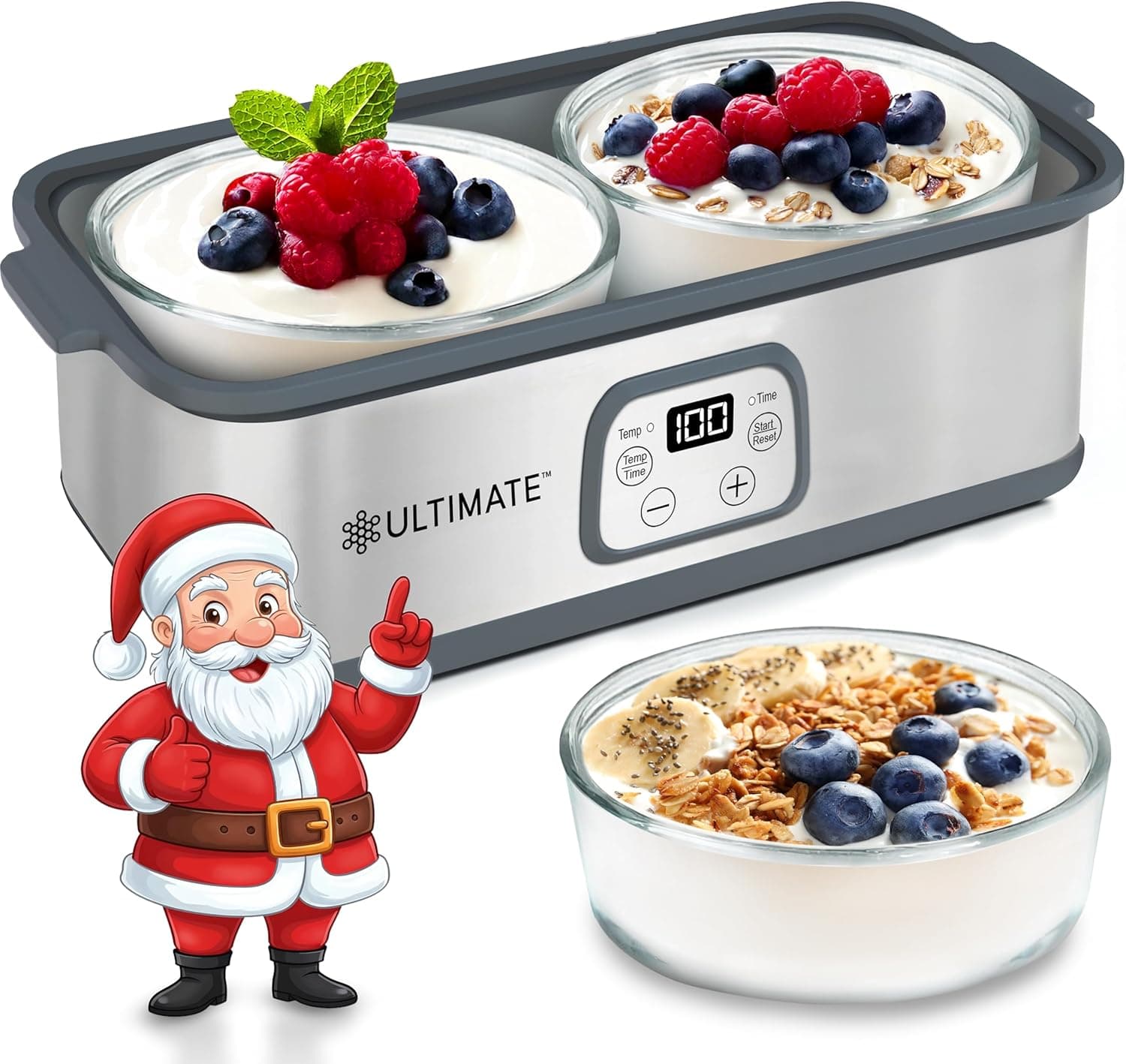
A yogurt maker with adjustable temperature control. Or a sous vide setup. Something that can hold 106°F accurately for a day and a half.
The result? By Dr. Davis's own estimates, on the order of 90 billion+ CFUs per half-cup serving — dramatically more than commercial yogurt (his figures aren't independently verified, and some sources cite higher).
That's not a typo. Compare that to kefir's 15-20 billion or a typical probiotic supplement's 10-50 billion.
This is therapeutic-level potency. It's not a daily maintenance drink — it's a 4-week protocol designed to shift the microbial balance in your upper GI tract.
Why Ferment All Three Strains Together?
You might wonder: why not make three separate yogurts and mix them?
Dr. Davis explains in Super Gut: "This process limits the resulting microbial counts of L. gasseri, which preliminary experience suggests is quite potent, so that we do not induce an excessive die-off reaction too quickly."
In other words, the thinking is that L. gasseri is potent enough that starting with too much could trigger a rough die-off reaction — so co-fermenting is meant to moderate its counts. (This is Dr. Davis's rationale from working with the cultures, not a formally studied mechanism.)
Smart design. The kind of thing you only learn from actually working with these organisms and paying attention to what happens.
(One update: this co-fermentation applies to L. reuteri and L. gasseri. In the current recipe, the heat-sensitive B. subtilis HU58 that replaced B. coagulans is cultured separately at ~98.5°F and stirred in afterward — see the 2025 update above.)
Kefir vs. SIBO Yogurt: The Complete Comparison
Let me lay this out plainly:
| Feature | Kefir | SIBO Yogurt |
|---|---|---|
| Philosophy | Diverse ecosystem support | Targeted L. reuteri benefits |
| Probiotic diversity | Broad (12+ strains + yeasts) | Focused (3 specific strains) |
| Approximate CFU count | ~10-50 billion per cup | ~90 billion+ per ½ cup* |
| Fermentation time | 18-24 hours | 36 hours |
| Temperature | Room temp (65-75°F) | Precisely 106°F |
| Equipment needed | A jar and strainer | Yogurt maker with temp control |
| Ease of process | Very flexible | Requires precision |
| Primary target | Whole digestive tract | Upper GI tract specifically |
| Best for | Everyday probiotic diversity | L. reuteri benefits (gut, skin, mood, sleep) |
| Contains yeasts | Yes (beneficial) | No |
| Consistency | Thin, drinkable | Thick, spoonable |
| Ongoing cost | Very low (grains multiply) | Low after initial investment |
| Typical serving | Up to 1 cup daily | ½ cup daily |
*Based on Dr. Davis's preliminary measurements
Potential Side Effects and Risks: What Can Go Wrong
Kefir's Potential Drawbacks
Histamine content
All fermented foods contain histamine. For the estimated 1% of people with histamine intolerance, this can mean headaches, flushing, digestive upset, or skin reactions.
The nuance: some research suggests kefir's kefiran actually helps stabilize mast cells and reduce histamine release. It's complicated. If you suspect histamine issues, start with tiny amounts (a teaspoon) and pay close attention to how you feel.
Die-off reactions
When you introduce new probiotics, sometimes you feel worse before better. Fatigue, digestive upset, even mood changes. This is your gut recalibrating. It usually passes within a few days to a week.
A little alcohol (and a D-lactate note)
Fermentation produces a small amount of alcohol — usually ~0.5–1% ABV in kefir, rising toward ~2% the longer it ferments. Worth knowing if you're pregnant, in recovery, avoiding alcohol, or giving it to kids. Kefir can also raise D-lactate, so go easy if you have trouble metabolizing it (e.g. short-bowel syndrome).
The store-bought trap
Commercial kefir is fermented for much shorter periods than homemade — often just a few hours versus 24. This means fewer probiotics, more additives, and less of what makes kefir actually therapeutic.
If you want the real benefits, you need real kefir grains and real fermentation time. Store-bought kefir is better than no kefir, but homemade is in a different league entirely.
SIBO Yogurt's Potential Drawbacks
L. reuteri produces histamine
This is a big one. For most people, it's fine — bacteria-produced histamine actually serves important immune functions. But for those with severe histamine intolerance, L. reuteri yogurt can trigger reactions.
Here's the tricky part: Dr. Davis suggests that if you react badly to L. reuteri yogurt, the problem might actually be severe underlying SIBO causing your histamine intolerance in the first place. Sometimes you need to address the dysbiosis with herbal or conventional antibiotics before the yogurt approach will work.
Die-off can be intense
Because SIBO yogurt is so effective at killing harmful bacteria, the die-off reaction (sometimes called a Herxheimer reaction) can be significant:
- Temporary worsening of bloating
- Fatigue or flu-like feelings
- Headaches
- Mood changes (including temporary depression or anxiety)
- Skin breakouts
Dr. Davis recommends activated charcoal (1,000mg capsule) to help absorb the toxins if this gets rough. Or reduce your serving size to a tablespoon and build up gradually over a week or two.
The precision problem
Temperature too high? You've killed your bacteria. Temperature too low? Contamination risk. Wrong timing? Inconsistent results.
SIBO yogurt rewards attention and punishes carelessness. It's not the ferment for people who want to set-it-and-forget-it.
This research is preliminary
Dr. Davis is transparent about this: SIBO yogurt represents emerging findings, not established medical treatment. In Super Gut, he calls it a "benign strategy" for those "nervous about making the leap to using herbal or conventional antibiotics."
Many people report remarkable results. But this hasn't been through rigorous double-blind clinical trials yet. It's functional medicine in action — observational, evolving, promising but not yet proven by conventional standards.
How to Choose: Kefir vs. SIBO Yogurt Decision Guide

Choose Kefir If:
✓ You want daily gut maintenance without fuss
✓ You're new to fermented foods and want something forgiving
✓ You enjoy drinkable probiotics for smoothies or straight sipping
✓ You want the unique benefits of beneficial yeasts alongside bacteria
✓ You don't have specific gut conditions requiring targeted intervention
✓ You value microbial diversity over concentrated single-strain potency
✓ You like the idea of a ferment that teaches patience and trust
Choose SIBO Yogurt If:
✓ You have diagnosed or suspected SIBO
✓ You experience chronic bloating, IBS symptoms, or upper GI discomfort that won't resolve
✓ You have histamine intolerance that might be rooted in gut dysbiosis
✓ You want targeted, high-potency therapeutic intervention
✓ You're following Dr. William Davis's Super Gut protocol
✓ You're willing to invest in proper equipment and precise technique
✓ You've tried other approaches without lasting success
The Both/And Approach
Here's my honest answer: it depends on you.
I eat SIBO yogurt almost every day. It just works for me — the L. reuteri benefits extend way beyond gut health, and I notice a real difference in my mood, sleep, and skin when I'm consistent with it. Kefir I make once in a while, when I'm craving that tangy diversity or want to switch things up.
But that's just me. Some people thrive on daily kefir and use SIBO yogurt only for focused protocols. Others rotate between them. There's no single right answer.
They work on different parts of the GI tract. They offer complementary benefits. There's no rule saying you have to pick just one — or that either one is "only" for maintenance or "only" for treatment.
Just don't ferment them together. Different temperatures, different organisms, potential competition. L. reuteri produces bacteriocins that could affect other microbes. Keep them as separate practices.
Getting Started: What You Actually Need
Making Kefir (The Beautifully Simple One)
Here's a confession: I overthought kefir for way too long. Researched equipment for weeks. Read forums about optimal jar shapes. Worried about contamination.
Then I watched my friend make it in a random jar she found in her cupboard, using grains her neighbor gave her, and it turned out perfect.
Kefir doesn't require much. That's the whole point.
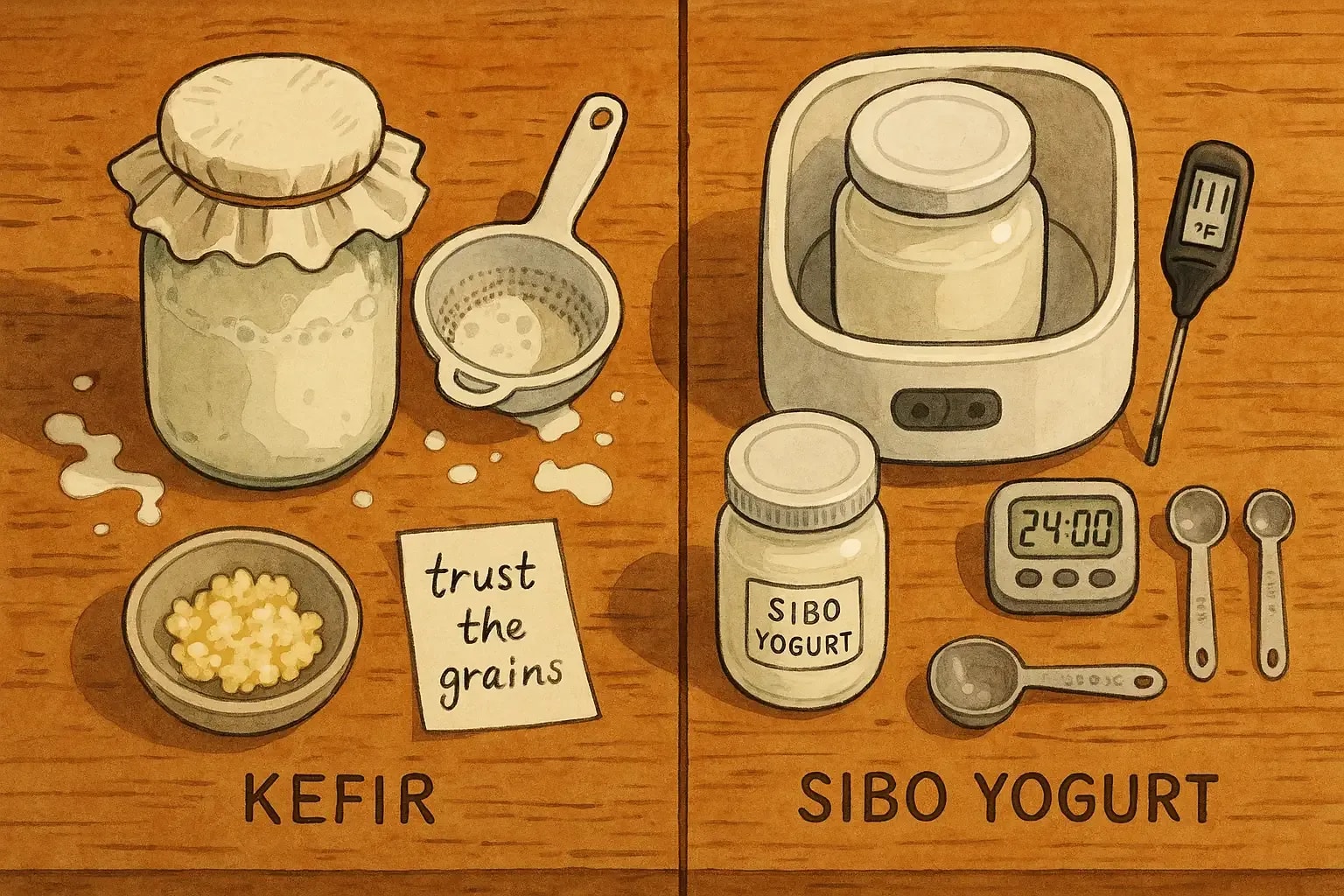
What you actually need:
- A glass jar (any wide-mouth jar works — mason jars are great, but so is that old pickle jar you cleaned out)
- Kefir grains (get them from a fellow fermenter, a local fermentation group, or a reputable online source — they multiply, so you only need them once)
- A fine mesh strainer (plastic or nylon, not metal)
- Milk
- A loose cloth or coffee filter to cover the jar
That's it. No special equipment. No thermometers. No anxious monitoring.
The process:
Add about 1-2 tablespoons of grains per cup of milk. Cover loosely — it needs to breathe. Leave it on your counter (somewhere out of direct sunlight) for 18-24 hours. When it's thickened slightly and smells tangy-sour, strain out the grains into fresh milk and start the next batch.
The first few times, you'll wonder if you're doing it right. You probably are. Kefir is incredibly forgiving. The grains have been doing this for thousands of years — they know what they're doing even when you don't.
Start slow with consumption — a few tablespoons daily, working up to a cup over a week or two. Your gut needs time to adjust to all those new microbial friends.
Making SIBO Yogurt (The Precision One)
SIBO yogurt is a different story. This one actually does require specific equipment, and there's really no way around it.
The one thing you absolutely must have:
A way to maintain exactly 106°F for 36 hours straight.
This is the only equipment decision that truly matters for SIBO yogurt. Get this wrong, and you've either killed your bacteria (too hot) or invited contamination (too cold). There's no "close enough" here.
Options that work:
- A yogurt maker with adjustable temperature control — the Luvele Ultimate Probiotic Yogurt Maker is popular in the Super Gut community for good reason
- A sous vide immersion circulator with a water bath — the Anova Precision Cooker 3.0 or Anova Pro both work well for this
- Some Instant Pot models — but verify yours can hold 106°F specifically, not just "yogurt mode" (many default to 110°F, which is too hot)
I know people who've rigged up coolers with aquarium heaters. I know people who've failed repeatedly with expensive equipment because they didn't verify the actual temperature. The method matters less than the accuracy.
The starter cultures (first batch only):
- 10 BioGaia Gastrus tablets, crushed
- 1 capsule L. gasseri BNR17
- 1 capsule B. coagulans GBI-30,6086 (original recipe — the current protocol replaces this with B. subtilis HU58, cultured separately; see the 2025 update above)
- 2 tablespoons prebiotic fiber (inulin or raw potato starch)
- 1 quart half-and-half
Yes, the initial probiotic investment is pricey — maybe $50-100 depending on where you source them. But here's the thing: after your first batch, you only need 2 tablespoons from the previous batch to start the next one. The ongoing cost becomes just the half-and-half and a bit of prebiotic fiber.
The process:
Crush the tablets and empty the capsules into a bowl. Add the prebiotic fiber and a splash of half-and-half. Whisk it into a smooth slurry — this prevents the fiber from clumping into weird chunks. Stir in the rest of the half-and-half.
Cover lightly (not airtight), put it in your yogurt maker or sous vide setup at 106°F, and walk away for 36 hours.
That's the hard part for some people — the walking away. The trusting. But checking on it constantly doesn't help. The bacteria are doing their thing. Let them.
After 36 hours, refrigerate. It keeps for about 2 weeks.
The protocol: ½ cup daily for 4 weeks. Some people do maintenance doses after the initial protocol. Dr. Davis covers the variations in Super Gut — honestly, if you're serious about SIBO yogurt, that book is worth having as your reference.
Dairy-Free Alternatives: Kefir and SIBO Yogurt Options
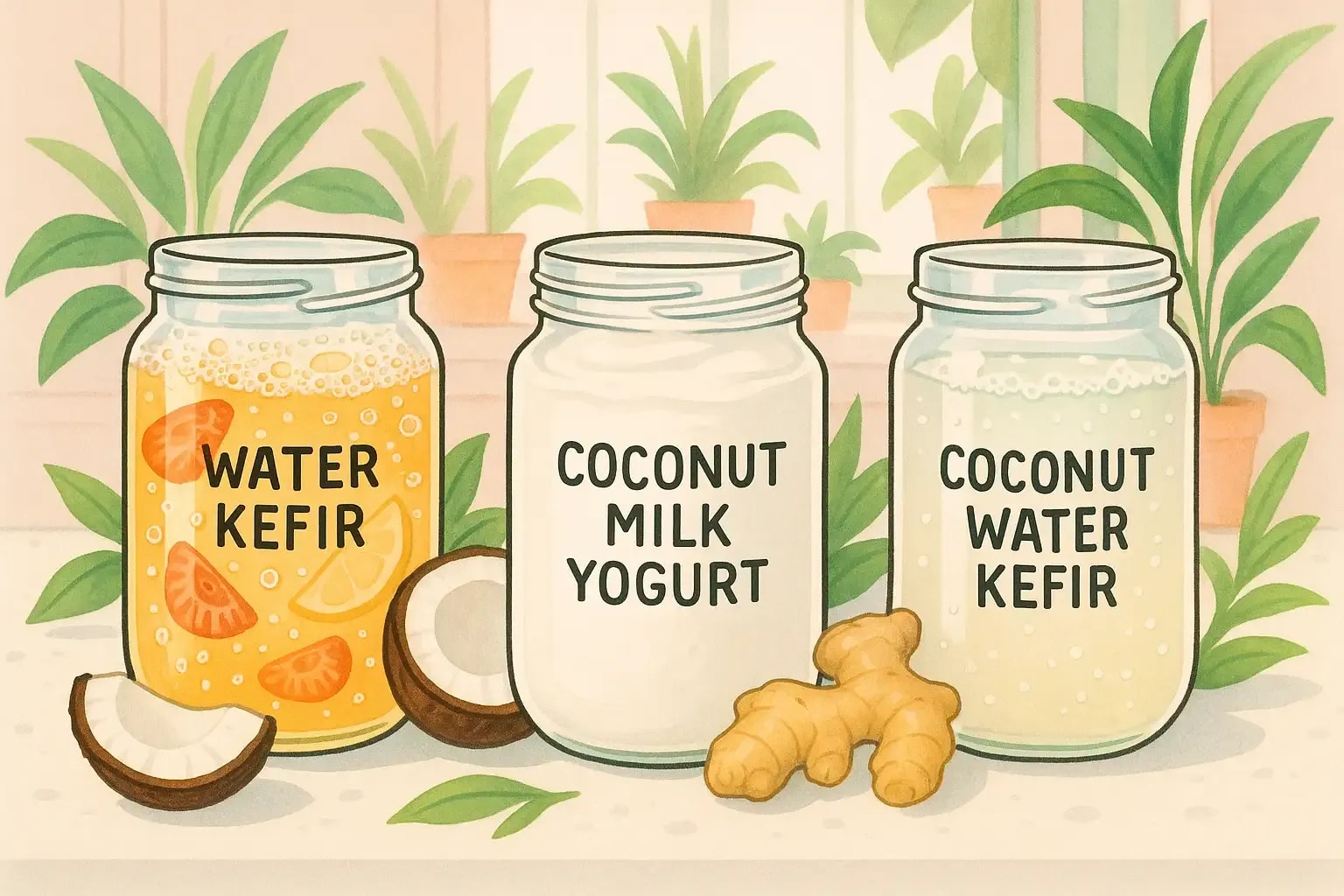
Water Kefir
Water kefir uses different grains (they look different and contain different organisms) and ferments sugar water, coconut water, or fruit juice. The microbial profile differs from milk kefir, but it's still beneficial and completely dairy-free.
Coconut Milk SIBO Yogurt
Making SIBO yogurt with coconut milk is absolutely possible, but requires important adjustments:
- Use canned full-fat coconut milk (never the thin carton versions). Look for brands with no emulsifiers like xanthan gum or gellan gum (guar gum is fine).
- Preheat to 180°F first, then let it cool before adding bacteria. Unlike dairy, coconut milk needs this step.
- Add guar gum and sugar during heating for proper texture. The bacteria will consume the sugar during fermentation.
- Ferment longer: 48-72 hours (compared to 36 for dairy)
- Lower temperature: 100°F (not 106°F like dairy SIBO yogurt)
- Add bacteria last, after any blending. Blending can kill the microbes.
Dr. Davis covers the complete coconut milk process in Super Gut if you want all the details.
The Mindfulness of Fermentation (A Brief Philosophical Detour)

Here's what I've learned from years of fermentation:
Kefir teaches patience. You can't rush it. You can't control it. You just provide the conditions and trust that the organisms know what they're doing. There's something almost meditative about straining grains each morning, checking on cultures, learning to read the signs of healthy fermentation.
SIBO yogurt teaches precision and attention. It rewards those who pay attention to details, who check temperatures, who learn from failures. There's satisfaction in that too — the craftsperson's pride in getting the parameters exactly right.
Both teach that healing is slow. That your body is a complex ecosystem, not a machine. That sometimes the best thing you can do is create the right conditions and then get out of the way.
Bubbles rising through brine. Bacteria multiplying in warm milk. Life doing what life does when you give it space.
I started fermenting because my gut was a disaster. I kept fermenting because somewhere in the process of tending these living cultures, I started to feel like I was tending myself too.
Your mileage may vary. But that's been my experience.
The Bottom Line: Which Fermented Food Is Right for You?
Kefir is the daily practice. The ecosystem support. The forgiving, ancient wisdom of microbial diversity.
SIBO yogurt is the targeted intervention. The precision protocol. The modern application of specific strains for specific problems.
Both are fermented. Both are powerful. Both have transformed people's gut health in real, measurable ways.
The question isn't which one is better. It's which one your gut needs right now.
Start somewhere. Pay attention to how your body responds. Adjust based on what you learn.
And maybe, along the way, you'll find yourself talking to your ferments like they're old friends too.
(No judgment. We've all been there.)
Have you tried kefir or SIBO yogurt? How did your gut respond? I genuinely want to hear your experience — drop a comment below.
Want to Go Deeper?
- Super Gut by Dr. William Davis — The definitive guide to L. reuteri yogurt, SIBO yogurt protocols, and the science of gut restoration
- The Noma Guide to Fermentation — For those who want to go deeper into fermentation as both craft and practice
Disclaimer: This article is for informational purposes only and does not constitute medical advice. Consult with a qualified healthcare provider before making changes to your diet or health routine, especially if you have diagnosed gut conditions or are taking medications. SIBO yogurt represents emerging research, not established medical treatment. Fermentation is powerful medicine — respect it accordingly.
Recommended
BioGaia Gastrus - L. Reuteri Probiotic Starter
Recommended
Super Gut: A Four-Week Plan to Reprogram Your Microbiome, Restore Health, and Lose Weight