#Key Takeaways
- Preserved lemons are salt-cured citrus that lose their bitterness during fermentation, developing complex, fragrant flavors perfect for Mediterranean and North African cooking.
- You only need two ingredients: fresh lemons and salt—no special equipment required, just a clean jar and 3-4 weeks of patience.
- The entire lemon becomes edible: the peel softens and becomes the star ingredient, while fermentation increases antioxidant capacity and antibacterial properties.
- They last for a year or more at room temperature once fermented, making them perfect for preserving seasonal abundance.
- Use them everywhere: tagines, salads, pasta, roasted vegetables—the salty, tangy, floral flavor transforms ordinary dishes into something extraordinary.
When life gives you lemons—especially when it gives you an enormous lemon tree that serves two buildings and bursts with fruit twice a year—you learn to get creative.
#What Are Preserved Lemons?
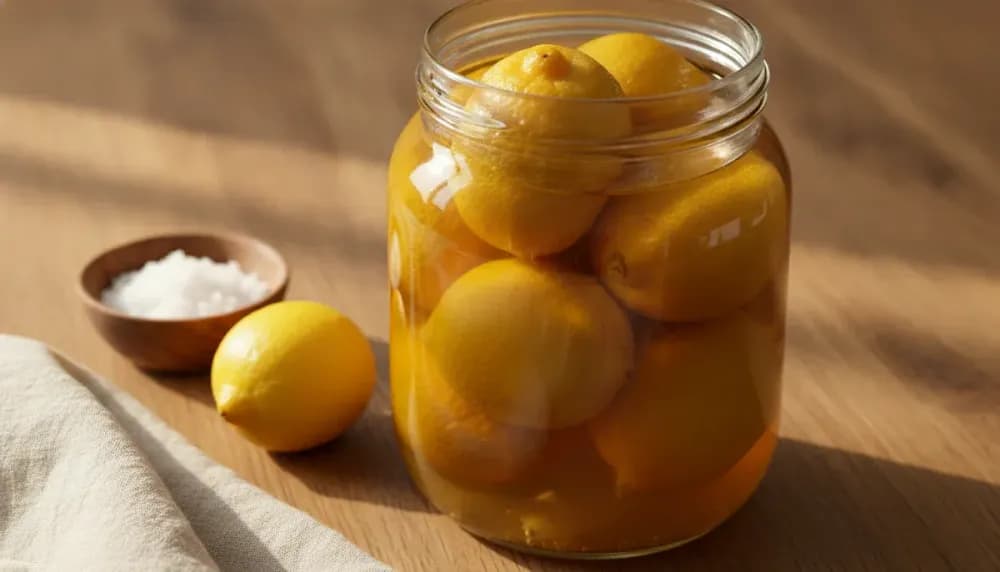
Preserved lemons are whole lemons that have been packed in salt and their own juices, then left to ferment and cure for several weeks. The result? A completely transformed ingredient where the peel—usually too bitter to eat—becomes soft, mellow, and intensely aromatic.
This isn't your typical lacto-fermentation like sauerkraut or kimchi. Preserved lemons are primarily salt-cured with minimal microbial activity compared to other fermentation methods. The high salt concentration does the preserving work, while time transforms the flavors.
The technique dates back centuries. The earliest recorded recipe for preserved lemons appears in a 12th-century Egyptian treatise called 'On Lemon, Its Drinking and Use.' From Morocco to India, lemon trees spread along with the knowledge of how to preserve their fruit—a necessity before refrigeration, now a culinary treasure.
#Why Preserve Lemons?
Beyond the practical reason of preserving seasonal abundance (trust me, when you have that many lemons, you need options beyond lemonade), preserved lemons offer something fresh lemons simply can't: complexity.
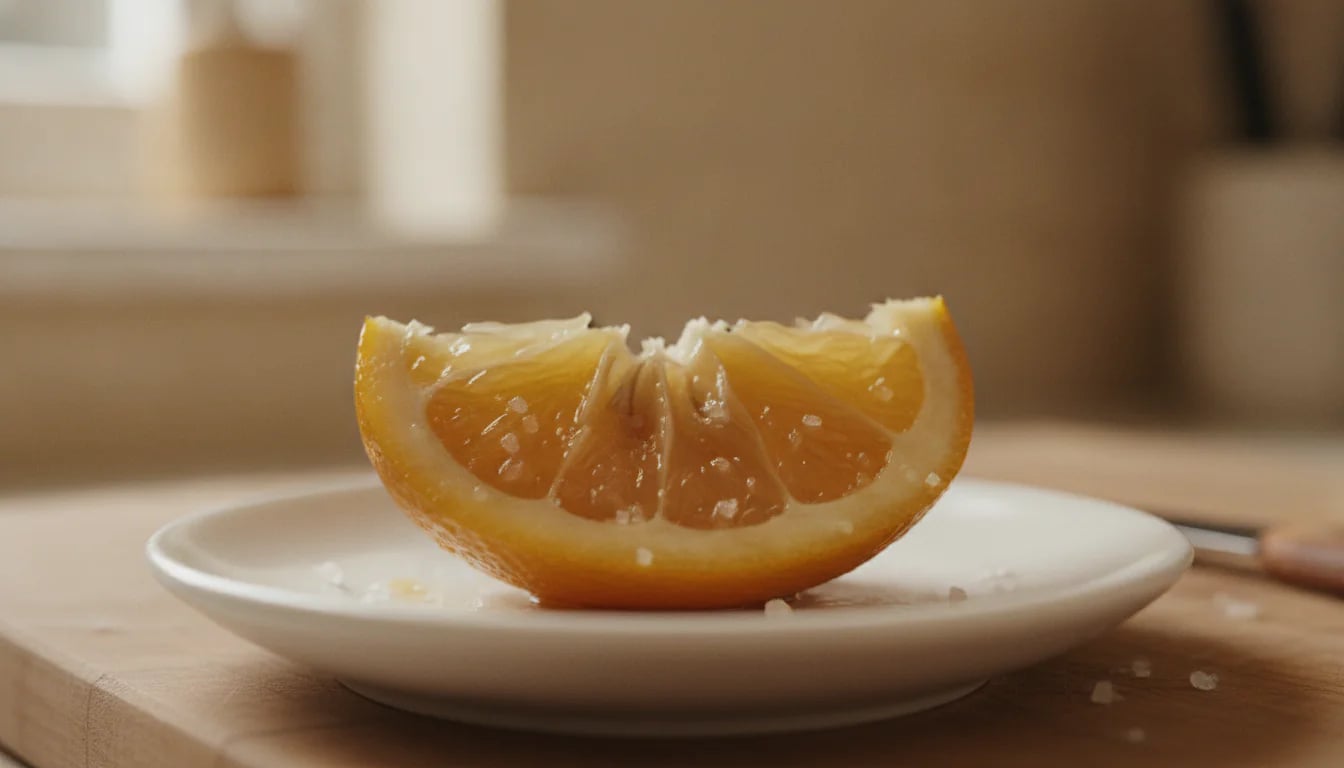
During the curing process, the peel loses its bitterness, allowing fruity and fragrant flavors to emerge. The white pith—normally astringent—becomes tender and almost sweet. The whole lemon transforms into an ingredient that adds depth, brightness, and a mysterious "what IS that?" quality to dishes.
#The Science Behind Preserved Lemons
While preserved lemons aren't a probiotic powerhouse like fermented vegetables, they do offer some fascinating health benefits—and the science of citrus fermentation is genuinely intriguing.
#Nutritional Transformation
Lemons are packed with vitamin C—one peeled lemon provides about 53 mg, over half your daily requirement. But here's what's interesting: research has found that ascorbic acid (vitamin C) is actually more stable in fermented lemon juice compared to non-fermented juice.
The lemon peel itself is where the magic lives. Lemon zest is loaded with protective plant compounds including limonene and anti-inflammatory polyphenols. The white pith? It's rich in pectin, a soluble fiber that helps control cholesterol and supports a healthy gut microbiome.
When you preserve lemons, you're making the entire fruit—peel, pith, and all—not just edible, but delicious.
#Antimicrobial Properties
Studies have shown that fermented lemon juice demonstrates antibacterial activity against pathogens like Salmonella Typhimurium and E. coli O157:H7. Research also found that fermented lemon juice showed strong inhibitory ability against Vibrio parahaemolyticus and uropathogenic E. coli.
While these studies focused on fermented lemon juice rather than salt-preserved whole lemons, they point to the antimicrobial compounds naturally present in lemons—compounds that remain active even after preservation.
A note on health information: The information shared here is for educational purposes only and is not intended as medical advice. Always consult with a healthcare professional before making changes to your diet, especially if you have existing health conditions or are taking medications.
#How to Make Preserved Lemons: The Simple Method
Here's the beautiful thing about preserved lemons: they're almost absurdly simple to make. If you can cut a lemon and measure salt, you can do this.
#What You'll Need
Ingredients:
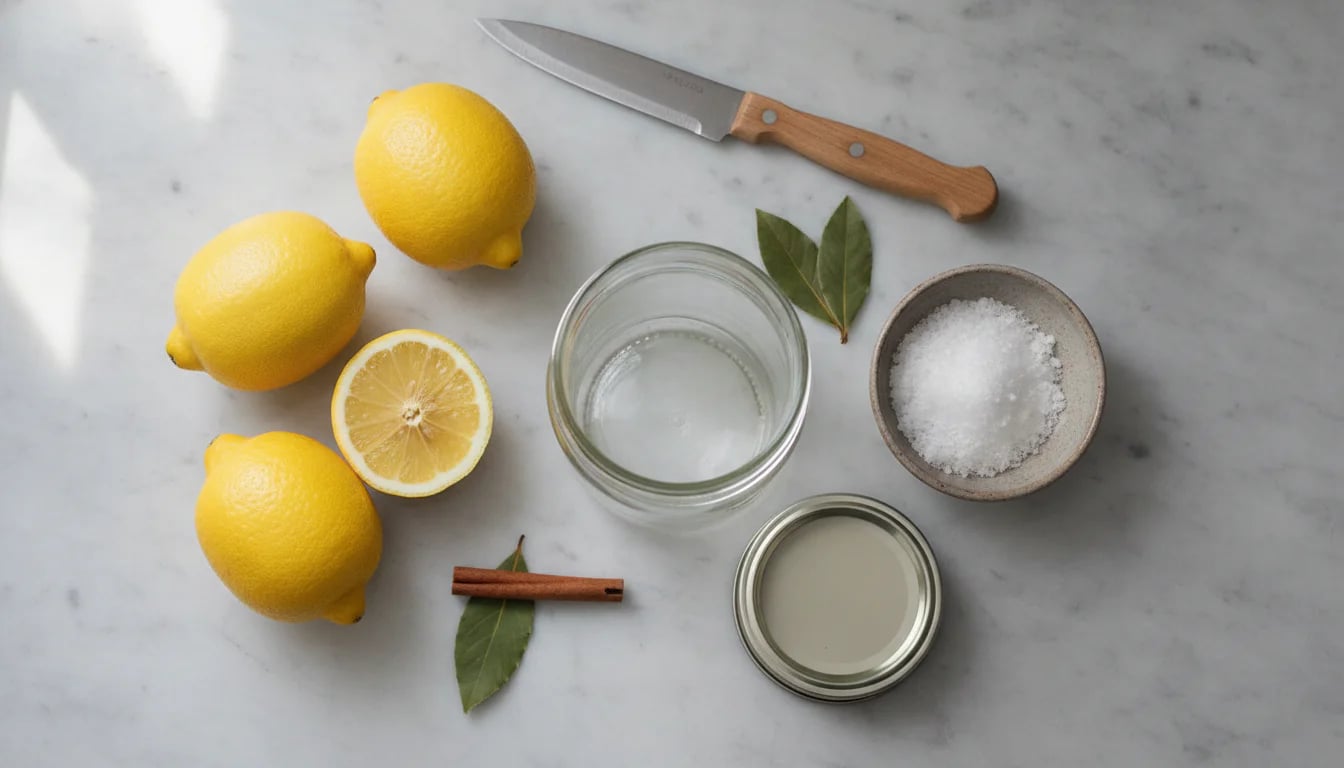
- Fresh, organic lemons (as many as will fit in your jar)
- Sea salt or kosher salt (about 1/4 cup per lemon)
- Optional: bay leaves, cinnamon sticks, coriander seeds, or other aromatics
Equipment:
- A clean wide-mouth mason jar (quart-size works well)
- A clean weight to keep lemons submerged—glass fermentation weights work perfectly
- A sharp knife
- Optional: fermentation airlock lids (though not necessary)
#The Process
Step 1: Prepare the lemons
Wash your lemons thoroughly. Cut each lemon lengthwise into quarters, but don't cut all the way through—leave them attached at one end so they open like a flower.
Step 2: Pack with salt
Generously pack salt into the cuts of each lemon. I mean generously—don't be shy. The salt is doing all the preservation work here. If you're wondering about exact salt ratios for fermentation, preserved lemons are unique—you're using salt as a curing agent, not creating a brine for lacto-fermentation.
Step 3: Pack the jar
Place the salted lemons in your jar, pressing down firmly as you go. You want to pack them tightly—this pressure will help release their juices. Add a tablespoon of salt between each layer.
If you're using aromatics (a cinnamon stick, a few bay leaves, some coriander seeds), tuck them in between the lemons.
Step 4: Add liquid
Press down hard on the lemons. They should release quite a bit of juice. If the lemons aren't completely covered in liquid after pressing, top off with fresh lemon juice (not water—you want that acidic environment).
Step 5: Weight and seal
Place a fermentation weight on top to keep the lemons submerged. Seal with a regular lid or a fermentation lid.
Step 6: Wait
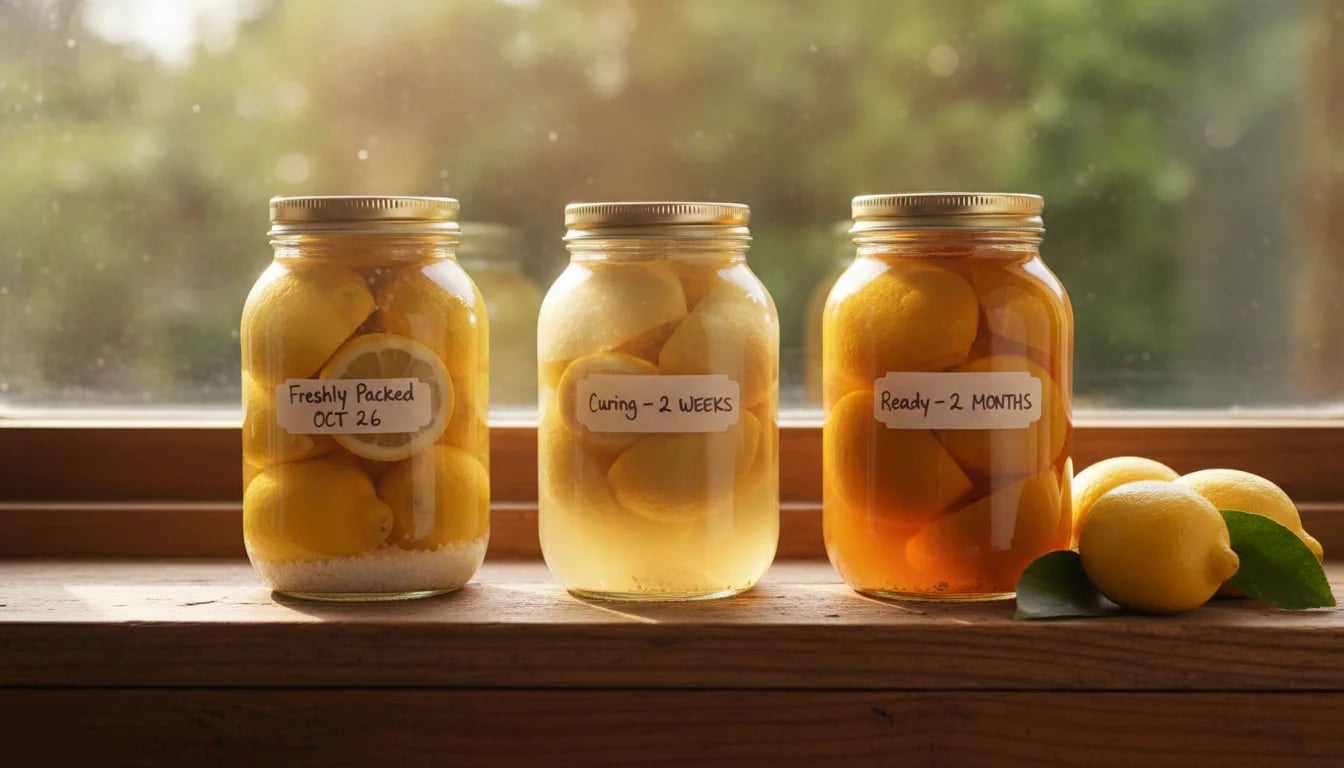
Leave the jar at room temperature for at least 3-4 weeks. The recipe takes just 10 minutes of prep time, but four weeks of fermentation.
Flip or shake the jar every few days to redistribute the salt and juices. You'll notice the liquid becoming cloudier and the peels softening—that's exactly what you want.
#My Lemon Abundance Journey
Living on the second floor with a massive lemon tree growing between four buildings has taught me something profound about seasonal eating and preservation. When that tree decides it's lemon season, it doesn't hold back. We're talking an enormous amount of fruit—enough to easily serve two buildings, twice a year.
At first, it felt overwhelming. How many batches of lemonade can one household drink? How much lemon curd can you reasonably gift to neighbors before they start avoiding you in the hallway?
Then I discovered preserved lemons, and everything changed.
Now, when lemon season hits, I feel excited rather than stressed. I make batch after batch of preserved lemons—some with just salt, some with cinnamon and bay, some with coriander and peppercorns. I experiment with Meyer lemons from my family's equally productive tree (yes, we're blessed with lemon abundance from multiple sources).
We use the peels in everything: chopped into grain salads, blended into salad dressings, tucked under the skin of roasted chicken, stirred into pasta with olive oil and garlic. We use the pulp too—the salty, fermented flesh adds incredible depth to marinades and sauces.
The best part? Those jars of preserved lemons sitting on my counter represent not just preserved fruit, but preserved time. The abundance of spring, captured and transformed, ready to brighten a winter stew or a summer salad months from now.
That's the real magic of fermentation—it's a conversation with time, with seasons, with the generous lemon tree that keeps on giving.
#How to Use Preserved Lemons
This is where preserved lemons go from "interesting pantry item" to "why don't I always have these on hand?!"
#The Golden Rule
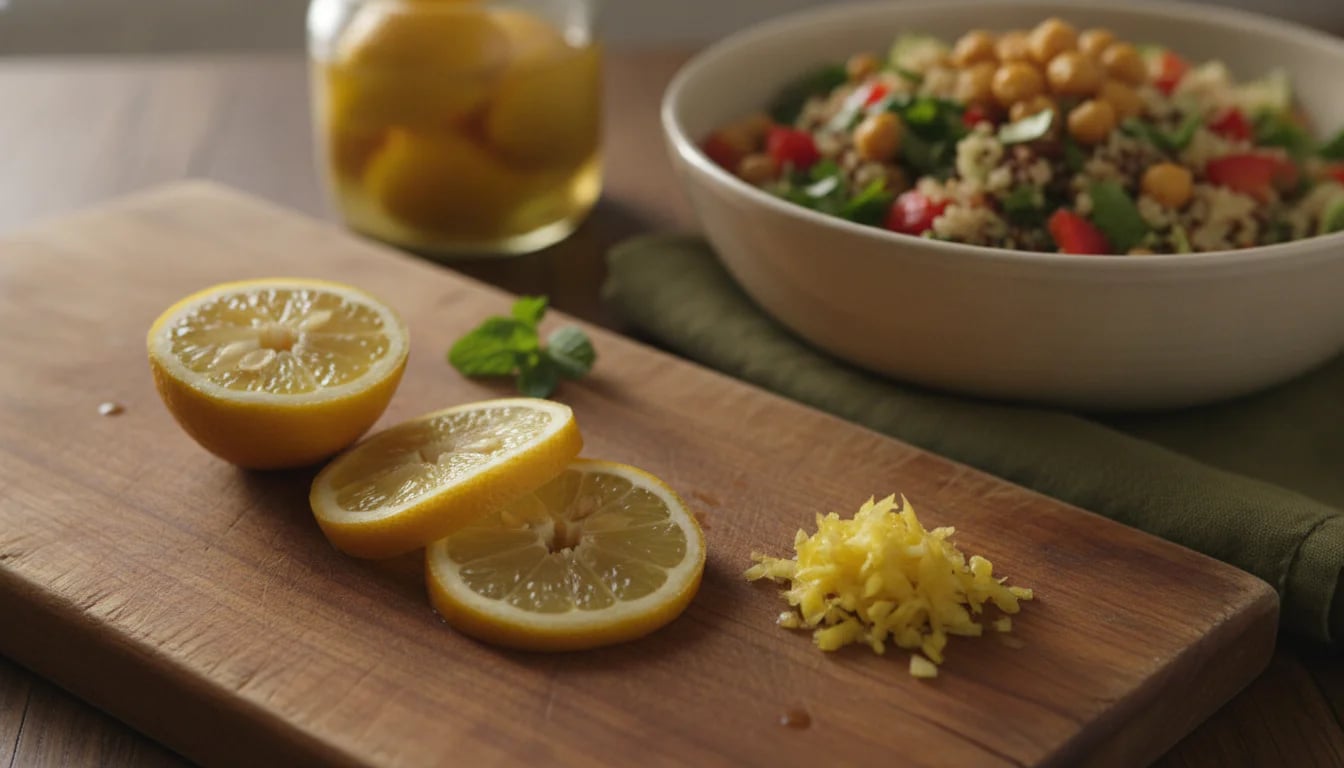
Use the peel, not the pulp (usually). The peel is the star—soft, mellow, intensely lemony without the harsh acidity. Rinse it briefly if you want to reduce the saltiness, then chop or slice it.
The pulp can be used, but it's very salty and intense. A little goes a long way in marinades, dressings, or anywhere you want a salty-sour punch.
#Where to Use Them
In Moroccan and Mediterranean dishes:
- Classic chicken tagine with olives and preserved lemon
- Moroccan fish chermoula
- Couscous dishes
- Harissa-spiced vegetables
In everyday cooking:
- Chopped into grain salads (quinoa, farro, rice)
- Blended into salad dressings and vinaigrettes
- Stirred into pasta with olive oil, garlic, and greens
- Tucked under chicken or fish skin before roasting
- Mixed into compound butter
- Added to roasted vegetables (especially cauliflower, carrots, or Brussels sprouts)
- Blended into hummus or other dips
The secret weapon:
A tiny bit of minced preserved lemon peel can transform a dish. It adds a mysterious depth—salty, bright, floral, complex—that makes people ask, "What's in this?" Try it in your next fermented hot sauce or fermented mustard for an extra layer of complexity.
#Troubleshooting & Tips
#"My lemons aren't covered in liquid"
This is the most common issue. Press down harder—really squish those lemons. If they still won't release enough juice, add fresh-squeezed lemon juice (not water) to cover. The acidic environment is important.
#"There's white stuff on top"
A thin layer of white film (kahm yeast) can develop on the surface. It's harmless but can affect flavor if left too long. Just scrape it off. Using a fermentation weight to keep everything submerged helps prevent this.
For more on managing surface growth, check out our guide on airlock vs open fermentation.
#"How do I know when they're ready?"
The peels should be soft and translucent, not firm and opaque. The brine should be cloudy. Taste a small piece of peel—it should be mellow and complex, not harshly bitter. Most preserved lemons are ready in 3-4 weeks, but they can ferment at room temperature for at least a year, with flavor maturing over time.
#"Can I use different citrus?"
Absolutely! Try Meyer lemons for a sweeter, more floral result. Limes work beautifully (preserved limes are incredible in Southeast Asian dishes). Even oranges or grapefruit can be preserved this way, though the flavor will be quite different.
#"Do I need special equipment?"
Not really. A clean jar is the only essential. That said, if you're getting into fermentation more seriously, a few tools make life easier:
- Fermentation weights keep everything submerged
- Airlock lids prevent kahm yeast (though regular lids work fine)
- A fermentation crock is beautiful and functional if you're making large batches
But honestly? I've made dozens of batches in simple mason jars with regular lids. Keep it simple, especially when you're starting out.
#Storage & Shelf Life
Once your preserved lemons are ready, you can:
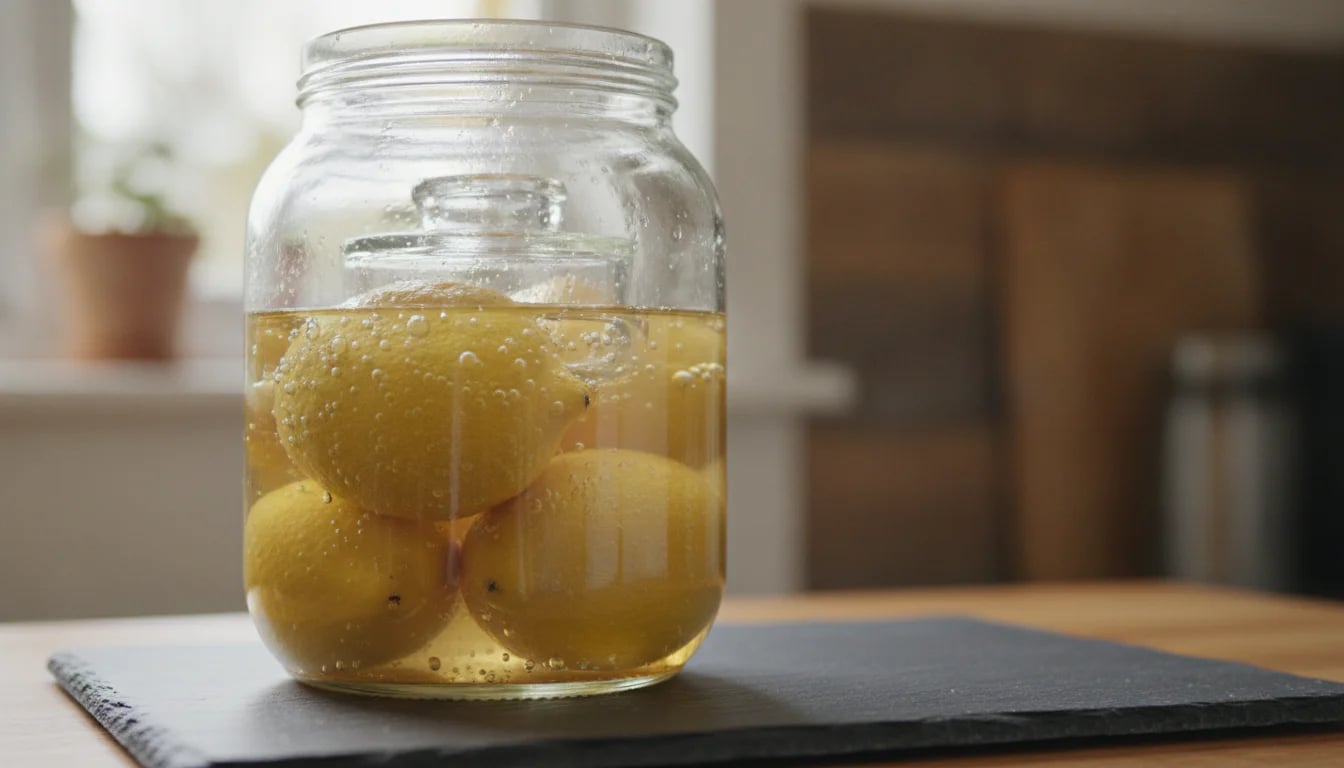
Keep them at room temperature: They can ferment at room temperature for at least a year, continuing to develop flavor. Just make sure they stay submerged in brine.
Refrigerate them: This slows the fermentation and keeps the flavor more stable. They'll last indefinitely in the fridge.
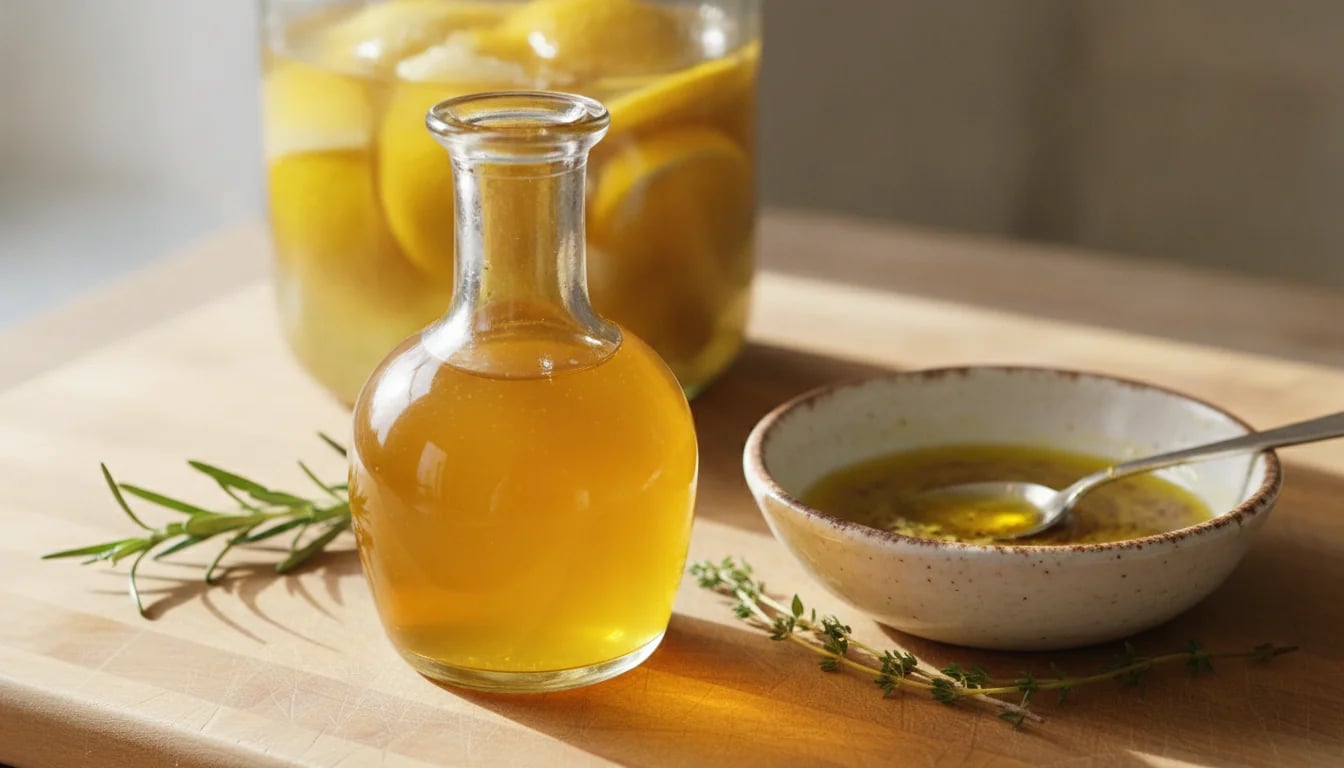
Use the brine: Don't throw it out! The salty, lemony brine is liquid gold. Use it in salad dressings, marinades, or anywhere you want a hit of salty-sour brightness.
As you use lemons from the jar, make sure the remaining ones stay covered in brine. If the level gets low, you can top it off with a mixture of fresh lemon juice and salt.
#Why This Ancient Technique Still Matters
In our world of year-round supermarket lemons, you might wonder: why bother preserving them?
Here's what I've learned from my lemon-abundant life: preserved lemons aren't just about preservation—they're about transformation. They're about taking something common and making it extraordinary. They're about capturing a moment of abundance and stretching it across seasons.
Growing scientific interest in the interactions between citrus fruit components and probiotics points to a future where fermented citrus products become more mainstream. But this technique doesn't need modern science to validate it—it's been working for over 800 years.
When you make preserved lemons, you're participating in something ancient and ongoing. You're joining the long line of cooks who looked at seasonal abundance and asked, "How can I make this last? How can I make it even better?"
And when you pull a jar from your pantry in the middle of winter, chop that soft, fragrant peel into a stew, and taste the complexity it brings—you'll understand why this technique has survived centuries.
It's not just about preserving lemons. It's about preserving possibility, creativity, and connection to the rhythms of the seasons.
So the next time life gives you lemons—especially if life gives you an enormous amount of lemons—you know what to do. Pack them with salt, tuck them in a jar, and let time work its magic.
Your future self (and your taste buds) will thank you.
Disclaimer: This article is for informational and educational purposes only. It is not intended to be a substitute for professional medical advice, diagnosis, or treatment. Individual results may vary. Please consult your healthcare provider before beginning any new dietary practice, especially if you have a medical condition or take medications.