#Key Takeaways
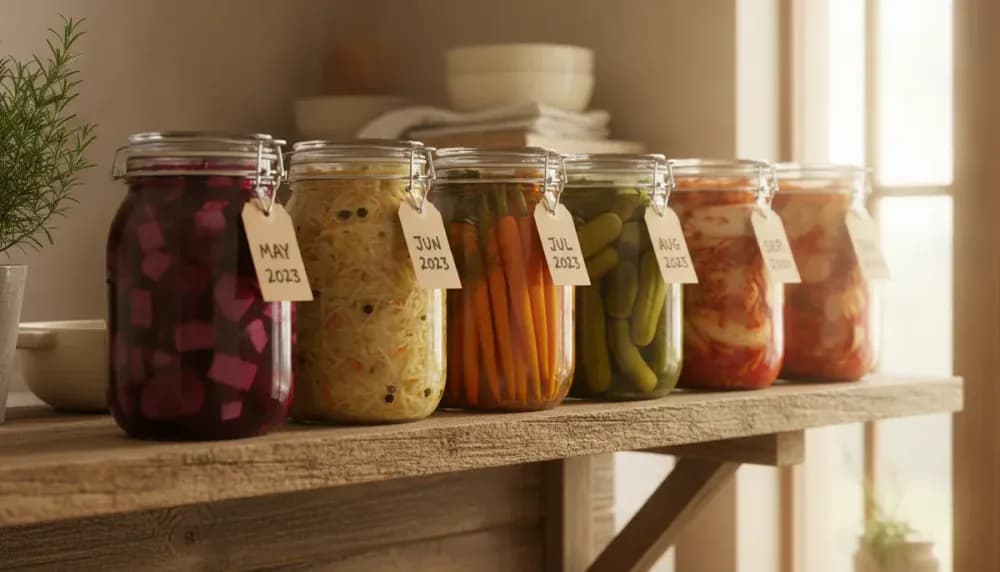
- Refrigerated fermented vegetables last 4-18 months when properly stored in brine at 32-50°F (0-10°C)
- Room temperature fermentation time is flexible—pickles are great at 7-10 days but can go 21+ days for deeper flavor in cool conditions (under 72°F/22°C)
- Hot weather changes everything—summer ferments get mushy faster, so shorter fermentation times work best
- The sniff-and-look test matters—trust your senses; if it smells off, has mold, or weird texture, don't risk it
- Proper storage extends shelf life dramatically—keep vegetables submerged in brine, use airtight containers, and store in cool, dark places
Have you ever pulled a forgotten jar from the back of your fridge and wondered if it's still safe to eat? After making hundreds—maybe thousands—of ferments over the years, I've learned that fermentation is one of nature's most incredible preservation methods. But knowing when to stop fermenting and how to store your creations properly can mean the difference between a jar that lasts months and one that disappoints.
#How Long Can Fermented Vegetables Last?
The short answer: When properly fermented and stored, your vegetables can last anywhere from 4 months to over a year.
The longer answer is more nuanced and depends on several factors: the type of vegetable, fermentation method, storage conditions, and salt concentration in your brine.
Research shows that fermented vegetables gain enhanced nutritional properties and extended shelf life through the fermentation process. The lactic acid bacteria create an acidic environment that naturally preserves the food while continuing to develop complex flavors over time.
According to USDA guidance, after fermenting, products must either be stored in the refrigerator or canned properly to ensure safety and longevity.
#Storage Duration by Method
Refrigerated Storage (32-50°F / 0-10°C):
- Most fermented vegetables: 4-18 months
- Sauerkraut and kimchi: 6-12 months
- Fermented pickles: 4-8 months
- Fermented onions, beets, radishes: 6-12 months
- Fermented garlic: 8-12 months
Root Cellar Storage (50-60°F / 10-15°C):
- Properly fermented vegetables: Up to 12 months
- Note: Fermentation continues slowly at these temperatures
Room Temperature:
- Active fermentation only: 3-28 days depending on temperature
- Not recommended for long-term storage
In practical testing, at least 90% of fermented vegetables kept for 6-7 months in a refrigerator remained safe and delicious. Some fermenters report vegetables lasting well over a year when stored properly in cold conditions.
#My Journey with Fermentation Storage
Over the years of making probably hundreds if not thousands of ferments, I've learned that storage is just as important as the fermentation process itself. One of my favorite discoveries has been how flexible fermentation timing can be—especially when you understand temperature.
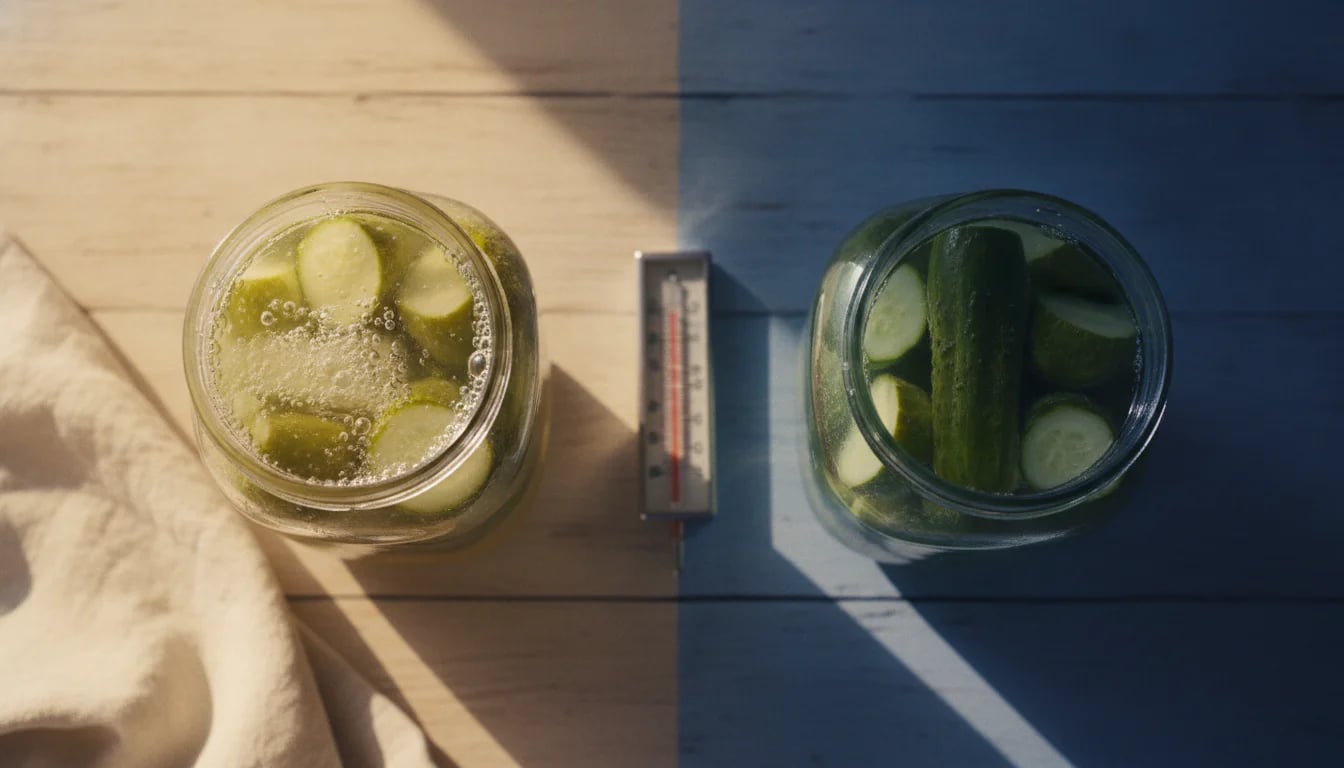
In my experience, if the temperature in the space where we're fermenting isn't too hot (usually 72°F/22°C and under), it's often mostly a taste choice whether to keep fermenting or stop at the traditional time. For example, pickles will usually be great after 7-10 days, but sometimes fermenting them for 21 days creates this incredible, deep taste that's absolutely worth the wait. Same with sauerkraut—while it traditionally goes for 21-28 days, I've enjoyed much longer fermentation periods outside the fridge, and the flavor development is remarkable.
Of course, in the hot summer, it's a completely different story. We all know how things tend to get mushy in the summer heat, where definitely less is more. I've learned to respect the seasons and adjust my fermentation times accordingly.
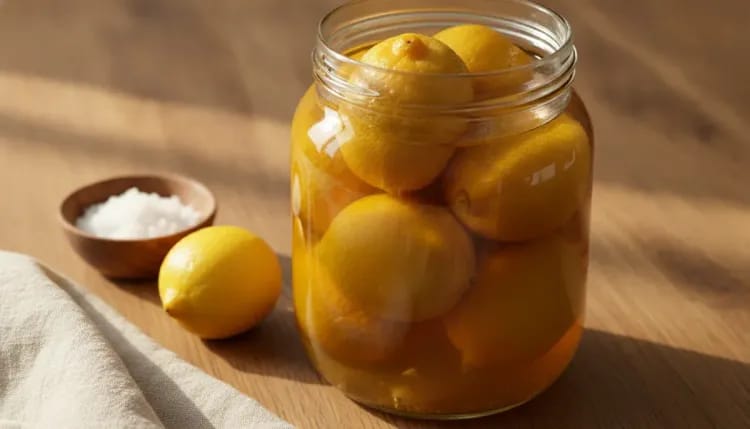
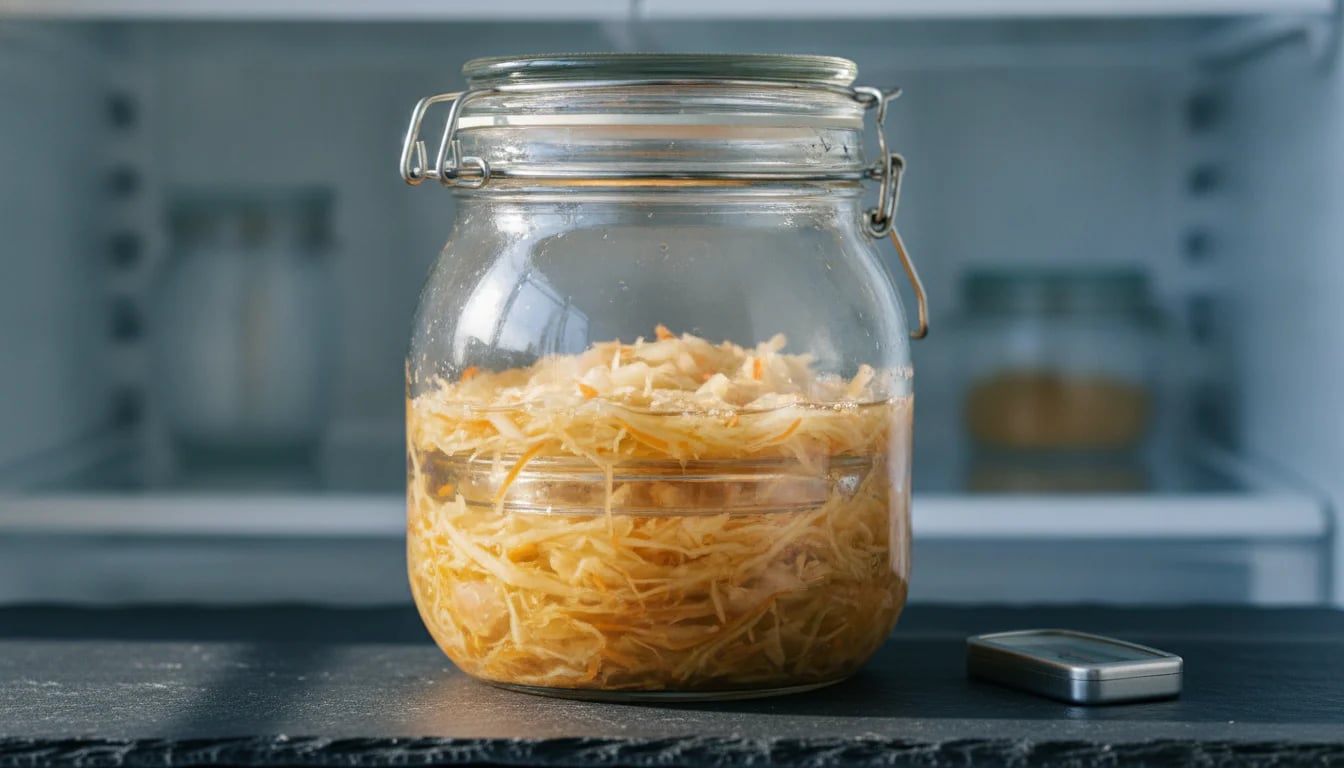
And in the fridge? Some ferments can last over a year. I love coming back to my fermented onions, fermented lemons, fermented radishes and beets, and garlic sauce that can sit in my fridge for months and months and still be incredible. That said, if you're just now pulling a jar that disappeared into the depths of the fridge for years, it should pass a few tests for smell, mold, and texture. If it's suspicious, it's not worth the risk—after all, we're trying to better our health with fermentation, not compromise it.
Fermentation is an incredible way of preservation. Things are kept surprisingly well thanks to the protective environment created by beneficial bacteria. It's one of the reasons I love fermenting so much.
#What Affects Shelf Life?
#1. Salt Concentration
The saltiness of your brine plays a crucial role in preservation. Higher salt concentrations (3-5%) create a more hostile environment for spoilage organisms while encouraging beneficial lactic acid bacteria.
Salt percentage guidelines:
- 2-2.5%: Lighter, faster ferments (shorter shelf life)
- 3-3.5%: Standard fermentation (good shelf life)
- 4-5%: Longer fermentation, extended shelf life
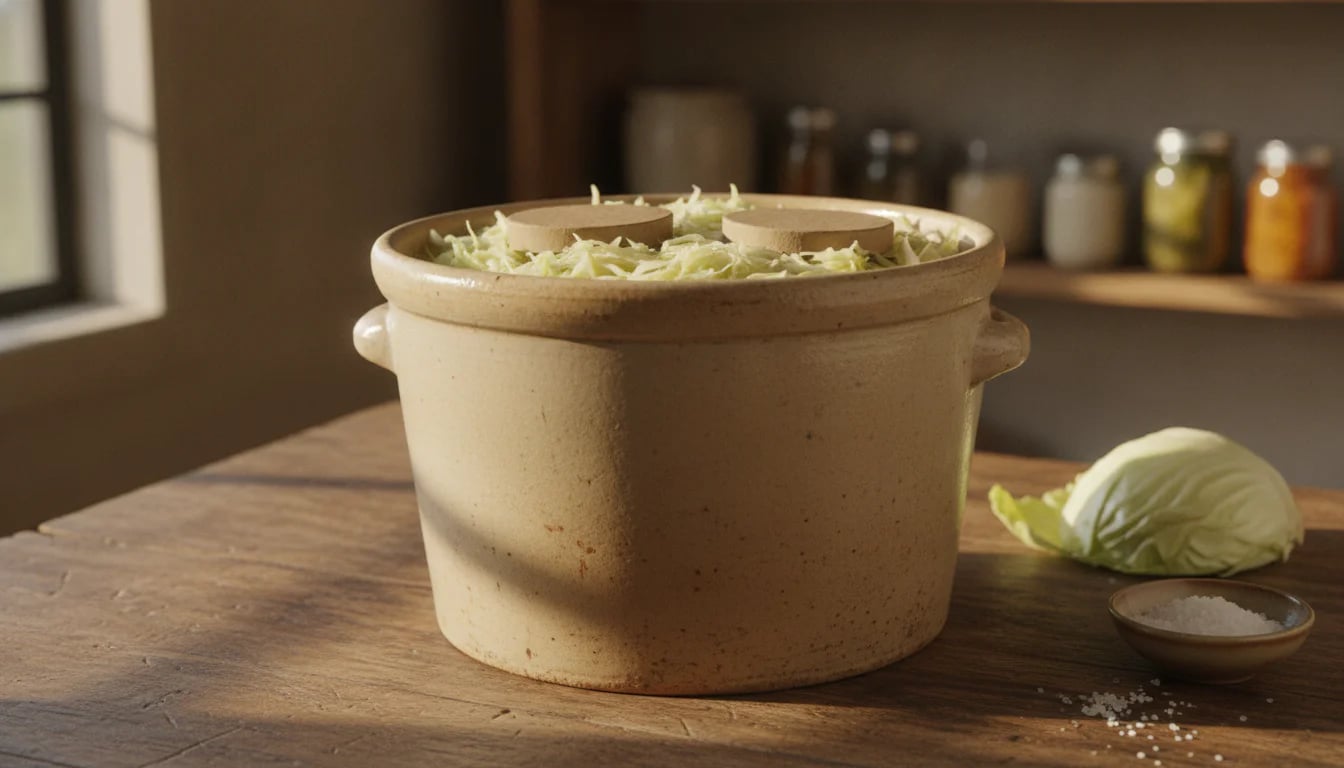
When using a fermentation crock or traditional vessel, maintaining consistent salt levels throughout your brine ensures even preservation.
#2. Temperature During Fermentation
Temperature is perhaps the single most important factor affecting both fermentation speed and final shelf life.
Cool conditions (60-68°F / 15-20°C):
- Slower fermentation (2-4 weeks)
- More complex flavor development
- Better texture retention
- Longer shelf life potential
Moderate conditions (68-75°F / 20-24°C):
- Standard fermentation speed (1-2 weeks)
- Good flavor balance
- Reliable results
Warm conditions (75-85°F / 24-29°C):
- Very fast fermentation (3-7 days)
- Risk of mushy texture
- Shorter shelf life
- Higher chance of off-flavors
For precise temperature control during fermentation, some fermenters use sous vide precision cookers in water baths, especially for temperature-sensitive ferments.
#3. pH Level
According to Canadian food safety guidance, the pH should be lower than 4.4 during shelf life to prevent growth of Listeria monocytogenes during refrigerated storage. Most properly fermented vegetables achieve a pH of 3.5-4.0, which provides excellent preservation.
The FDA defines fermented foods as low-acid foods subjected to acid-producing microorganisms to reduce pH to 4.6 or below, creating a safe preservation environment.
If you're serious about monitoring your ferments, a pH meter can help you track acidity levels and ensure safe fermentation.
#4. Keeping Vegetables Submerged
This is non-negotiable: vegetables must stay under the brine to prevent mold growth and oxidation.
Using fermentation weights keeps everything safely submerged. I've found that proper weights make a huge difference in the final quality and shelf life of ferments.
#5. Oxygen Exposure
Minimizing oxygen contact during both fermentation and storage extends shelf life significantly. Airlock fermentation lids allow carbon dioxide to escape while preventing oxygen from entering, creating ideal anaerobic conditions for lactic acid bacteria.
#How to Store Fermented Vegetables for Maximum Shelf Life
#Step 1: Allow Full Fermentation
Experts recommend allowing vegetables to fully ferment before transferring to refrigerator for long-term storage. This means waiting until:
- Bubbling has slowed significantly or stopped
- Flavor has developed to your liking
- pH has dropped to 4.0 or below (if testing)
- Vegetables have the desired texture
For most vegetables, this takes 1-4 weeks at room temperature, depending on conditions.
#Step 2: Transfer to Cold Storage
Once fermentation is complete, move your vessels to cold storage:
Refrigerator (32-40°F / 0-4°C):
- The extreme cold essentially halts the fermentation process
- Preserves texture and flavor at their peak
- Extends shelf life to 4-18 months
- Most convenient for home fermenters
Root Cellar or Cool Basement (50-60°F / 10-15°C):
- Fermentation continues very slowly
- Flavors continue to develop gradually
- Can store for up to 12 months
- Traditional storage method
#Step 3: Use Proper Containers
Storage containers matter more than you might think:
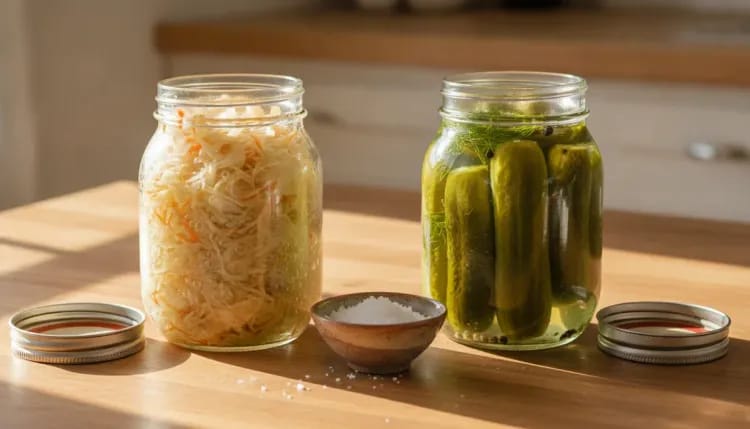
Glass jars: Excellent for refrigerator storage, non-reactive, easy to monitor
Fermentation crocks: Ideal for both fermentation and storage, especially traditional stoneware crocks with water-seal lids
Avoid: Metal containers (can react with acids), plastic (can absorb odors and stain)
#Step 4: Maintain Brine Coverage
Throughout storage, keep vegetables submerged. If brine evaporates:
- Top off with a 2-3% salt solution (2-3 tablespoons salt per quart of water)
- Ensure vegetables remain covered
- Use weights if needed
#Step 5: Store in Dark, Cool Location
Light and heat are enemies of long-term storage:
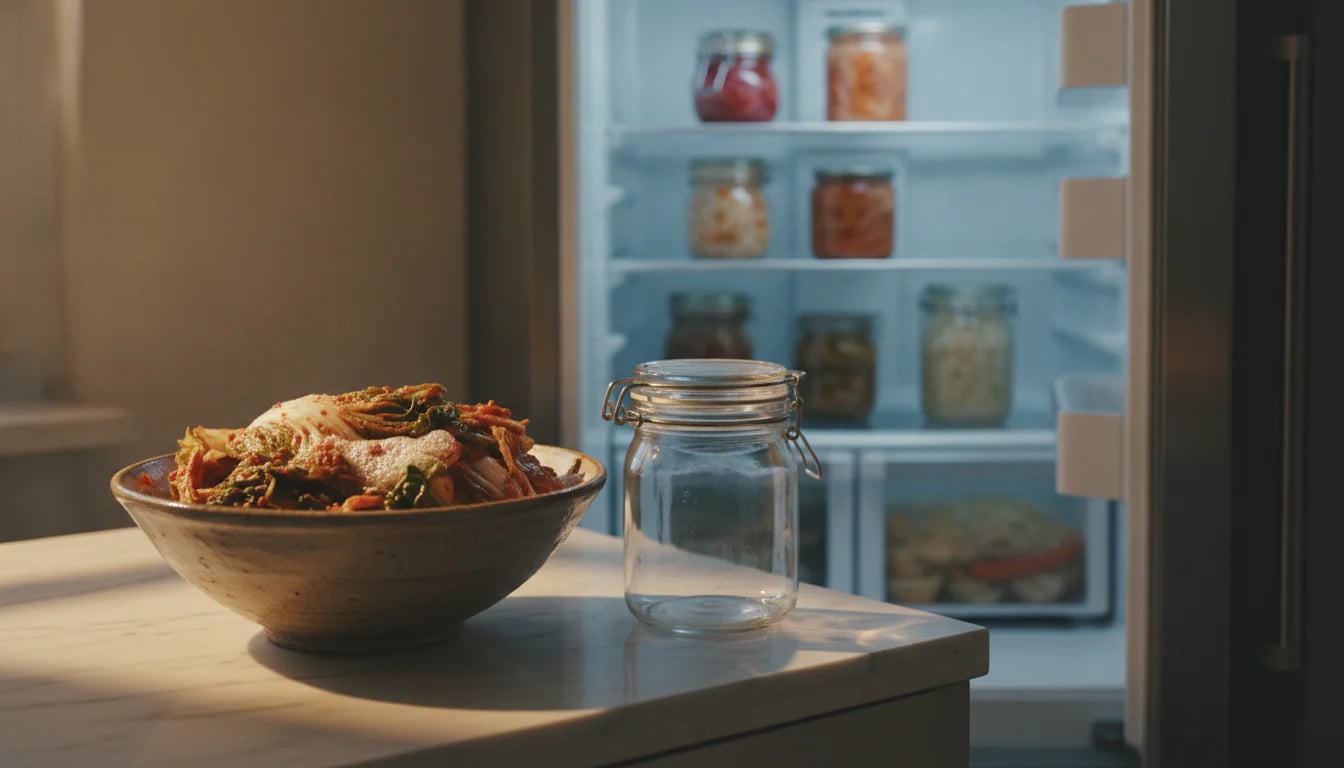
- Keep jars in the back of the refrigerator
- Avoid door storage (temperature fluctuates)
- If using a root cellar, choose the coolest, darkest spot
- Consider covering clear jars with cloth to block light
#Signs Your Fermented Vegetables Have Gone Bad
While fermented vegetables are incredibly stable, they can occasionally spoil. Trust your senses:
#Visual Signs
Normal:
- Cloudy brine (lactic acid bacteria)
- Small white spots on surface (kahm yeast—harmless but unpleasant)
- Bubbles during active fermentation
- Color changes (vegetables often fade or change hue)
Warning Signs:
- Fuzzy mold (green, black, pink, or orange)
- Slimy texture throughout
- Extreme discoloration
- Vegetables floating above brine with mold
#Smell Test
Normal:
- Tangy, sour, pleasantly acidic
- Pungent (especially kimchi and garlic ferments)
- Earthy, vegetable-forward
Warning Signs:
- Rotten, putrid odor
- Chemical smell
- Extremely unpleasant (beyond normal fermentation funk)
#Taste and Texture
Normal:
- Crisp to slightly soft (depending on fermentation time)
- Sour, tangy, complex flavors
- Salty, savory notes
Warning Signs:
- Mushy, disintegrating texture
- Off-flavors that taste wrong (not just strong)
- Bitter or metallic taste
When in doubt, throw it out. As I've learned over the years, if a jar seems suspicious after being lost in the fridge for ages, it's not worth the risk. We're trying to improve our health with fermentation, not compromise it.
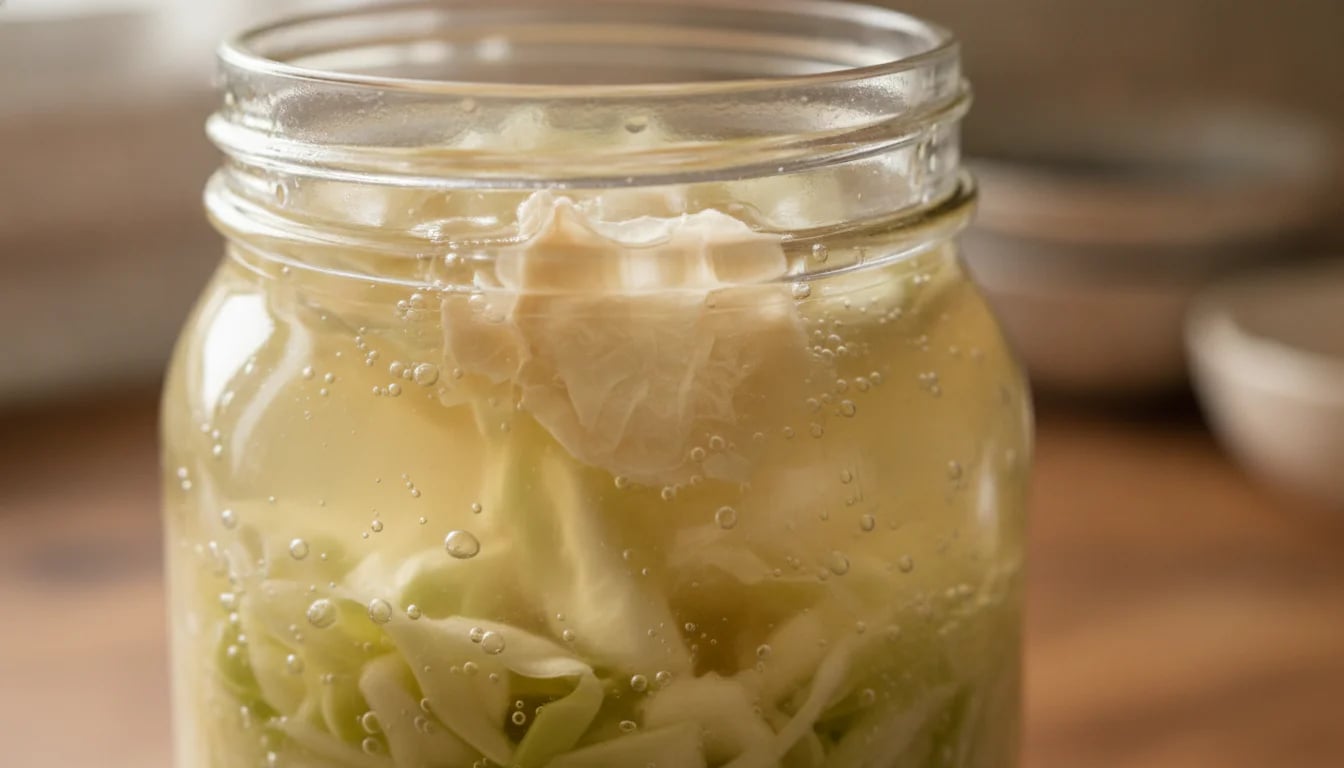
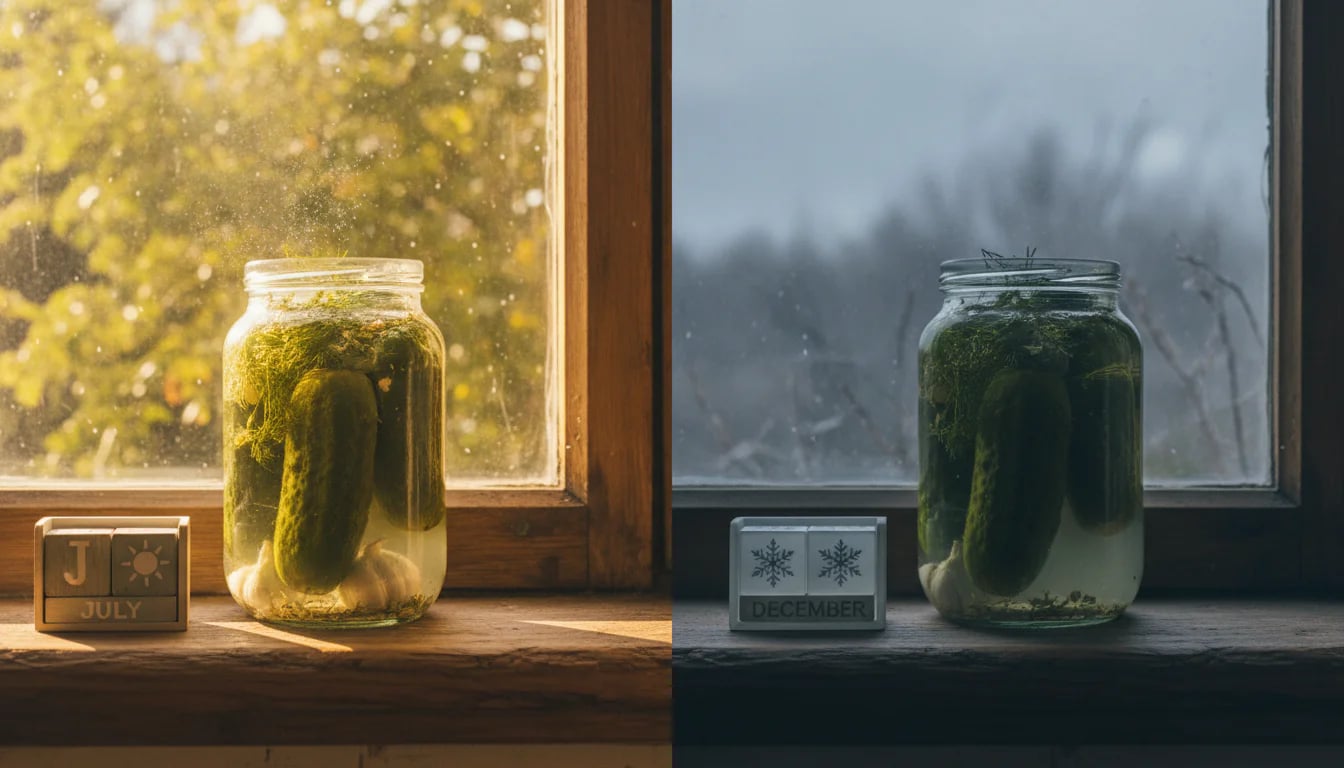
#Seasonal Considerations: Summer vs. Winter Fermenting
#Summer Fermentation (Warm Weather)
When temperatures climb above 75°F (24°C), fermentation accelerates dramatically:
Challenges:
- Vegetables can become mushy within days
- Higher risk of off-flavors
- Faster pH drop
- Shorter optimal fermentation window
Solutions:
- Reduce fermentation time (3-7 days instead of 14-21)
- Increase salt slightly (3.5-4%)
- Ferment in the coolest part of your home
- Check ferments daily
- Move to refrigerator sooner
As I've experienced firsthand, summer ferments require more attention and a lighter touch. Less is definitely more when the weather heats up.
#Winter Fermentation (Cool Weather)
When temperatures drop below 65°F (18°C), fermentation slows beautifully:
Benefits:
- Extended fermentation time allows complex flavor development
- Better texture retention
- Lower risk of spoilage
- More forgiving timeline
Approach:
- Allow 3-6 weeks for full fermentation
- Enjoy the flexibility of longer fermentation
- Experiment with extended aging for deeper flavors
This is when I love to make my long-fermented sauerkrauts and pickles that develop those incredible, complex flavors you just can't rush.
For year-round consistent results, some fermenters maintain their vessels in temperature-controlled environments using precision temperature equipment, though this isn't necessary for most home fermenters.
#Special Storage Considerations for Different Vegetables
#Leafy Vegetables (Cabbage, Kale)
- Shelf life: 6-12 months refrigerated
- Storage tip: Keep tightly packed to prevent air pockets
- Best containers: Wide-mouth crocks or large jars
Try our Spicy Horseradish Sauerkraut for a long-lasting, flavorful ferment.
#Root Vegetables (Beets, Carrots, Radishes)
- Shelf life: 6-12 months refrigerated
- Storage tip: Maintain firm texture by not over-fermenting
- Best containers: Glass jars with tight-sealing lids
Our Fermented Beets with Pomegranate & Thyme stores beautifully for months.
#Alliums (Onions, Garlic)
- Shelf life: 8-12 months refrigerated
- Storage tip: These develop stronger flavors over time
- Best containers: Smaller jars for portion control
The Perfect Pickled Onions are one of my go-to ferments that last incredibly well.
#Cucumbers (Pickles)
- Shelf life: 4-8 months refrigerated
- Storage tip: More delicate than other vegetables; monitor texture
- Best containers: Jars with fermentation weights to keep pickles submerged
#Kimchi and Mixed Ferments
- Shelf life: 6-12 months refrigerated
- Storage tip: Flavors intensify over time; some prefer younger kimchi, others aged
- Best containers: Specialized kimchi containers with pressure-release valves
Check out our Classic Napa Cabbage Kimchi for traditional fermentation that ages beautifully.
#Frequently Asked Questions
#Can I freeze fermented vegetables?
Yes, but with caveats. Freezing stops fermentation completely and preserves vegetables for 8-12 months. However:
- Texture will soften upon thawing
- Some probiotic benefits may be reduced
- Best for vegetables you'll use in cooked dishes
- Use double or triple layer protection to prevent freezer burn
#Do fermented vegetables lose probiotics over time?
The bacterial population does change during storage. Research indicates that fermented vegetables continue to evolve microbiologically even in cold storage, though the rate slows dramatically. While some bacterial strains may decrease, others may increase, and the vegetables generally remain probiotic-rich for many months.
#Should I burp my jars during refrigerated storage?
Once fermentation has slowed and vegetables are in cold storage, burping is rarely necessary. The extreme cold of refrigeration (below 53°F/12°C) essentially halts fermentation, so minimal gas production occurs. However, if you notice pressure building, a quick burp won't hurt.
#Can I add fresh vegetables to an existing ferment?
It's not recommended for long-term storage. Adding fresh vegetables:
- Introduces new bacteria that may compete with established cultures
- Dilutes the protective acidic environment
- Can introduce spoilage organisms
- Resets the fermentation timeline
If you want to extend a ferment, it's better to start a new batch and use some brine from the old batch as a starter.
#How do I know when fermentation is "done"?
Fermentation is never truly "done"—it's a continuum. However, vegetables are ready for cold storage when:
- Bubbling has slowed significantly
- Flavor is pleasantly sour and complex
- Texture is to your liking (still has some crunch)
- pH is below 4.0 (if testing)
- Usually 1-4 weeks at room temperature
The beauty of fermentation is that "done" is largely a matter of personal preference.
#The Bottom Line: Fermentation as Preservation
Fermentation is one of humanity's oldest and most effective preservation methods. When you create the right conditions—proper salt concentration, anaerobic environment, appropriate temperature, and cold storage—your fermented vegetables can last many months while continuing to develop complex, delicious flavors.
The key lessons I've learned over hundreds of ferments:
- Temperature is everything: Cool fermentation creates better texture and longer shelf life
- Trust the process: Properly fermented vegetables are incredibly stable
- Trust your senses: If something seems off, it probably is
- Storage matters: Moving to cold storage at the right time preserves quality
- Flexibility is beautiful: Fermentation timelines are more flexible than you think (especially in cool weather)
Whether you're pulling out a jar of fermented turnips you made six months ago or deciding whether to let your pickles ferment another week, remember that fermentation is both science and art. The science gives us safety guidelines and understanding; the art comes from your experience, your taste preferences, and your willingness to experiment.
So go ahead—make that big batch of sauerkraut, ferment those onions, preserve those beets. With proper storage, you'll be enjoying them for months to come. And if you're ever unsure about a jar that's been hiding in the back of your fridge? Give it the sniff test, check for mold, and trust your instincts. After all, we're doing this to support our health, not risk it.
Happy fermenting, and may your jars be ever full and your ferments ever delicious.
Disclaimer: This article is for informational and educational purposes only. It is not intended to be a substitute for professional medical advice, diagnosis, or treatment. Always follow proper food safety guidelines when fermenting and storing foods. If you have concerns about food safety or specific health conditions, please consult with a healthcare provider or food safety expert.