Fermentation Temperature Guide: The Complete Guide to Perfect Vegetable Ferments Every Time
Last Updated: January 2025 | Reading Time: 12 minutes
Master the ideal fermentation temperatures for sauerkraut, kimchi, pickles, and all lacto-fermented vegetables. This science-backed guide reveals exact temperature ranges, seasonal adjustments, and troubleshooting tips for consistent results.
Table of Contents
- Optimal Fermentation Temperatures by Vegetable
- The Science Behind Temperature and Fermentation
- Summer Fermentation Temperature Control
- Winter Fermentation Temperature Solutions
- Temperature Troubleshooting Guide
- Seasonal Fermentation Strategies
- Advanced Temperature Control Techniques
- Building Your Temperature-Controlled Setup
- Frequently Asked Questions
You've mastered your first batches of fermented vegetables. The bubbling has become familiar, the tang just right. But something's been nagging at you—why does your summer sauerkraut taste different from your winter batch? Why did that fermented cucumber pickle turn mushy while your friend's stayed crisp?
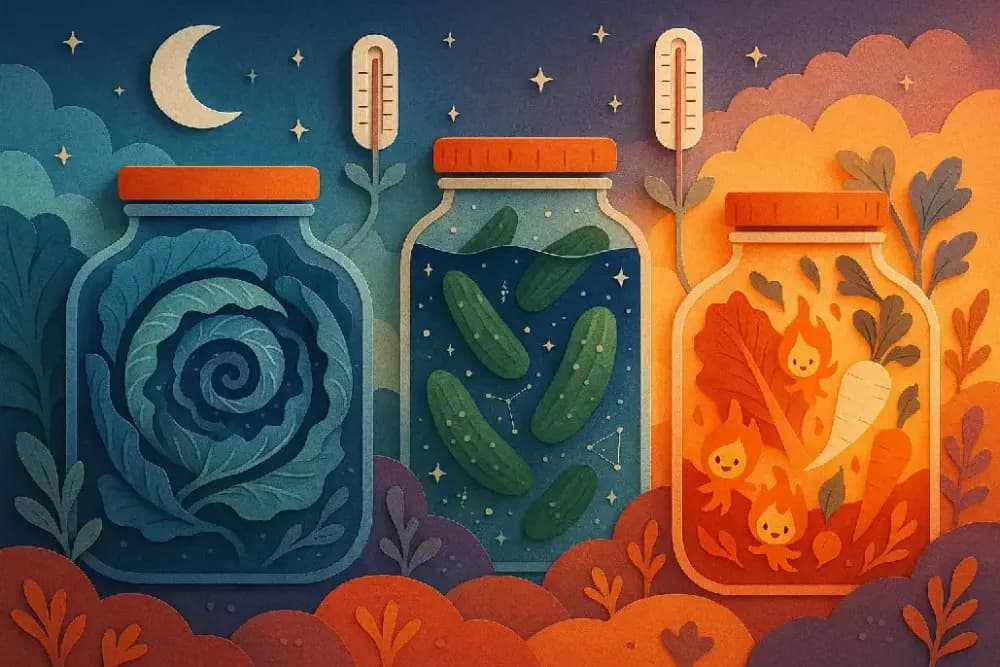
The answer lies in fermentation temperature control—the single most important factor separating good ferments from exceptional ones. Temperature directly controls lactic acid bacteria (LAB) activity, determining not just fermentation time, but how your fermented foods taste, smell, and feel. Master temperature, and you'll produce consistent, professional-quality fermented vegetables year-round.
Optimal Fermentation Temperatures by Vegetable
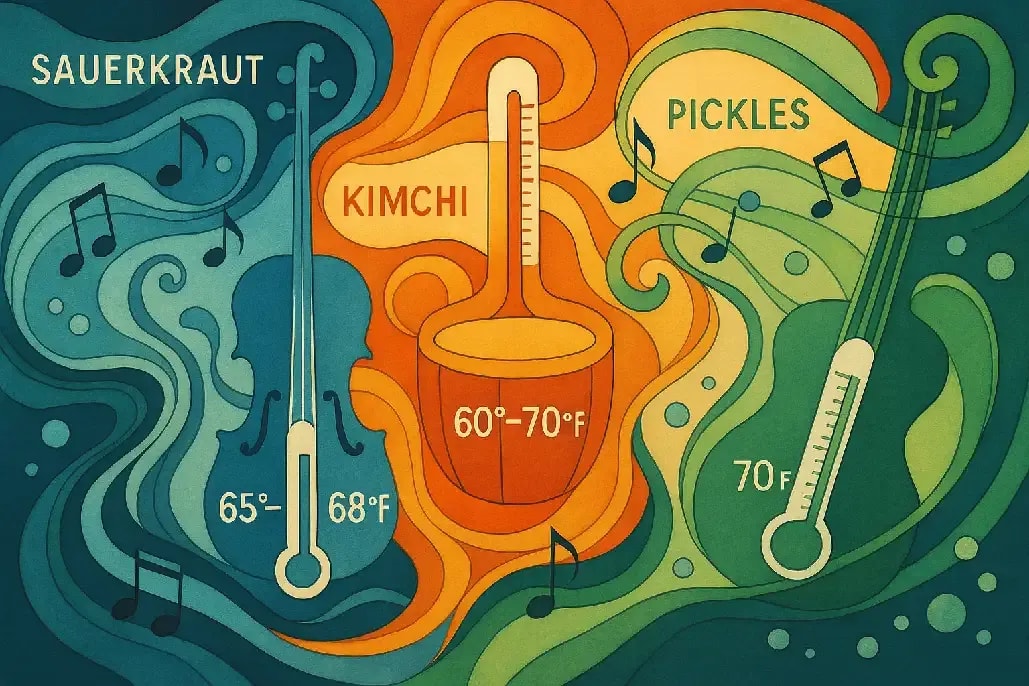
Every fermented vegetable has its ideal temperature range. Straying too far creates problems ranging from off-flavors to mushy textures. Here's your comprehensive fermentation temperature chart:
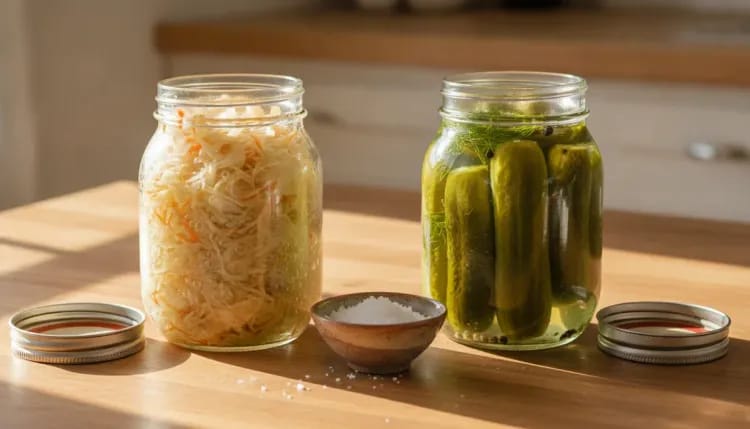
Best Temperature for Fermenting Sauerkraut: 65-68°F (18-20°C)
Sauerkraut fermentation temperature requires precision. This narrow range allows proper bacterial succession through three critical stages:
- Leuconostoc mesenteroides (60-70°F / 16-21°C) produces initial acids and CO2
- Lactobacillus plantarum takes over later in the ferment (tolerating a wide temperature range), finishing it while producing little gas
- Lactobacillus brevis (60-70°F / 16-21°C) adds final aromatic compounds
Cooler temperatures (around 64-68°F) favor a fuller early Leuconostoc phase, which builds more complex flavor, while warmer temperatures shift the balance toward the later Lactobacillus bacteria and tend to give simpler, sharper flavors. (You'll sometimes read that Leuconostoc "can't survive" above 70°F — that's more a rule of thumb than a hard fact.) The Ohio Stoneware 2-gallon fermentation crock maintains temperature beautifully thanks to its thick ceramic walls—place it in a spot that holds steady at 65-68°F for perfect sauerkraut every time.
Ideal Kimchi Fermentation Temperature: 60-70°F (16-21°C)
Kimchi fermentation temperature varies by style:
- Traditional Korean kimchi: 55-60°F (13-16°C) for 3-6 months
- Quick home kimchi: 65-70°F (18-21°C) for 3-7 days
- Summer kimchi: 60-65°F (16-18°C) to prevent over-fermentation
The E-Jen Premium Kimchi Container excels here—its inner vacuum lid and earthenware construction create the perfect microclimate for developing kimchi's signature complex flavors at any temperature.
Perfect Pickle Fermentation Temperature: 60-75°F (15-24°C)
Fermented pickle temperature tolerance seems wider, but there's a catch:
- 60-70°F: Crisp texture, balanced flavor (7-10 days)
- 70-75°F: Faster fermentation, monitor closely (4-7 days)
- Above 80°F: Mushy texture guaranteed
Keep cucumbers submerged with Masontops Pickle Pebbles to prevent temperature hot spots at the surface.
Other Vegetable Fermentation Temperatures
Root vegetables (beets, carrots, turnips): 60-70°F (16-21°C) Pepper ferments (hot sauce base): 70-80°F (21-27°C) Mixed vegetable ferments: 60-70°F (16-21°C) Green beans: 65-72°F (18-22°C)
The Science Behind Temperature and Fermentation

Understanding how temperature affects fermentation helps you troubleshoot problems and optimize results. Temperature influences four critical fermentation factors:
1. Lactic Acid Bacteria Growth Rates
Bacterial reproduction doubles with every 18°F (10°C) increase until enzyme denaturation at 131°F (55°C). This exponential relationship means:
- At 64°F (18°C): Sauerkraut takes 20-30 days for full fermentation
- At 72°F (22°C): Ready in 10-14 days with good complexity
- At 90°F (32°C): "Done" in 8-10 days but tastes flat
2. pH Progression and Food Safety
Temperature directly affects how quickly pH drops during fermentation:
- Slow drop (60-65°F / 16-18°C): Complex flavor development, gradual acidification
- Moderate drop (65-72°F / 18-22°C): Balanced speed and flavor
- Rapid drop (75°F+ / 24°C+): Sharp, vinegary notes without nuance
Monitor with the Yinmik digital pH meter—aim for pH 4.6 or below for safety, with 3.5-4.0 ideal for most fermented vegetables.
3. Enzyme Activity and Texture
Pectinase enzymes that break down vegetable structure accelerate with heat:
- Below 70°F (21°C): Minimal enzyme activity, vegetables stay crisp
- 70-75°F (21-24°C): Moderate activity, slight softening
- Above 75°F (24°C): Faster breakdown; kraut is much more likely to go soft (especially with lower salt or a long ferment)
4. Flavor Compound Development
Different temperatures favor different bacterial strains, each producing unique flavors. The NOMA Guide to Fermentation details how temperature manipulation creates specific flavor profiles—essential reading for advanced fermenters.
Summer Fermentation Temperature Control

Hot weather fermentation presents unique challenges. When ambient temperatures exceed 80°F (27°C), fermentation actually runs faster — the good bacteria aren't struggling. The real downsides of heat are soft, mushy texture, sharper or off-flavors, and more surface kahm/mold, which is why cooling helps quality. Here's how to maintain ideal fermentation temperatures in summer:
Cooling Methods That Work
Water bath method: Place fermentation vessels in a large container filled with water. Add frozen water bottles twice daily. This drops temperatures 10-15°F (6-8°C) below ambient—simple but effective.
Evaporative cooling: Wrap vessels in wet towels with a fan blowing across them. As water evaporates, it pulls heat away. Works best in dry climates.
Strategic placement: Find your home's coolest spots:
- Basements (10-15°F / 6-8°C cooler than upstairs)
- Interior closets
- Lower kitchen cabinets
- North-facing rooms
Recipe Adjustments for Heat
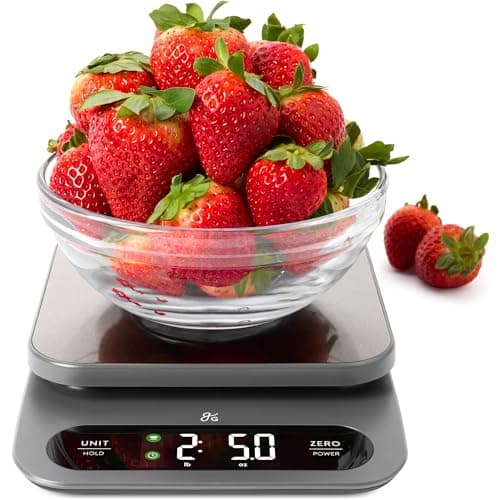
Increase salt concentration from 2% to 2.5-3% to slow fermentation. Use your Greater Goods kitchen scale for precise measurements—accuracy matters more in challenging conditions.
Reduce fermentation time by 30-40%. That 7-day ferment might be ready in 4 days. Check daily using wide-mouth mason jars for easy monitoring.
Summer Fermentation Best Practices
- Start ferments in evening when temperatures drop
- Use Brillenti Easy Grip fermenting lids for better gas release
- Favor quick ferments: curtido, pickle chips, 3-day kimchi
- Pack vegetables tightly with the Brewing America acacia wood tamper
Winter Fermentation Temperature Solutions

Cold weather fermentation requires patience and gentle warming. Below 60°F (16°C), the beneficial bacteria become sluggish and fermentation slows dramatically or stalls (around 50°F it can take many months). The main issue is simply a slow acid drop, so keep everything submerged and salted and judge doneness by souring — a stalled ferment that never drops below pH 4.6 is the real thing to avoid.
Effective Heating Methods
Seedling heat mats: Wrap around vessels for 5-10°F (3-6°C) temperature boost. Consistent, gentle heat perfect for fermentation.
Appliance warmth: Place ferments on refrigerator tops where compressor heat provides steady warmth.
Oven light method: Light bulb heat maintains 75-80°F (24-27°C). Place note on oven to prevent accidental heating.
Heating pad setup: Set on low, place towel between pad and vessel. Monitor temperature carefully.
Cold Weather Fermentation Tips
Embrace extended timelines—winter ferments develop incredible complexity. The Seeutek fermentation crock's heavy stoneware provides excellent thermal mass for temperature stability.
Monitor more carefully since cold ferments show fewer visual cues. The OXO Good Grips scale ensures proper salt percentages. Track ferments with the Niimbot B1 label maker—essential when fermentation extends for weeks.
Fermentation Temperature Troubleshooting Guide
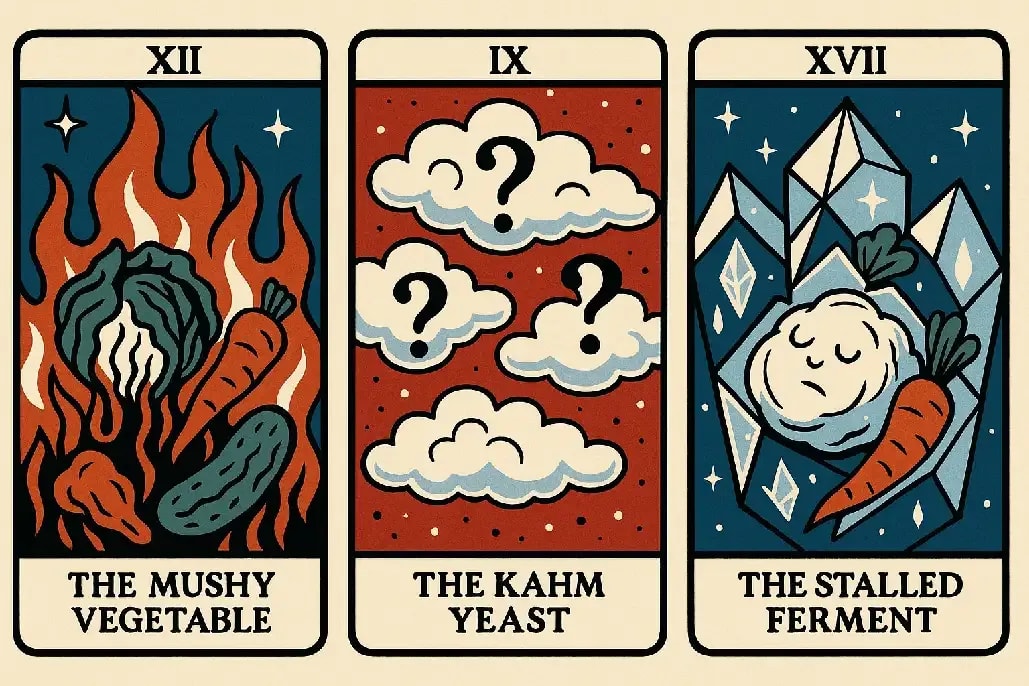
Common Temperature-Related Problems and Solutions
Mushy fermented vegetables
- Cause: Temperature exceeded 75°F (24°C), pectinase enzymes overactive
- Solution: Maintain 60-70°F (16-21°C), increase salt to 3%, shorten fermentation time
- Prevention: Use temperature strips, monitor daily in summer
Kahm yeast on fermented vegetables
- Cause: Surface temperature above 75°F (24°C), low salt concentration
- Solution: Skim surface, increase salt, reduce temperature
- Prevention: Masontops Pickle Pipes maintain anaerobic conditions
Slow or stalled fermentation
- Cause: Temperature below 60°F (16°C)
- Solution: Gradually warm to 65-70°F (18-21°C), add active starter
- Prevention: Use heating mats in cold weather
Alcoholic smell in fermented vegetables
- Cause: Yeast overgrowth from temperatures above 80°F (27°C)
- Solution: Immediate cooling, higher salt next batch
- Prevention: Water bath cooling in summer
Seasonal Fermentation Temperature Strategies

Spring Fermentation (55-75°F)
- Ideal conditions for most ferments
- Start ambitious projects: 6-week sauerkraut
- Experiment with temperature variations
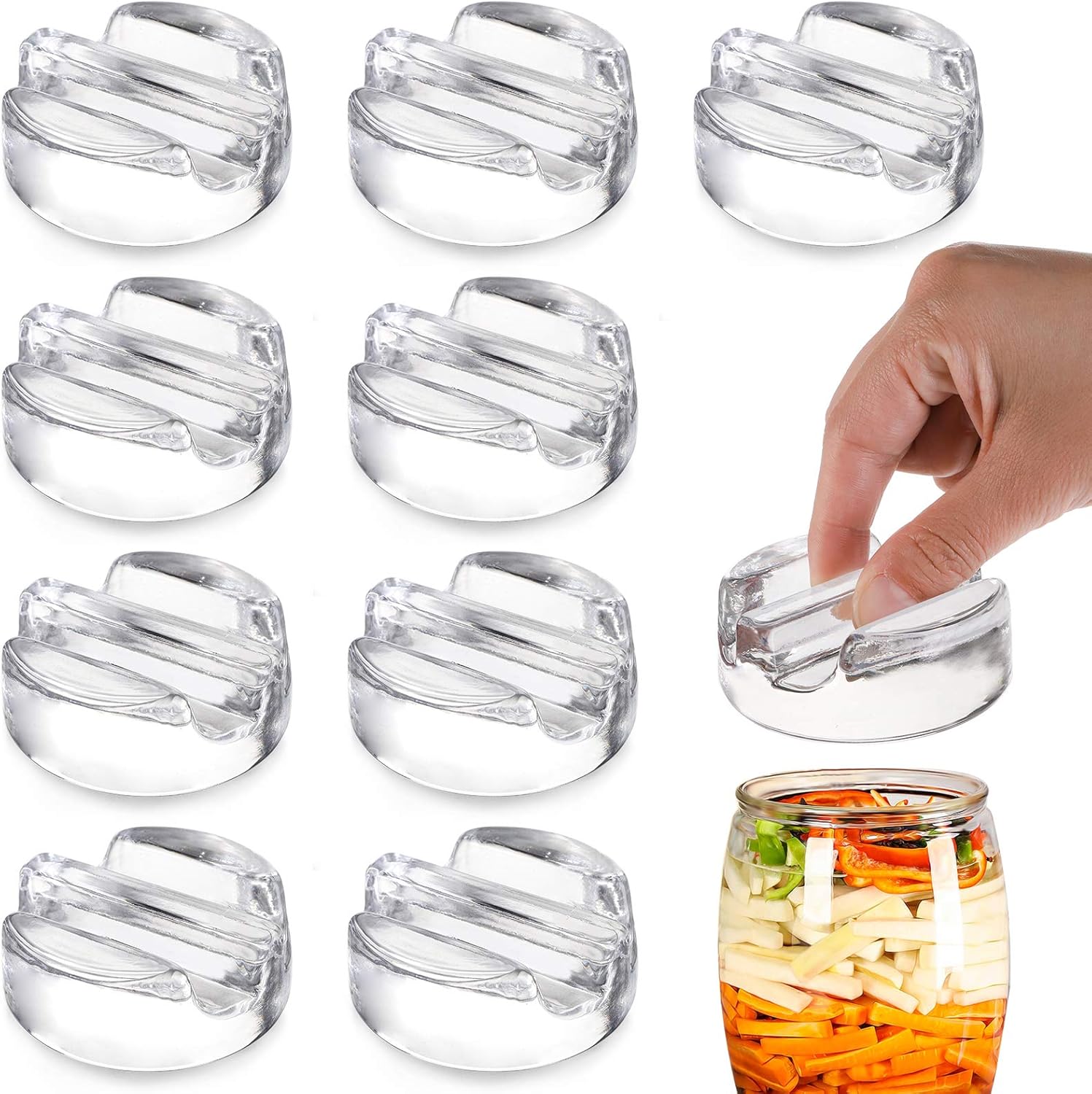
- Stock up on Topzea glass weights 9-pack
Summer Fermentation (75-95°F)
- Focus on temperature control
- Quick ferments only
- Double-check temperatures daily
- Use smaller batches in small-mouth jars with Pickle Pipes
Fall Fermentation (45-70°F)
- Perfect for bulk fermentation
- Start winter supply
- Gradual temperature drops enhance flavor
- Ideal for the E-Jen 1.3 gallon container
Winter Fermentation (30-60°F)
- Extended fermentation times
- Complex flavor development
- Requires supplemental heat
- Perfect for experimental batches
Advanced Fermentation Temperature Techniques
Multi-Stage Temperature Fermentation
- Initiation (72°F / 22°C for 24 hours): Jump-start bacterial activity
- Primary (65°F / 18°C for 5-7 days): Develop core flavors
- Secondary (60°F / 16°C for 7-14 days): Build complexity
- Cold finish (50°F / 10°C for 7+ days): Preserve volatiles
Temperature Cycling for Complex Flavors
- Week 1: 72°F (22°C) - vigorous fermentation
- Week 2: 65°F (18°C) - complexity development
- Week 3: 75°F (24°C) - final maturation
Creates layered flavors impossible with static temperatures.
Professional Cold-Conditioning
After primary fermentation, store at 45-50°F (7-10°C) for several weeks. Flavors meld while texture firms. Use wide-mouth jars by MIUYHJI for efficient cold storage.
Temperature-Controlled Fermentation Setup
Budget Setup ($50-100)
- Stick-on thermometer strips
- Seedling heat mat
- Cooler for water bath
- Basic timer
Intermediate Setup ($100-300)
- Digital temperature controller (Inkbird ITC-308)
- Mini-fridge or chest freezer
- Heat source (ceramic bulb or mat)
- Multiple temperature probes
Professional Setup ($300+)
- Dedicated fermentation chamber
- Dual-stage temperature controller
- Glycol chiller or heating elements
- Data logging capability
Start Your Temperature-Controlled Fermentation Journey
Temperature control transforms fermentation from guesswork to science. Start by monitoring temperatures throughout your next batch. Note how fermentation speed changes with conditions. Adjust placement, use simple heating or cooling methods, and taste frequently.
Soon you'll recognize temperature's effects immediately—that slightly boozy smell indicating warmth, the sluggish bubbling suggesting cold. You'll adjust instinctively, producing consistent results regardless of season.
Remember: understanding temperature matters more than perfect equipment. Whether using ice baths or sophisticated controllers, the principles remain constant. Monitor, adjust gradually, and let temperature become your ally in creating exceptional fermented vegetables.
Ready to master fermentation temperature? Start with one new technique from this guide. Your journey to consistently perfect ferments begins with understanding this fundamental variable.

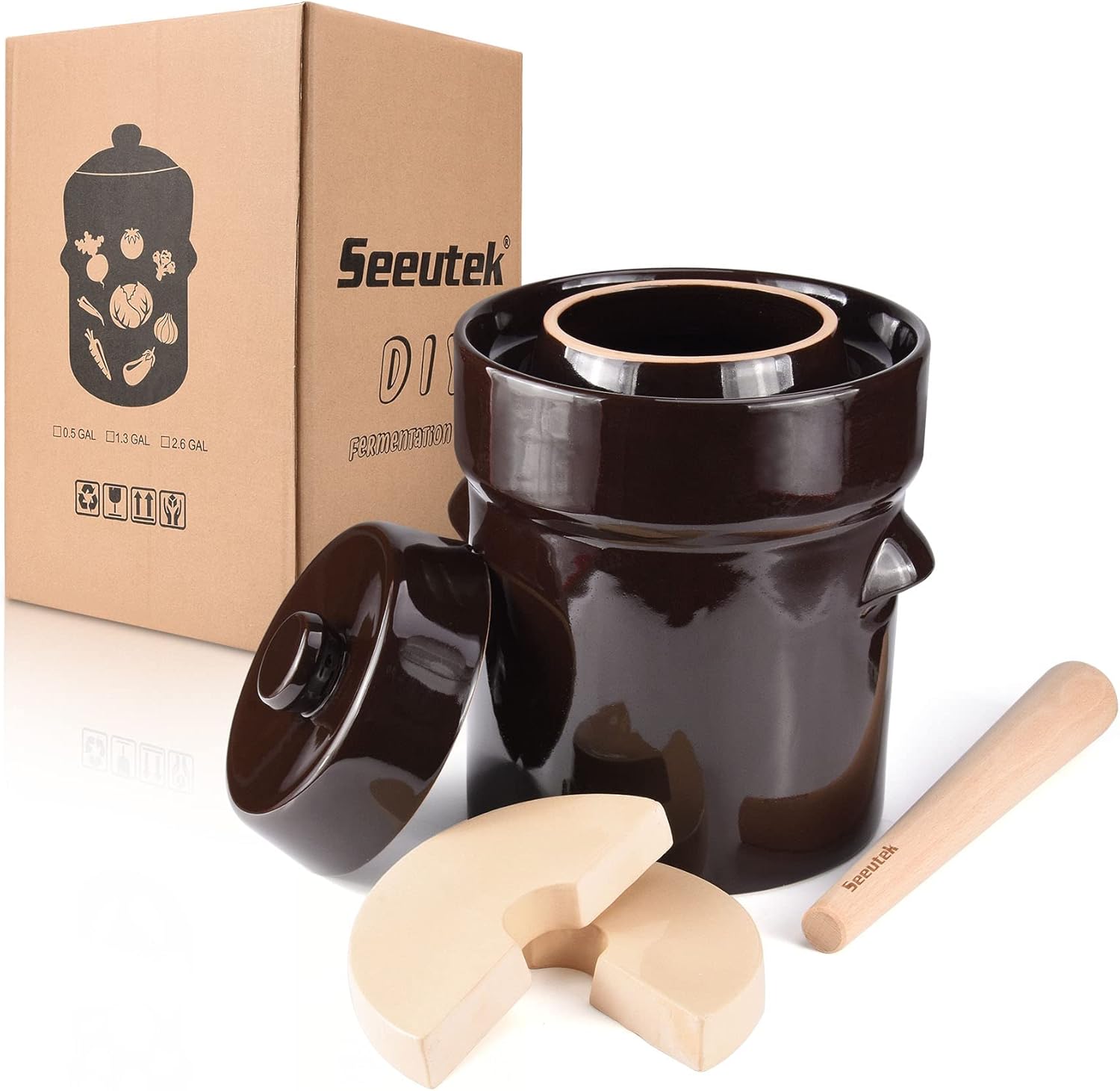
Recommended
Seeutek Fermentation Crock Jar 5L – Stoneware Pot with Weights, Lid & Pickle Tamper
Recommended
TOPZEA Fermentation Glass Weights (9-Pack) for Wide Mouth Mason Jars